

Spot a rip current like a pro
Able to develop anywhere, rip currents are found wherever there are breaking waves - the bigger the wave, the stronger the current produced.
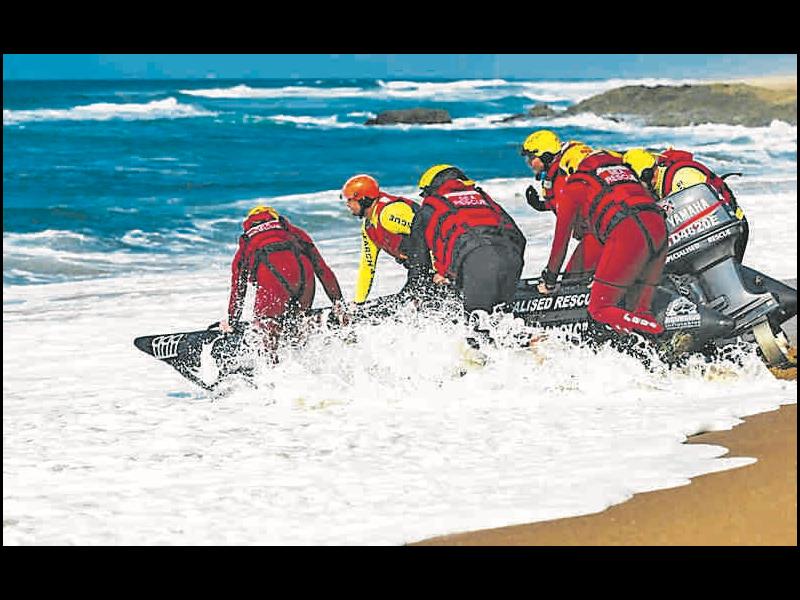
Beaches all the way from Umdloti right through to Zinkwazi are sure to be jam-packed with holidaymakers set to storm the North Coast this Festive Season and, as always, beachgoers are urged to be cautious and alert at all times, always obeying the lifeguards on duty.
Each beach has its own unique set of dangers which bathers should watch out for and familiarise themselves with however, the most common danger people fail to spot is a rip current.
‘What is a rip current?’ you ask.
Well, spotting and avoiding one may mean the difference between life and death.
Able to develop anywhere, rip currents are found wherever there are breaking waves – the bigger the wave, the stronger the current produced.
Rip currents create ‘rivers’ when water drains from the beach and back to the ocean. According to the National Sea Rescue Institute, rip currents are the number one danger visitors at beaches will face.
“Often, rip currents move slowly enough to barely be detected. But given the right circumstances of waves and beach profile, they can develop into currents moving at speeds of up to two metres per second – faster than any of us can swim,” explained the NSRI.
Rip currents can range from a width of just a few feet to a few hundred yards and pull to just where the waves form.
The NSRI iterates that rip tides are not the same as a rip current.
A rip tide is formed as the tide ebbs and flows through a narrow opening such as an estuary.
So, how do you spot a rip current? Keep an eye out for water moving through a surf zone which is different in colour from the surrounding water.
A change in the incoming pattern of waves is also a telltale sign. Watch for for seaweed, sand ‘clouds’ or debris moving out to where waves are in the process of forming.
Turbulent and choppy water conditions are also a sign of a rip current. As with all risks, avoiding rip currents altogether is safest.
KwaDukuza municipal head lifeguard, Bongani Xulu advised that beachgoers visit where lifeguards are on duty and swim between their flags at all times.
Xulu said you find yourself in a rip current, the most important thing to remember was to remain calm and not panic.
“Wherever there are rocks, you can expect a rip current as well,” said Xulu.
“You are not going to win a fight with the ocean. Swim slowly and conservatively out of the current or, relax and allow it to carry you out past the breakers until it slacks.”
Contrary to myth, rip currents are not an undertow and will not pull you beneath the water. Xulu said that if you are unable to call for help, attempt to swim parallel to the current to escape from it.
“If you are swimming at a beach where lifeguards are on duty, they will be able to help you. Raise your arm and wave for help,” said Xulu.
In order to be better prepared for the challenges brought on by the Festive Season, Xulu said they had appointed 50 additional lifeguards and will also be making use of additional monitoring equipment to ensure the safety of beachgoers.
To date, the most demanding day lifeguards have been faced with was December 16, which Xulu says was due to the lovely weather on the day which saw them tend to the safety of 12 000 people.
Fortunately no incidents were reported on December 16, but on December 18 a teenager nearly drowned in the Salt Rock tidal pool.
By the time the lifeguard had arrived, the 15-year-old was unconscious. However the lifeguards performed CPR and resuscitated her before paramedics arrived.
The lifeguards will be working 12-hour shifts every day, from 6am to 6pm.
Contact head lifeguard Xulu at 073 268 4085 or Ballito NSRI at 063 699 2687.
Download The North Coast Courier mobile app, now available free from the Apple iStore and on Google Play, for IOS and Android phones.

Stay in the loop with The North Coast Courier on Facebook, X, Instagram & YouTube for the latest news.
Mobile users can join our WhatsApp Broadcast Service here, or if you’re on desktop, scan the QR code below.