

Alien weed threatens to leave North Coast residents with more than congestion
Due to its potency, ragweed poses a serious implication for human health and those previously not affected by pollen allergies, may well develop a sensitivity to ragweed as it proliferates.
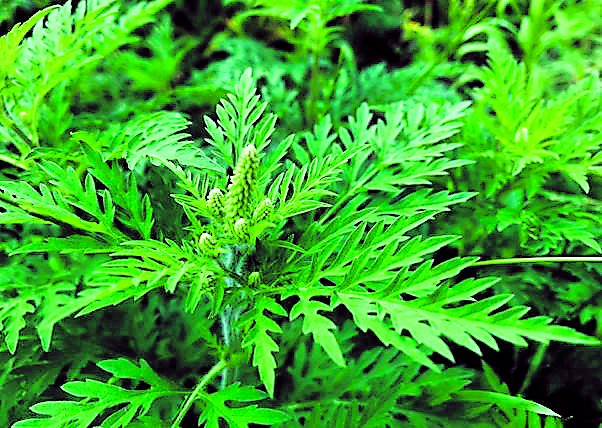
Have you found your sinuses acting up more than usual?
Environmentalist’s fears are growing equally as fast as an alien invasive species of weed known as ragweed and, the North Coast provides an excellent breeding ground for the pollen-producing pest.
Scientists recently discovered the weed, native to the United States of America, in pollen spore traps in Westville for the first time.
Dolphin Coast Conservancy’s Di Jones said Ragweed has since been spotted on the North Coast and she fears it will continue to spread.
The original discovery was made by Dr Dilys Berman, an aerobiologist at University of Cape Town (UCT) and Professor Jonny Peter, who heads up the UCT Lung Institute’s Allergy Unit.
Wits University palynologist, Dr Frank Neumann confirmed that the pollen grains belong to the invasive Ambrosia species.
Although the province’s coastal climate provides a suitable breeding ground for the plant, Dr Berman said the plant will grow just about anywhere.
CO2 emissions were found to contribute to its rapid growth. With global research indicating CO2 emissions being at an all-time high, fears of the plant spreading fast are growing.
Controlled tests in closed environments found the weed able to lengthen flowering seasons as well as the number of flowers it produced.
According to Dr Berman, given the correct conditions, the weed has the ability to spawn millions of pollen spores.
Due to its potency, ragweed poses a serious implication for human health and those previously not affected by pollen allergies, may well develop a sensitivity to ragweed as it proliferates.
“Increasing amounts of fine-powder ragweed in SA could aggravate hay fever symptoms and asthma for the estimated 17 million South Africans who suffer from allergies,” said Dr Berman.
Common hay fever symptoms include red, itchy and watery eyes, a runny, itchy or congested nose and post-nasal drip.
Prof Peter said that because of the world’s changing climate, ragweed was projected to decline in some areas as it may over time no longer be climatically suitable to grow there.
“Either way you look at it, ragweed is on the move. Once it sprouts, it can multiply and grow up to two metres in height in a matter of weeks.
“Weed control boards should add it to their invasive weeds list as soon as possible if they have not done so already and removal thereof should be a priority before it becomes impossible to control.
“Some studies also suggest that ragweed poses a threat to crop health. It drains the soil and oppresses plant growth, so is definitely a weed that should be monitored carefully,” he said.
KwaDukuza municipality’s environmental management unit said it had no knowledge of ragweed, and had received no caution from the provincial environmental management unit of the weed’s invasion.
However, as part of a standing partnership with the KwaZulu-Natal Invasive Alien Species Programme, KwaDukuza municipality conducts awareness drives with schools and ward committees on invasive plants.
“As we speak, KDM has done site inspections for sites to be piloted to remove and make use of invasive alien biomass,” said municipal spokesperson, Sipho Mkhize.
Once removed, the invasive plant biomass is used to create products and in doing so, job opportunities, according to Mkhize.
Download The North Coast Courier mobile app, now available free from the Apple iStore and on Google Play, for IOS and Android phones.

Stay in the loop with The North Coast Courier on Facebook, X, Instagram & YouTube for the latest news.
Mobile users can join our WhatsApp Broadcast Service here, or if you’re on desktop, scan the QR code below.