

Land invasion threatens descendants of legendary hunter and Zulu king’s friend
Dunn, a hunter and businessman, became a great friend of King Cetshwayo, who made him the province's only white chief. In keeping with tradition, such status came with tracts of land, cattle and permission to marry many women.
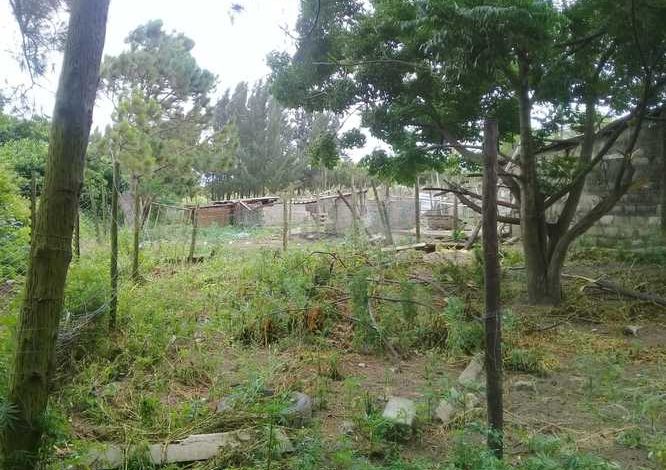
For decades farmers in the Mangete area of the North Coast, near Mandeni, have been embroiled in a controversial land dispute with the neighbouring Macambini community with no end in sight.

On the one side is the Zulu Macambini community, who claim they were unlawfully evicted from Mangete land under apartheid in 1976, and on the other, descendants of the 19th century British settler, John Dunn, who was originally given custodianship of land in Mangete by the Zulu King Cetshwayo in the 1850s.
Dunn, a hunter and businessman, became a great friend of King Cetshwayo, who made him the province’s only white chief. In keeping with tradition, such status came with tracts of land, cattle and permission to marry many women.
Over the years, Dunn married 49 Zulu women and sired a total of 117 children, who have today spawned a clan some 3 500-strong, 500 of whom live at Mangete.
When Dunn died in 1895 he left 4 000 hectares to his children, parcelled into 40 hectare plots.
Sixty-seven children accepted plots in Mangete while others inherited in nearby Emoyeni.
The remaining 1 000 hectares were given to local Zulu families.
It took 84 years for Dunn’s descendants to obtain title deeds to the land, their efforts thwarted by successive white administrations until 1979.
Although a small portion of the land has been sold over the years to independent farmers, most of the area’s landlords are direct descendants of John Dunn, or people who have married into the clan.
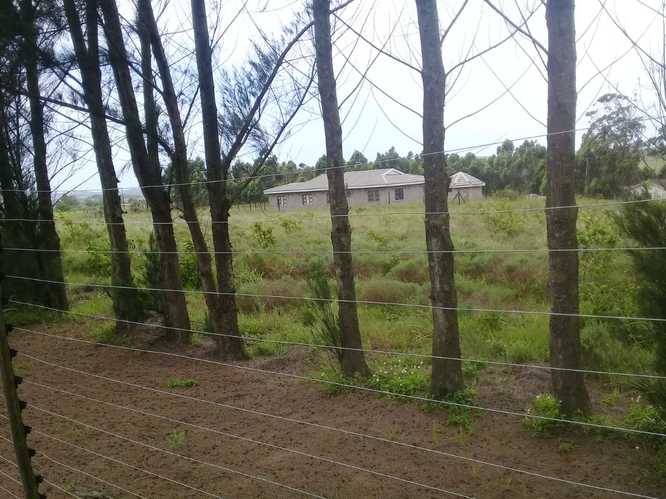
However, in recent years tensions have mounted as scores of Macambini Zulus have moved onto the contested land, erecting homes and planting crops on the sugarcane farms.
According to farmer and descendant Chris Dunn, about 5 000 illegal squatters have moved onto 63 farms in Mangete, erecting huts and planting crops in fields that are not theirs.
Dunn said matters reached a head in 1996 when around 2 000 people from the Macambini clan illegally settled in the area.
“Tensions between the landowners and illegal settlers became extremely hostile and included torching of crops, burning of a community hall and physical attacks on the Dunn community leaders. A formal land claim was initiated in 1996 by the neighbouring chief, Khayelihl Mathaba, who claimed the land belonged to their ancestors.”
Wilson Ndlovu, a spokesman for the chief, said: “We are simply going back to our fathers’ land, which we were forced to vacate by coloureds who call us squatters.”
The clan, frustrated by delays, occupied land in anticipation of a favourable ruling, he told the Courier.
Legislation is very clear that the invasion of land which is subject to a claim is illegal.
However, Dunn said it is impossible to evict anyone who does so.
“At that time the KZN lands commission acknowledged the validity of the 199 families of claimants. The Bhekhamafa trust was formed and 300 hectares of Dunn land was purchased through a willing buy-willing sell negotiation. A further R14 million of state-funds was paid into the Bhekhamafa trust account to be used for the resettlement and development of housing for the claimants.
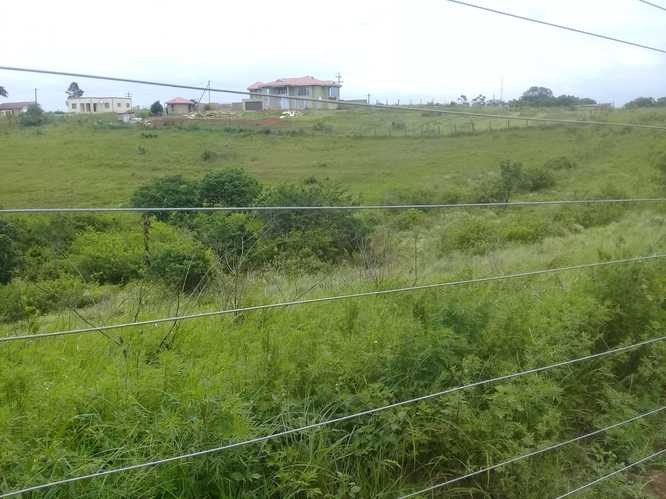
“Yet to date, with all the drawn out proceedings, not a single claimant has been moved off the Dunn’s land nor have any resettled on the 300 hectares purchased for them. The 300 hectares of land purchased for Mathaba and his claimants has grown to over 900 hectares and all this land is under sugar cane. Why, when R14 million has been allocated, have all the families listed, by the commission as successful claimant, not been provided with land and accommodation in the Macambini tribal area?” asked Dunn.
“Many of the farms have been overrun by invaders posing as claimants, some of whom engage in all manner of intimidatory tactics, including setting fire to land they wish to take over. We have been intimidated, threatened with our lives, our crops are constantly burnt and to make matters worse, almost every day we see new homeless people invading our land. In some instances our sugarcane crops have been cleared to make way for illegal structures and buildings. The squatters are claiming they are merely returning to land from which they were forcibly removed under apartheid, yet relatively few of the several thousand people living in these illegal structures have historic ties to the area,” said Dunn.
Dunn said the police have failed to stop the illegal land invasions and their cries for help have fallen on deaf ears – despite taking the matter to the courts and local police.
“The Mtunzini chief magistrate has informed us that his court only deals with violent crimes and not trespassing.
“The municipality has also been contributing to our problem by erecting pit toilets, building a crematorium on the occupied land and even installing electrical connections for the land invaders despite having numerous recorded meetings with them instructing them that the Dunn’s land (reserve 7A) is private property and that all projects must be stopped,” said Dunn.
Illegal building activities continue despite a request to the Land Claims Commission that a moratorium be declared on the erection of any further structures.
On October 9, the Dunns met with Mandeni municipality to discuss the illegal land invasions.
Chairing the meeting was conciliator Dan Mabuyakhulu from the Office of the Premier, In attendance was also the Mandeni DA councillor Kathleen Naido, DA KZN spokesperson on Agriculture and Rural Development and a member of the provincial portfolio committee, Chris Pappas and Dr Peter Munns of the National Peace Commission, who is also spokesperson for the Dunn family.
“It is important to realise that consultation and discussion needs to take place to determine what is right for the aggrieved parties who are the taxpayers and ratepayers and who have a legal right to this land that goes back to 1879,” said Munns.
Dr Munns said the High Court had passed judgement in favour of the Dunn family – and the eviction orders were pending action in favour of the Dunn family members.
“It defies all logic and common sense that those law enforcement officials have not acted on the instructions from the judiciary and a High Court ruling on the basis that these were seen as a civil matter and not one for the police,” said Munns.
Pappas said: “The KZN Legislature Ad Hoc committee on land reform recently held its first sitting. The purpose of the two-day workshop was to begin to unpack the challenges and complexities around land reform in our province, along with the problems facing agrarian transformation. The deeds office revealed that they do not keep records of the gender and race of land ownership in our province. This means that the deeds office actually has no record or mechanism to report on how much progress has been made – or not made – in the transformation of land ownership and usage patterns.”
He said, according to the Office of the Premier, KZN required R5.5 billion to turn failing land reform farms around.
“Considering that the total budget of the Department of Agriculture is around R1.3 billion annually, this is a tall order indeed.”
Mandeni municipality manager Sizwe Khuzwayo said he could not comment as the matter was in court.
Khuzwayo clarified that the land issue fell under the Rural Development and Land Reform department and was being facilitated by the Office of the Premier.
The next meeting between the Dunns and government officials has been postponed to next year.

Stay in the loop with The North Coast Courier on Facebook, X, Instagram & YouTube for the latest news.
Mobile users can join our WhatsApp Broadcast Service here, or if you’re on desktop, scan the QR code below.