
Heavy penalties for drinking and driving come July with National Road Traffic Amendment Act
The zero-tolerance stance means that getting behind the wheel after a single drink could see you arrested.
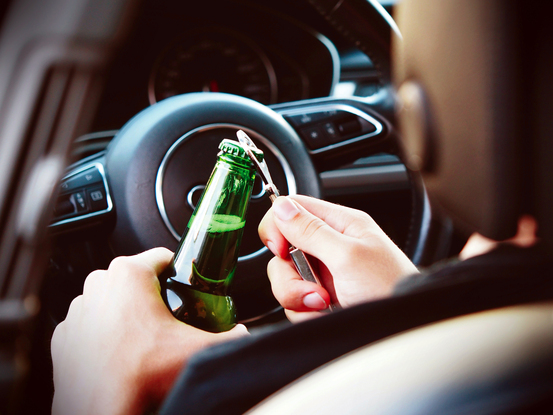
Enjoying a beer with a few mates after a hard day at work – those were the days and be ready to kiss them good-bye come month end.
While it is still legal to drive if your blood-alcohol-level measures below 0.05g per 100ml, having a sip of alcohol could land you in the deep-end of the law when the new National Road Traffic Amendment Act comes into effect.
The zero-tolerance stance means that getting behind the wheel after a single drink could see you arrested.
A charge of driving under the influence of alcohol will mean your arrest and being held in custody until you are able to post bail. You face a minimum fine of R2 000 (maximum of R120 000) or a 2-year prison sentence, or both.
This depends on prior conviction and the circumstances of the arrest, according to the South African Police Service.
If convicted, you face having your driver’s licence suspended or even taken away.
A criminal record would also apply.
The Section 65 amendment to the National Road Traffic Bill was published in October last year and again in January, and received some 6 000 comments during the public participation process.
A great number of civil society groups, legal experts and opposition parties voiced concerns on the potentially harmful impact of the provision.
Concerns include the possibility of false positives from cough medicines, toothpaste and other products containing trace amounts of alcohol; the traffic department’s inability to enforce the rules, the unlikelihood of the act reducing fatalities and the possibility of the act criminalising the innocent.
On the matter of trace alcohol, government maintained that these medications came with warning labels and that motorists should not operate heavy machinery – such as cars – when taking medication, as warning labels often state.
Various amendments were called for however, the transport department was unbending on its decision to introduce the zero-tolerance drunk driving regulation as planned.
There are however exceptions in the law for those who possess a professional driving permit.
Regular licence holders face a zero-tolerance limit while those who hold professional driving permits have seen the limit move from 0.05g per 100ml to a proposed 0.02g per 100ml.
The need for the amendment to the National Road Traffic Act is an attempt to reduce fatal crashes in South Africa, of which drunk driving accounts for 27.1%.
The estimated cost to the country is around R18.2 billion annually because of drunk driving.
While there is no way to speed up the process of eliminating alcohol from your body, this is generally how long certain alcoholic beverages take to be metabolised:
• A small shot of liquor: 1 hour.
• A pint (roughly 473ml) of beer: 2 hours.
• A large glass of wine: 3 hours.
• A few drinks: Several hours.
Alcohol dissipates from the body at a rate of about 0.015g per 100ml, per hour.
This means that one can of beer, a glass of wine or even a normal mixed drink or cocktail are all equally intoxicating and give the same reading on a breathalyser.
It should however be noted that alcohol can be detected in your blood until 6 hours after you’ve stopped drinking, while a breathalyser can detect alcohol for up to 24 hours after you’ve been drinking.
The latest crime statistics released by the Saps indicate that (for the first quarter of the year) driving under the influence had dropped nationally from 19 330 in 2020 to 8 583 in 2021.

Stay in the loop with The North Coast Courier on Facebook, X, Instagram & YouTube for the latest news.
Mobile users can join our WhatsApp Broadcast Service here, or if you’re on desktop, scan the QR code below.