

What do those number on your car tyre mean?
Fitting the wrong type of tyre to your car could spell the difference between life and death.
Don’t you feel like you sometimes need to have a mechanic’s degree in order to understand what your car needs?
Well, tyres just so happen to be one of the things people don’t know much about all.
And while some might know what those pesky numbers of the side of a tyre do mean, not many people do.
To keep things as simple as possible, Tyre Track Ballito’s Shane Govender is here to break things down for you.
The marking on your tyre can be broken down into 5 specific categories, from A to E:
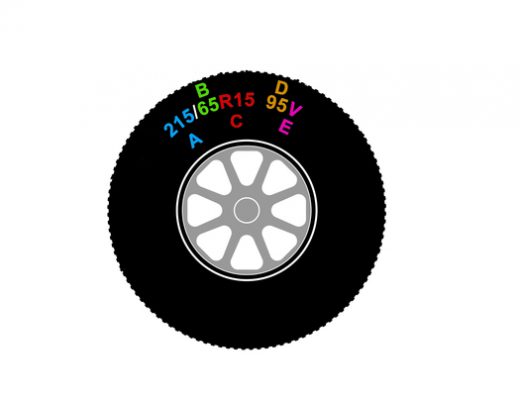
First up, A:
This refers to the width of the tyre from sidewall to sidewall, in millimetres – in this case, 215mm.
It should be noted that the tread width is slightly small than the actual tyre width.
Knowing the width matters most when upgrading tyre size.
Different manufacturers have different overall widths, even when the tyre size is the same.
Now B, the profile of a tyre:
Expressed as a percentage, this is the height of a tyre – in this case, 65% as tall as it is wide.
Tyre profile is also referred to as aspect ratio.
“The profile on the tyre decreases, so too does the tyre’s firmness – smaller profile tyres are called ‘low profile’ and are in most cases reserved for performance tires.”
C may be for cookie, but it’s also an indication of your rim size:
The tyre’s diameter, which matches the outer diameter of the car’s wheels.
This is measured in inches, in this case 15″.
It is taken from the wheel flange where the tyre is seated, to the same point on the opposite side.
The ‘R’ prior to the figure refers to the tyre’s build type and means ‘radial’.
If you’re a tyre dummy, D is for you:
This references the load rating of the tyre, in this case 95.
It is associated with the maximum load that tyre can carry at maximum speed.
A 95 rating would amount to 690kg.
It is best to get advice from a tyre dealer, especially if you intend to tow a trailer or caravan as you may require tyres with a high load rating.
Last but not least, E:
A reference to ‘speed rating’, all passenger car tyres have a speed rating expressed as a letter. In this case, V.
“The letter V means that the tyres are capable of handling speeds up to 240km/h.
The higher the speed, the hotter your tyres and this rating highlights the tyre’s ability to dispel heat and avoid blowout.”
Higher ratings mean better heat-handling. The highest rating is Y, with a maximum speed of 300km/h.
However, it is possible that high performance sports cars need specially manufactured tyres, which a manufacturer would advise on.

Stay in the loop with The North Coast Courier on Facebook, X, Instagram & YouTube for the latest news.
Mobile users can join our WhatsApp Broadcast Service here, or if you’re on desktop, scan the QR code below.