

#Terrariums: The accidental discovery and what you need to get started
Today, terrariums are a common feature in some homes and this is what you would need to know to get started on making your own!
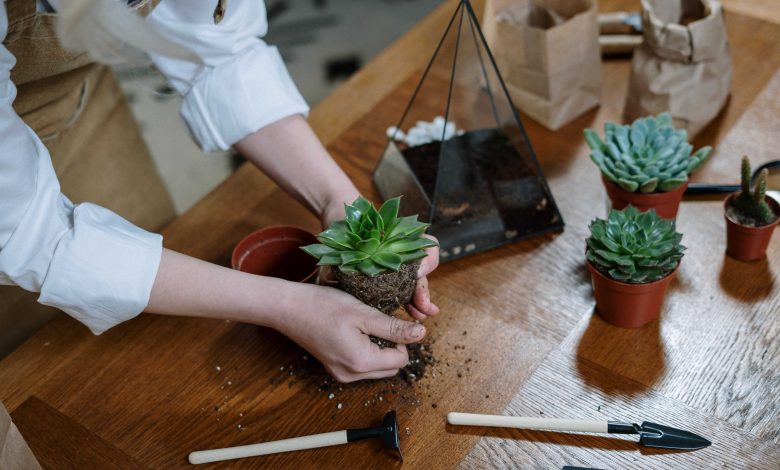
 Being curiously creative when it comes to ensuring that stubborn fern survives in your home is tiring work, so if you’re looking for wonderful ways to spruce up the greenery in your home look no further than terrariums.
Ferns, while not boring are often overlooked for the endless creative opportunities they offer – one would often see a lonesome fern hanging around in someone’s home, often seemingly requiring some miracle cure to revive it.
To anyone unfamiliar with the proper care of plants, a fern can prove a sticky mess to keep happy. But what if you could make sure that that fern becomes self-sustainable?
A terrarium is a micro eco-system which generally requires very little care and is mostly self-sustaining.
They often include plant life such as ferns, fly traps, dwarf palms, airplants, succulents to peperomia and have been proven to boost mental health by reducing anxiety.
Origin of the terrarium
Terrariums believe it or not, were an accidental discovery by English botanist, Nathaniel Bagshaw Ward.
Interested in the study of insects, Ward in 1842 was observing as much when he accidentally left one of his insect jars unattended – during the course of time, a fern spore grew and eventually transformed the jar into a green-rich environment.
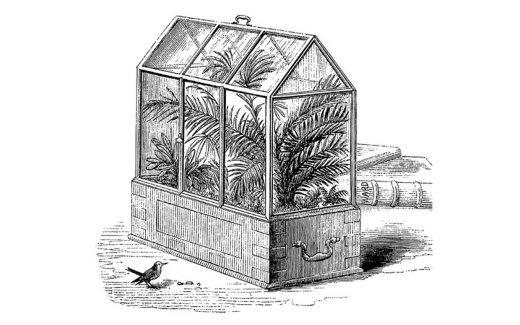
Terrariums were originally called Wardian cases – named after Ward who at the time was working in one of the most polluted parts of the world, Whitechapel, London.
A medical doctor by profession, Ward became obsessed with ferns which he tried to grow however, coal ash from factories hampered his efforts until his jar discovery.
When the proverbial lightbulb moment came – Ward realised that glass encases once sealed could allow for humidity to be controlled, also ensuring air quality – his discovery of terrariums further became an indispensable creation to explorers who would send living plants back to Britain from across the planet.
Where to start…
Today, terrariums are a common feature in some homes and this is what you would need to know to get started on making your own!
• A glass jar, both clear and with its lid – even lightbulbs have been successfully used as terrariums, so don’t limit your creativity.
• While the previously mentioned plants work well, you may even include seeds for herbs and vegetables.
• Potting soil, sphagnum and/or peat moss.
• Pebbles or stones for drainage.
• Activated charcoal.
• Tools would include a spoon, fork or even chop sticks.
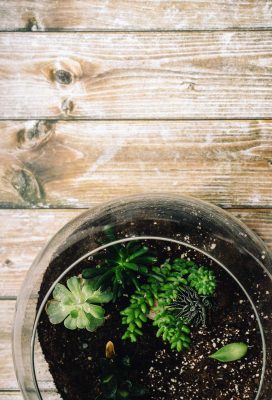
But, how do you get started?
Making a terrarium is surprisingly easy, and can even be a fun activity to do with your children, or siblings.
• First, select your plants as well as the number you would like to feature in your terrarium. Have an odd number to keep it realistic, and include a variety of colours, heights but remember to include plants which have similar needs in terms of sun and water.
• You will need to have a suitable container – you don’t have to use a jar – which can be either sealed-off or open. Ensure that your plants will not touch the sides of the container.
• Before starting, make sure your plants will actually fit, and also not exceed the height of the container.
• Now that you are ready, add about a one-inch layer of small rocks and pebbles for drainage – this will ensure that excess water does not damage the plant roots. Depending on the container, you may thicken the layer.
• Next up, moss. This assists in preventing soil from falling between the cracks of small rocks or pebbles.
• Now add half an inch of activated charcoal to allow water purification.
• Go ahead and add your potting soil to the next layer – you could use a small fork or spoon, and create small holes to prepare for planting.
• Before planting, ensure that you have teased the roots of the plant and then go ahead with planting. Cover the roots gently and try and make sure that you leave no air pockets between the roots and soil.
• You may add some more moss, pebbles or small stones – be creative and have fun, and feel free to include some decorative elements.
Now that we are done, be sure to water your terrarium and move it to a suitable location.
Watering needs will differ depending on the type of plants and size of terrarium. Ask at your local nursery.
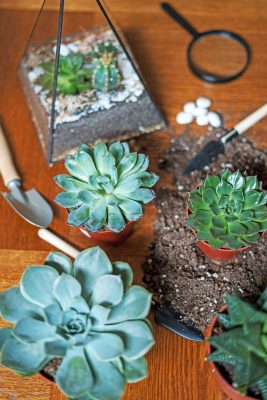
Consider, before you leap
Whether you’re a terrarium virgin or not, you may first like to contemplate not only the purpose of your terrarium but the theme, too.
Themes for terrariums range from tropical, woodland to succulent.
Tropical terrariums include crotons and bromeliads, which also make for splashy statements – adding frothy ferns for a lush, layered look adds to the aesthetic value.
Keep in mind however, that most tropical plants prefer partial shade so, it would be best avoid sunny areas.
A great place to visit for such plants to include in your terrarium would be the household plant section of your local nursery.
Mini ferns and a single orchid would be the perfect option to build a woodland landscape – these would also benefit more from partial shade.
Succulent-themed terrariums are made up of round-leafed sedum, echeveria and rock roses.
You may of course use whichever succulents you like.
This is the minimalist’s option, as these plants require little water and full sun.
Terrariums and mental health
This may surprise you, but terrariums are exceptionally good for mental health!
Scientifically-proven, terrariums and plants alike play a vital role for the improvement of mental health, from relieving anxiety right through to even encouraging productivity in the work place.
While it is common knowledge today that stress and anxiety go hand-in-hand, we take a closer look at some of the mental benefits of terrariums.
Think more positively
The colour green has been shown to create environments which promote comfort and, when it comes to creating your own terrarium from scratch, such colours would be great to include – don’t feel threatened by including other bright colours such as yellow, which promotes optimism, while blue promotes calm.
Calm and collected
To better be able to combat anxiety and stress, our bodies require fresh air.
Plants and terrariums of course do this, while terrariums being a self-sustaining eco-system which generates fresh, breathable air daily.
This has been proven to aid people in clearing their minds and restore a sense of inner calm.
Placed either at home or the office, this sense of greenery aids in instilling tranquility.
The combined effect assists in you being better able to manage both physical and mental health.
Apply your mind
Need to boost your concentration and attention?
Look no further than terrariums which have been shown to do just that, while stimulating the parts of your brain which pushes you to be more productive.
A sense of productivity has also been shown to see people withdraw from negative-thinking and boosting the desire to achieve more.

Stay in the loop with The North Coast Courier on Facebook, X, Instagram & YouTube for the latest news.
Mobile users can join our WhatsApp Broadcast Service here, or if you’re on desktop, scan the QR code below.