

Step lightly among North Coast slithering snakes
Nick Evans of KwaZulu-Natal Amphibian and Reptile Conservation, has provided the Courier with a useful guide to help you stay informed about non-poisonous snakes versus those nasties to be avoided.

Tis the season to be jolly, and also to watch your step as the hot weather draws out some of our scaly, slithery friends.
The North Coast has many snakes, many harmless and a few that can be lethal.
Nick Evans of KwaZulu-Natal Amphibian and Reptile Conservation, has provided the Courier with a useful guide to help you stay informed about non-poisonous snakes versus those nasties to be avoided.
One of the most common snakes in the area, the spotted bush snake (also known as the variegated bush snake) is a non-venomous and easily identified by the distinctive black spots on its green skin.
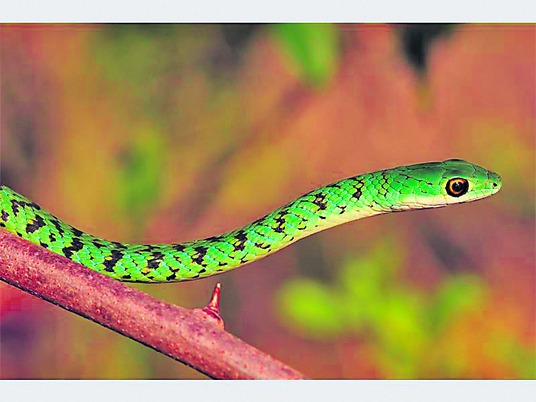
Evans said this snake prefers geckos on its menu and is obviously found wherever geckos are.
Another common local snake is the Eastern Natal green snake, also non-venomous.

One should not mistake this snake for the bush snake thanks to it lacking spots.
While the herald snake is harmless, it still packs a powerful bite that can cause a headache in humans.
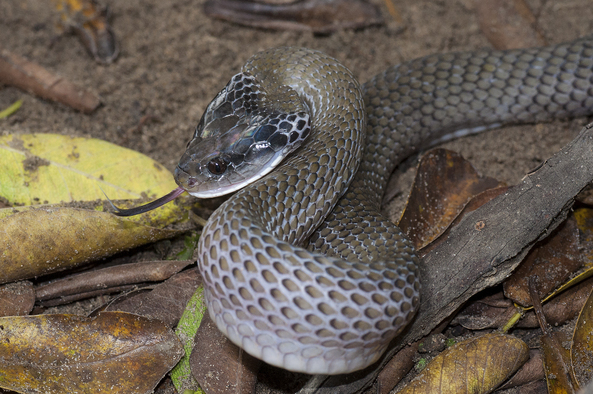
They prefer frogs and lizards, much like the Eastern Natal green snake.
Three non-venomous snake species – the brown house snake, brown water snake and worm snake – enjoy feasting on rats, lizards, frogs, fish and termites.
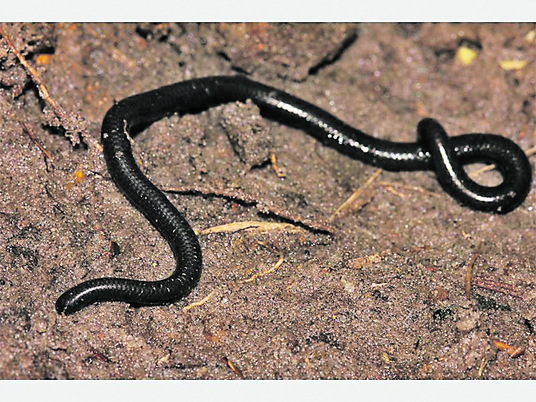
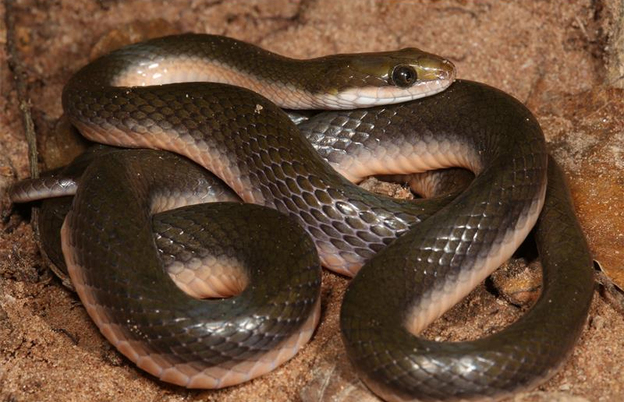
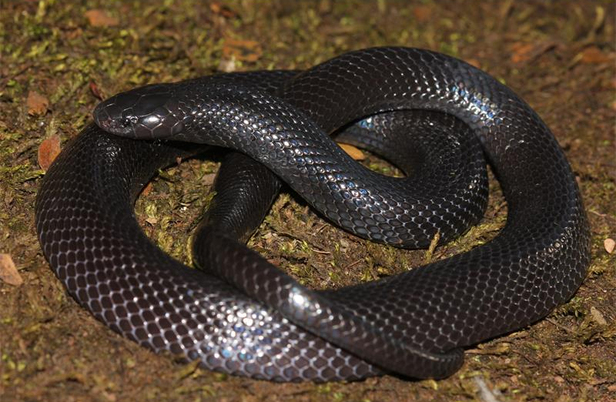
Mildly venomous species are the short snouted grass snake and Natal black snake, which both enjoy rodents as snacks.
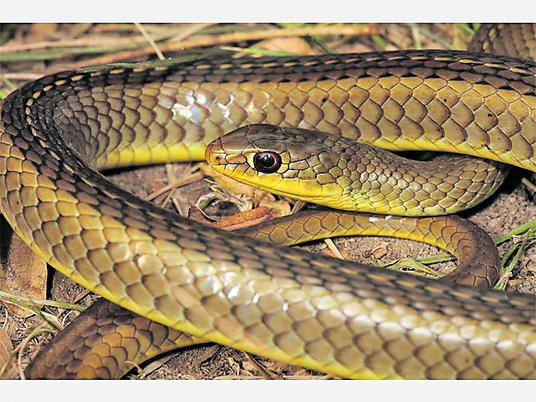
But beware, an agile and extremely fast mover is the difficult to catch grass snake.
The Natal black snake is also commonly mistaken for a black mamba despite being much darker and shinier in appearance.
It is also black all over, not lighter on the belly.
Venomous snakes to keep an eye out for include the Rhombic night adder which, despite its name, is more active during the day.
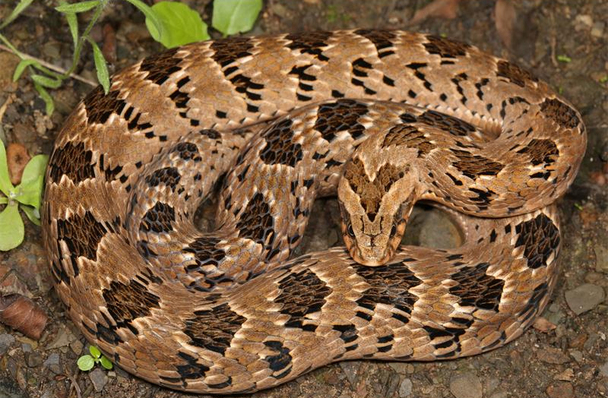
Night adders enjoy toads over frogs. Its venom is cytotoxic and will cause necrosis and pain.
Another species to steer clear of is the stiletto snake, also called the burrowing adder.
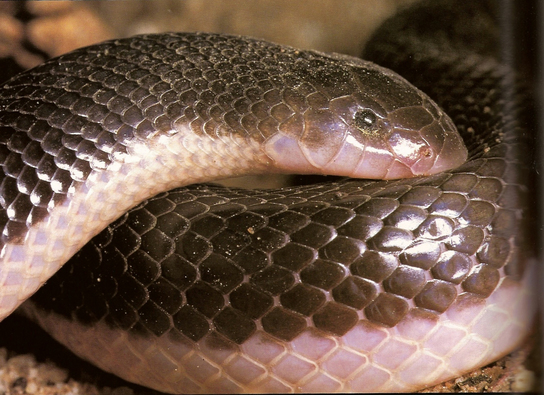
After the Mozambique spitting cobra and puff adder, the stiletto snake accounts for the majority of serious snakebites in South Africa.
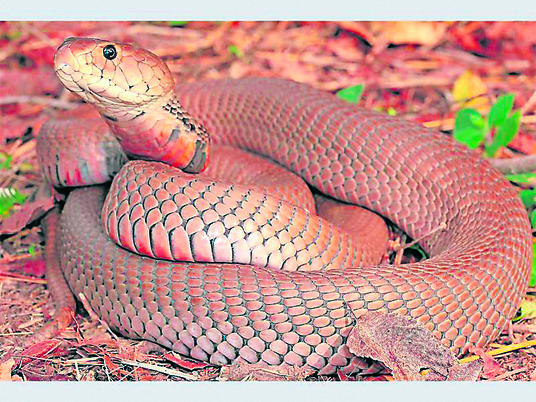
It spends most of its life underground but often emerges on hot humid nights and may be stepped on.
With large rotating fangs it cannot be handled safely and also cannot be held behind the head – it merely twists its head sideways and will get a fang to penetrate.
It is usually a blackish brown colour and is easily confused for a variety of harmless snakes.
This snake averages 30cm but can exceed 80cm in length. Its venom is potently cytotoxic causing severe pain, swelling, blistering and necrosis.
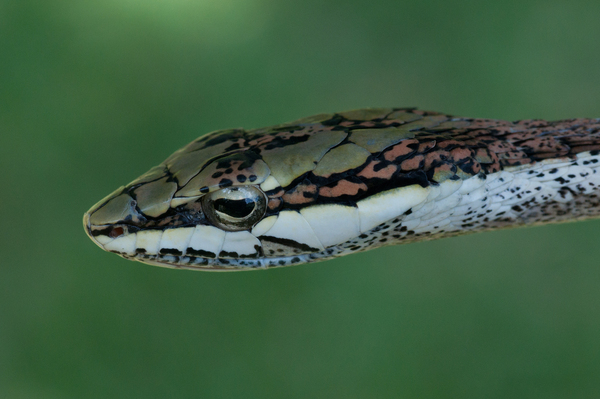
Snakes which should be avoided at all costs include the black and green mambas, the Mozambique spitting cobra, vine snake and boomslang.
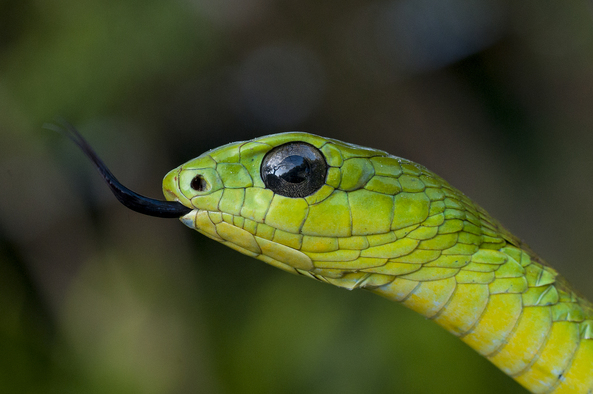
Just this December alone, Evans said he had encountered 13 black mambas.
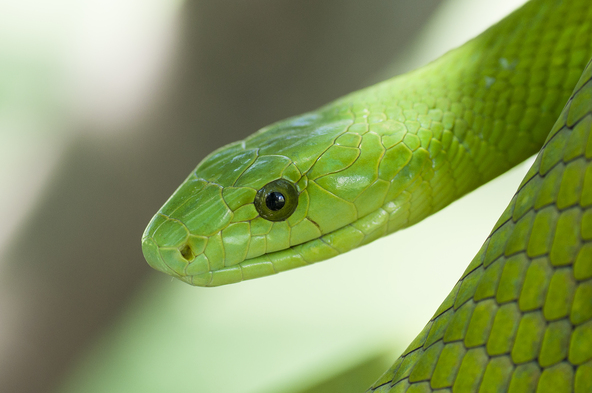
These five highly venomous species commonly hunt rodents, dassies, birds, toads and lizards.
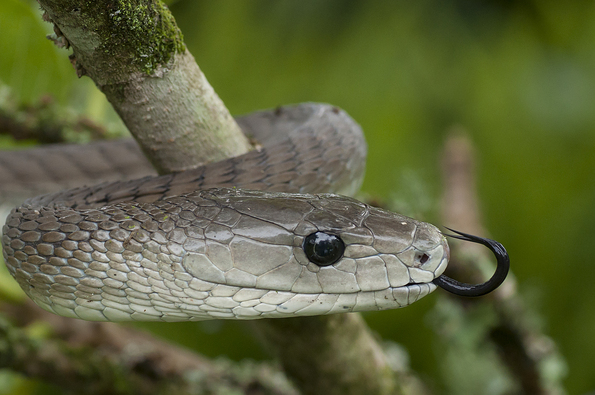
Interestingly, the Mozambique spitting cobra also eats other snakes.
The black mamba is a large, strong snake and is in fact grey to brown in colour.
Only the inside of its mouth is an inky black.
The green mamba is bright green on top with a lighter green belly.
The boomslang is a lighter green, sometimes with black markings, and is distinguished by its very large eyes.
Juveniles, Evans said, are brownish with a yellow throat and bright green eyes, almost emerald.
“Instead of killing a snake, rather step away and leave it be. In most cases, it will leave on its own but if it doesn’t give a snake catcher a call,” Evans said, noting that one should still keep an eye on the snake while calling a snake catcher.
Should you need a snake removed, contact Evans at 072 809 5806 or Neville Wolmarans at Ndlondlo Reptile Park at 079 453 3557.
For breaking news follow The North Coast Courier on Facebook, Twitter, Instagram and YouTube.
Join our Telegram Broadcast Service at: https://t.me/joinchat/yJULuN8NaCs5OGM0
Join our WhatsApp Broadcast Service: Simply add 082 792 9405 (North Coast Courier) as a contact to your phone, and WhatsApp your name and surname to the same number to be added.
Stay in the loop with The North Coast Courier on Facebook, X, Instagram & YouTube for the latest news.
Mobile users can join our WhatsApp Broadcast Service here, or if you’re on desktop, scan the QR code below.