

KZN’s citizen scientists shine: Sibaya Coastal Forest Reserve boosts eThekwini’s ranking in City Nature Challenge
Cape Town leads African charge in City Nature Challenge.
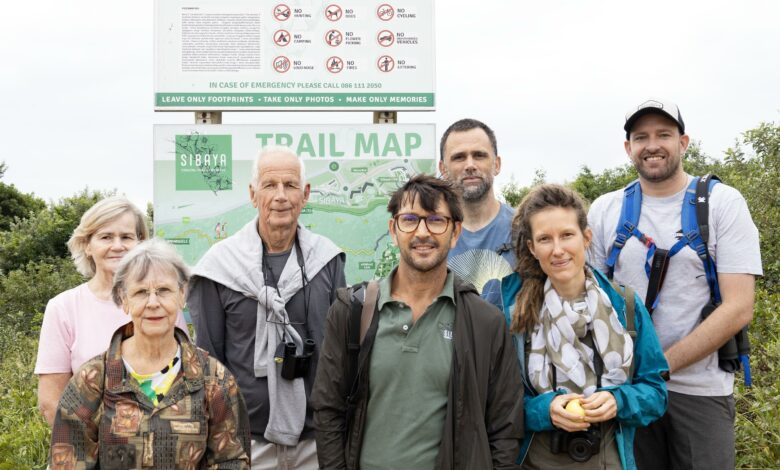
The Sibaya Coastal Forest Reserve contingent of citizen scientists contributed to eThekwini’s second place overall in South Africa in the recent City Nature Challenge (CNC).
As a province, KZN (including the South Coast, eThekwini, KZN Midlands, the Dolphin Coast and Zululand) claimed the silver medal position in Africa across all four categories, including numbers of people who participated, observations made, species recorded and identifiers.
The province saw just over 23 000 observations made of 3 500 species.
Cape Town topped the African leaderboard across the board and impressed globally too.
On the global leaderboard, the Mother City’s effort saw them placed 10th for the number of observations made and eighth for the number of species recorded.
Bolivian city La Paz walked away with global honours in all categories.
The four-day global event, held from April 26 to 29, showcased biodiversity in nearly 500 cities. Globally, 83 528 participants made a total of 2 436 844 observations of more than 65 682 species.
“We have much to celebrate as the southern African community. Thirty-six cities representing nine African countries participated, compared to 31 cities representing six African countries in last year’s challenge. A total of 136 234 observations were made by 2 980 observers,” said the South African Biodiversity Institute’s (SANBI) Suvana Mohan.
She said thus far in Africa 10 093 species have been identified by 1 465 identifiers. This number is increasing as more identifications are made with time.
Mohan said the number of casual observations decreased from 12.5% last year to 9.1% this year, implying participants are focusing on wild species as opposed to captive or cultivated species.
She added that the South African Red List Plants and Animals Project produced an impressive 473 out of a global 3 378 threatened species observations.
Dr Allister Starke, who lead the Sibaya group, explained the masses of collected biodiversity data was dropped into a bigger database called the SANBI-Global Biodiversity Information Facility (SANBI-GBIF) that all other bird and nature observation applications fed into.
This was not only useful to the public as a visual learning library, but also assisted scientists, environmental managers and conservationists, thus ploughing back into global conservation efforts.
Stay in the loop with The North Coast Courier on Facebook, X, Instagram & YouTube for the latest news.
Mobile users can join our WhatsApp Broadcast Service here or if you’re on desktop, scan the QR code below.

Stay in the loop with The North Coast Courier on Facebook, X, Instagram & YouTube for the latest news.
Mobile users can join our WhatsApp Broadcast Service here, or if you’re on desktop, scan the QR code below.