
Inquest into Chief Albert Luthuli’s death reopened after 57 years
Speaking on behalf of the Luthuli family, Sandile Luthuli said they had never accepted the original findings of the 1967 inquest, which concluded that there was no criminal involvement in the chief's death.
The family of Chief Albert Luthuli has welcomed the reopening of the inquest into his death, expressing hope that long-held suspicions of foul play will finally be addressed.
The inquest into the July 1967 death of the Nobel Peace Prize laureate got underway at the Pietermaritzburg High Court on Monday after being announced by Advocate Elaine Harrison, director of public prosecutions in KwaZulu-Natal, last week. The death of anti-apartheid lawyer Mlungisi Griffiths Mxenge will also be investigated.
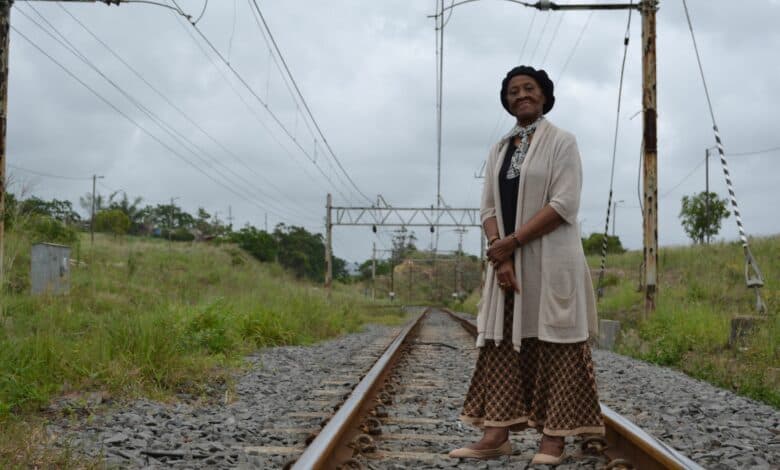
Speaking on behalf of the Luthuli family, Sandile Luthuli said they had never accepted the original findings of the 1967 inquest, which concluded that the chief had been struck by a train and that there was no criminal involvement in his death.
“Even at this early stage in the investigation, a pattern of a cover-up and attempts to block justice is already becoming clear,” he said.
He added that the family was especially hopeful for Chief Luthuli’s surviving daughters, Dr Albertina Luthuli and Ambassador Thandeka Gcabashe, who may now see justice served in their lifetime.
In a 2017 interview with the Courier, Albertinah said she had long believed her father had been assassinated because he was “a thorn in the apartheid government’s side.”
“The Special Branch used to visit our home frequently with the objective of harassing our family and humiliating that great man,” she said.
“They would enter the house in the middle of the night, march us all to the lounge, and ransack the place. Us children would sometimes react because we could not take it, but my father would calm us down. He was a man who responded to rudeness with kindness.”
She said the apartheid regime was particularly infuriated by her father’s growing international recognition, which included being awarded the Nobel Peace Prize in 1960, and a 1966 visit from New York Senator Robert F. Kennedy.
She added that prominent leaders like Nelson Mandela had to meet secretly with Chief Luthuli – often in the surrounding sugar cane fields – to avoid state surveillance.
Born in 1898, Chief Albert Luthuli was a schoolteacher and Christian leader who rose to prominence in 1937 when he was appointed Chief of the Zulu tribe in Groutville. He joined the African National Congress (ANC) in 1944 and went on to serve as its president-general, working alongside Nelson Mandela and others in organising major anti-apartheid actions, including the 1952 Defiance Campaign.
A vocal opponent of apartheid, Luthuli was stripped of his chieftaincy and placed under severe restrictions by the state. Confined to Groutville, he remained a symbol of resistance both at home and abroad.
The reopening of the inquest into his death is viewed by many as a critical step toward justice and a historical reckoning.
Stay in the loop with The North Coast Courier on Facebook, X, Instagram & YouTube for the latest news.
Mobile users can join our WhatsApp Broadcast Service here or if you’re on desktop, scan the QR code below.

Stay in the loop with The North Coast Courier on Facebook, X, Instagram & YouTube for the latest news.
Mobile users can join our WhatsApp Broadcast Service here, or if you’re on desktop, scan the QR code below.