

Stuck with a niggling muscle sprain? Dry needling can offer relief
Dry needling can relax muscles, improve blood flow and target chronic pain conditions.
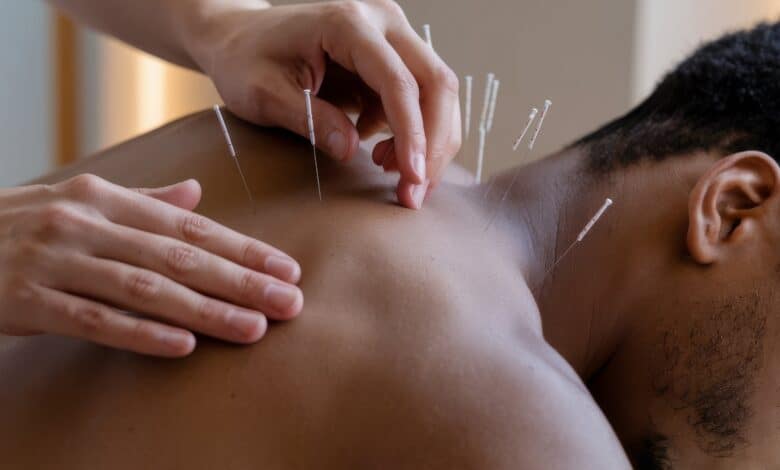
Let’s be honest – hearing “dry needling” for the first time often raises eyebrows. Needles? In muscles? On purpose? Yes – and it’s more effective (and less scary) than it sounds.
What is dry needling?
Dry needling is a modern, evidence-based treatment used by physiotherapists and chiropractors to deal with muscle tension, pain and dysfunction. We use ultra-fine, sterile needles (no meds involved – that’s the “dry” part) to target trigger points – those annoying knots in your muscles that make you wince when pressed and sometimes send pain radiating to other parts of your body.
Dry needling is not acupuncture. Acupuncture is based on traditional Chinese medicine and energy meridians. Dry needling is rooted in anatomy, muscle function and physiology. Think of it as acupuncture’s nerdy, science-loving cousin.
How does it work?
Inserting a needle into a tense muscle triggers several effects:
• Local twitch response: The muscle spasms briefly, then relaxes like it’s just let out a deep sigh.
• Improved blood flow: The needle causes a micro-injury, which boosts blood flow and healing.
• Pain recalibration: It helps “reboot” the nervous system, easing that persistent “this hurts” signal from the brain.
What does it feel like?
Most people feel a light pinch when the needle goes in. If it hits a trigger point, you might feel a twitch or deep ache – but it’s short-lived. Many patients describe it as “odd but satisfying” and leave feeling looser and more mobile. Mild soreness may follow for a day or two, similar to post-exercise muscle fatigue.
Who can benefit?
Dry needling is great for:
• Muscle pain and tightness
• Neck and shoulder tension (hello, desk job)
• Headaches and jaw pain
• Sports injuries
• Sciatica and nerve-related pain
• Chronic pain conditions
• Even pelvic pain (yes, we needle those deep, hidden muscles too)
If your muscles are stiff, overworked or throwing tantrums – dry needling might help them calm down and get back to work.
Why do physios love it?
Because it works – often quickly. It helps release tight muscles, reduce pain and restore movement.
It has both a local effect as well as an effect on the central nervous system.
You walk in with a rock-hard upper trap or a glute that’s been on strike, and after a few tiny twitches – boom – it softens and releases and suddenly moving doesn’t feel like dragging around a concrete block.
While not a magic cure, it’s a powerful tool in fast-tracking recovery and getting you moving again.
So next time your physio says, “Shall we needle that?” – consider saying yes.

Salt Rock resident Tarryn Graham has a BSc in physiotherapy from Stellenbosch University, and has a special interest and further training in women’s health physiotherapy and sexual health.
She has 14 years’ experience in women’s health and pelvic floor physiotherapy.
Stay in the loop with The North Coast Courier on Facebook, X, Instagram & YouTube for the latest news.
Mobile users can join our WhatsApp Broadcast Service here or if you’re on desktop, scan the QR code below.

Stay in the loop with The North Coast Courier on Facebook, X, Instagram & YouTube for the latest news.
Mobile users can join our WhatsApp Broadcast Service here, or if you’re on desktop, scan the QR code below.