

Environmental groups call for shark net alternatives in KZN to save marine life
The KZN Sharks Board says shark nets remain the only proven safety solution in local sea conditions.
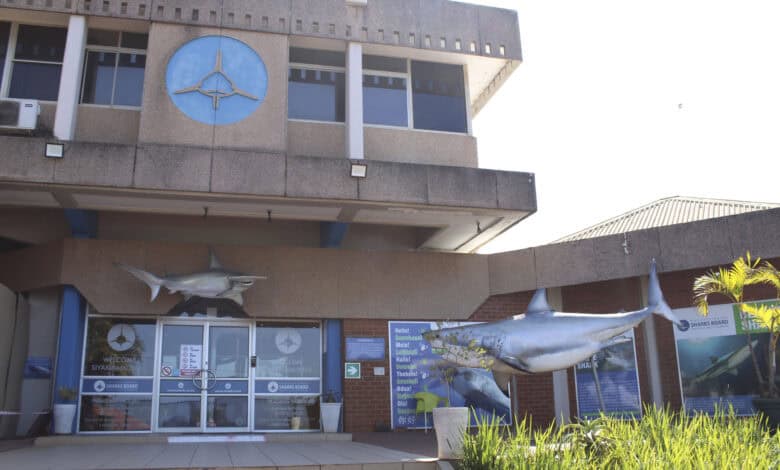
Outrage is growing over KZN’s use of shark nets, as a coalition of over 40 organisations calls for urgent reform to end decades of what they believe to be indiscriminate marine animal deaths.
The group, which includes marine biologists, ecotourism operators and filmmakers, says shark nets and drumlines are outdated and harmful to endangered species.
They are calling on the Department of Forestry, Fisheries and the Environment (DFFE) to establish an independent scientific panel to oversee non-lethal shark safety trials at five KZN beaches.
“The KZN culling devices don’t just kill sharks, they remove whales, dolphins and endangered species from our oceans,” said Kim McLean of SharkLady Adventures.
“We have proven, modern solutions that protect both swimmers and marine life.”
The KwaZulu-Natal Sharks Board (KZNSB), which has managed shark safety since the 1950s, says its gear remains the only reliable way to prevent fatal shark attacks in KZN’s murky, high-energy surf.
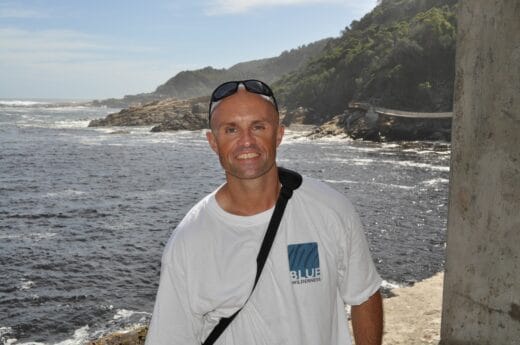
Professor Matt Dicken, Head of Research at the Sharks Board, defended the use of nets and drumlines.
“Our primary mandate is to prevent shark attacks – this is about tourism revenue, job creation and economics,” said Dicken.
“If there was a silver bullet to protect lives and the economy without killing a single animal, we’d use it.”
ALSO READ: KZN shark net replacement claims identified as hoax | North Coast Courier
But critics say this argument is outdated. De Wet du Toit, director of The Last Shark documentary, said scientific research shows the local white shark population is critically low – estimated at 438 in 2016, with some studies suggesting as few as 280 remain.
“In some years, the Sharks Board caught up to 35 white sharks – nearly 10% of the entire population,” said du Toit.
“They reproduce slowly. Some scientists say it’s already too late.”

Du Toit said non-lethal technologies, such as the SharkSafe Barrier – a kelp-mimicking structure embedded with magnets – have proven effective elsewhere.
Dicken argued that these emerging technologies, such as magnetic and electric deterrents, are ineffective against white sharks and not suited to KZN’s coastal conditions.
Dr Sara Andreotti, COO of SharkSafe Barrier, disagrees. She said the SharkSafe Barrier performs best where swell, surge and currents are within engineering limits and noted that peer-reviewed studies show strong deterrence. During trials none of the 80+ white sharks and 40+ bull sharks swam through the barrier.
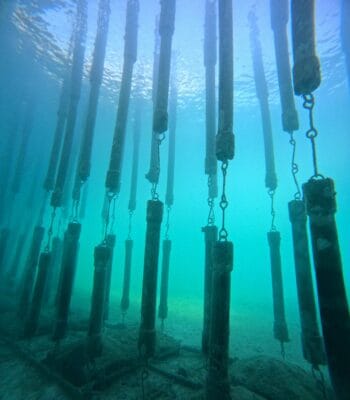
“We used to be limited to rocky seafloor, but in the last four years we successfully developed moving-sand anchorage systems,” said Andreotti.
“Our coastal engineers are confident that we can successfully install SharkSafe Barrier at KZN beaches.”
Dicken disputed this, saying: “For us to trial a device, there has to be a realistic chance of success. Otherwise, it is categorised as fruitless and wasteful expenditure.”
He added that net use has already been reduced from 44km to 7.5km in winter and 12.5km in summer. But du Toit said the risk to marine life remains high.
ALSO READ: Marine experts present shark net alternatives at uShaka exhibition
“Up to 35% of sharks are caught on the same side of the nets as the swimmers. These are not barriers. they are baited hooks and gillnets.”
The coalition is not calling for an immediate shutdown, but a science-led transition backed by political will.
“This isn’t emotional,” said du Toit. “It’s a sustainability issue backed by 70 years of data.”
A petition supporting the campaign has already attracted more than 5 400 signatures at change.org/KZNSBNetsOutNow.
Stay in the loop with The North Coast Courier on Facebook, X, Instagram & YouTube for the latest news.
Mobile users can join our WhatsApp Broadcast Service here, or if you’re on desktop, scan the QR code below.

Stay in the loop with The North Coast Courier on Facebook, X, Instagram & YouTube for the latest news.
Mobile users can join our WhatsApp Broadcast Service here, or if you’re on desktop, scan the QR code below.