

What you say today could become your child’s inner voice tomorrow
The words children hear consistently - especially from the adults they trust most - become the foundation of their inner voice.

The words adults use every day shape far more than behaviour, they become the voice children carry with them for life.
“You’re so lazy.” “You’re so sensitive.” “You’re so clever.” “Stop crying. You’re fine.”
At first glance, these may seem like ordinary comments made in the rush of everyday life. But to a child’s developing brain, they are rarely just words. Over time, they can become beliefs.
As parents and educators, we often underestimate the power of everyday language. Our words don’t simply describe children, they help shape the story they begin to believe about themselves.
Research shows the brain is remarkably adaptable. Through a process known as neuroplasticity, repeated experiences strengthen neural pathways. Simply put, the words children hear consistently – especially from the adults they trust most – become the foundation of their inner voice.
Think back to your own childhood. Can you still remember something a parent, teacher or coach said that has stayed with you? Perhaps it filled you with confidence. Or perhaps it became a quiet belief you’ve spent years trying to overcome.
Our words often outlive the moment in which they are spoken.
Psychologist Carol Dweck’s research found that children praised for their effort, perseverance and strategies are more likely to embrace challenges and recover from setbacks than those praised only for fixed traits such as intelligence or talent. Instead of saying, “You’re so clever,” try, “I noticed how hard you worked on that.” It teaches children that growth comes through effort, not labels.
One of my favourite coaching principles is simple: Identity is stronger than behaviour.
There is a profound difference between saying, “You’re rude,” and, “That wasn’t a respectful choice.”
Or between, “You’re lazy,” and, “You’re finding it difficult to get started today.”
One labels the child. The other addresses the behaviour.
Children should never become the behaviour they are still learning to manage.
The same applies to emotions. When a child is overwhelmed, it’s easy to say, “Stop crying. You’re fine.”
Although intended to reassure, the child may instead hear, “My feelings aren’t welcome.”
A better response might be: “I can see you’re really upset. I’m here with you. Let’s take a deep breath together, then we’ll work through it.” We acknowledge the emotion, strengthen the connection and help the child regulate their feelings.
Educator Charlotte Mason wrote, “Children are born persons.” It’s a reminder that every child deserves to be seen first as a person of inherent worth, not a problem to fix or a performance to measure.
So how can we be more intentional with our words?
Pause before using a label. Describe the behaviour rather than defining the child. Notice and name positive choices. Add one small but powerful word – yet. “I can’t do this… yet.” That single word keeps hope alive.
Every child is quietly asking, “Who am I?”
As parents and teachers, our words help answer that question every day.
May we choose words that help every child feel deeply known, challenged with purpose, and inspired for life.
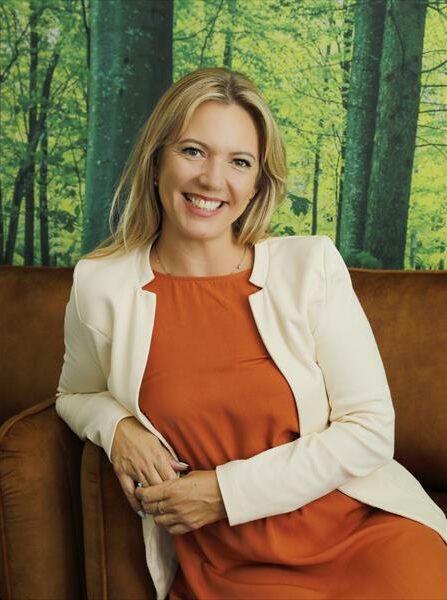
May Coomer is an NLP life and brain coach working with children and families on emotional regulation, confidence, and resilience. She is based at Eden Village in Foxhill, Salt Rock.
Contact: 072 237 1821
Stay in the loop with The North Coast Courier on Facebook, X, Instagram & YouTube for the latest news.
Mobile users can join our WhatsApp Broadcast Service here, or if you’re on desktop, scan the QR code below.