
Two Bits: Ballito’s “six lane racetrack”
"The entrance to Ballito is about as appealing as Umbilo." - Bruce Stephenson
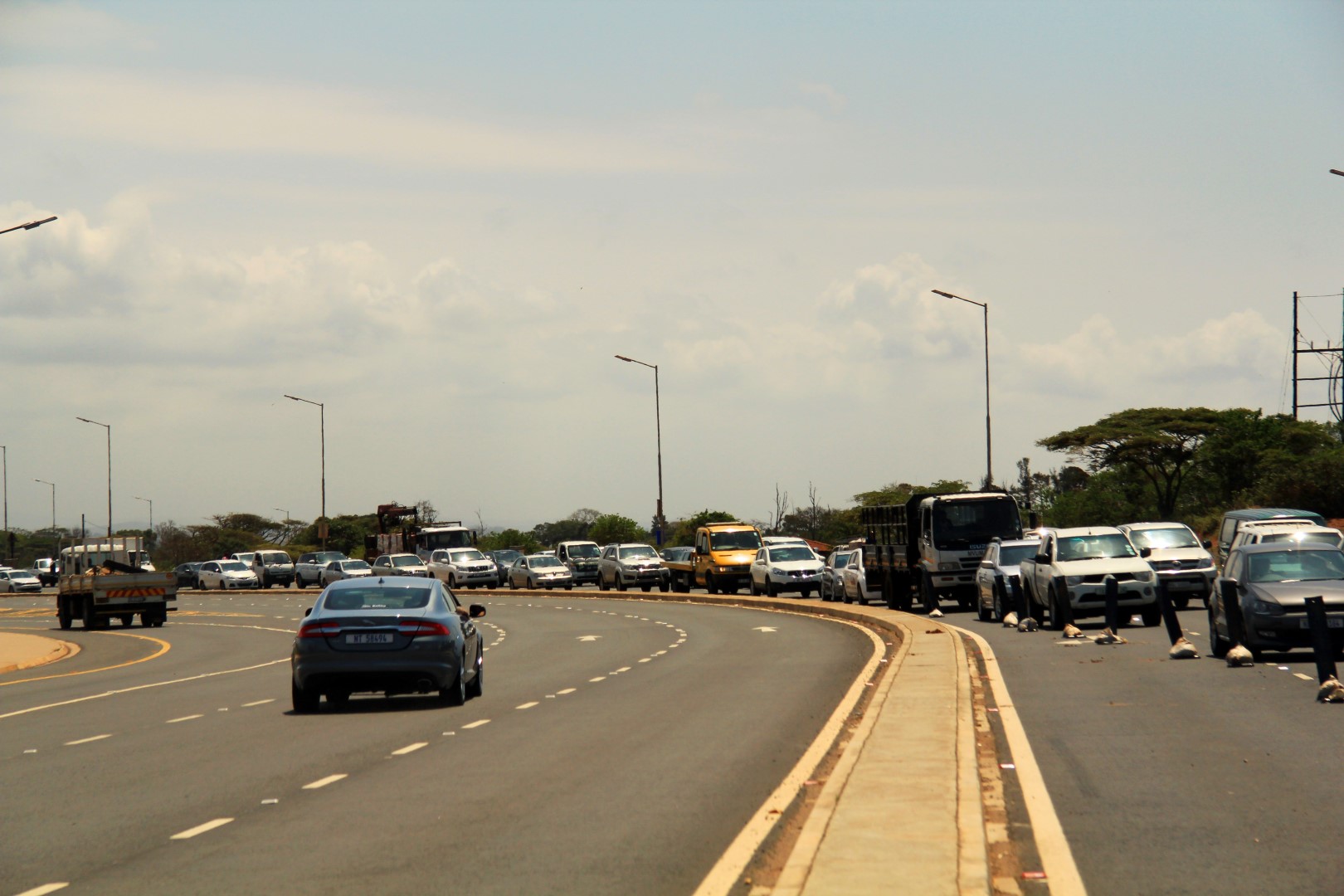
A few years ago when the entrance road into Ballito was getting jammed, the traffic planners decided it was time for an upgrade, so they built today’s N2 interchange and the six lane racetrack in and out of town.
At any time of the day, doesn’t matter if it’s 5am when I go to gym or midday, people race between the six sets of robots – and treat orange and red lights as a suggestion only. It’s like some little worm in our heads takes over and we have to beat the lights.
I blame the aesthetics – or lack of them.
The entrance to Ballito is about as appealing as Umbilo. There is no local signature, nothing that says “This is a small coastal village. Take it easy.”
As Tom Vanderbilt describes in his book Traffic, in the mid-1980s Dutch traffic engineer Hans Monderman was sent to the village of Oudehaske. Two children had been killed by cars, and Monderman’s radar gun showed right away that drivers were going too fast through the village. He pondered the traditional solutions – traffic lights, speed bumps, additional signs pestering drivers to slow down. They were expensive and often ineffective. Control measures such as traffic lights and speed bumps frustrated drivers, who would often speed dangerously between one measure and another. (Talk about ineffective measures: how’s the new stop street below the Virgin gym? That’s where the expression ‘She ignored me like a stop sign’ comes from!)
And so Monderman tried something revolutionary. He suggested that the road through Oudehaske be made to look more like what it was: a road through a village. First, the existing traffic signs were removed. The signs might ostensibly be asking drivers to slow down however, argued Monderman, because signs are the universal language of roads everywhere, on a deeper level the effect of their presence is simply to reassure drivers that they were on a road – a road like any other road, where cars rule. Monderman wanted to remind them that they were also in a village, where children might play.
So, next, he replaced the asphalt with red brick paving and the raised kerb with a flush pavement and gently curved guttering.
Where once drivers had, figuratively speaking, sped through the village on autopilot – not really attending to what they were doing – now they were faced with a messy situation and had to engage their brains. It was hard to know quite what to do or where to drive – or which space belonged to the cars and which to the village children. Rather than clarity and segregation, he had created confusion and ambiguity.
Perplexed, drivers took the cautious way forward: they drove so slowly through Oudehaske that their speed could not be measured on a radar gun. By forcing drivers to confront the possibility of small errors, the chance of them making larger ones was greatly reduced.
My experience is that most drivers try to beat the amber lights, so it comes as no surprise to learn that most traffic accidents happen at robots. Add the complication of pedestrians trying to dodge flying cars on the six lanes between the present taxi rank and the Lifestyle centre and Junction centre and there is a recipe for disaster.
I like traffic circles, or ‘roundabouts’ as the Brits call them. But I believe our provincial traffic planners do not. A few years ago when council was trying to make suggestions to improve the logjam outside Tiffany’s centre in Salt Rock, they got a curt one-line reply from province: ‘We do not like traffic circles.’ Why, nobody seems to know. As reader Michel de Rauville, who lives in France, pointed out in a letter to the paper last year, traffic circles are used widely in Europe because they work and are not subject to power cuts. Perhaps in the rush to ‘decolonise’ everything, it wouldn’t be surprising if provincial authorities have a kneejerk aversion to what works in Europe!
Mind you, when our traffic planners have put in circles in the past, they have made such a half-assed job as to be laughable.
To this day I cannot drive through the one next to Ballito BP or the pot-holed mess in Umhlali village without them reminding me of flower pots. They’re too small to be really effective. The point of decently-built circles is that they break up the traffic, allowing all sides to flow. As it is, you’re stuck in a queue straining to jump in at the slightest hint of a gap. If they’re building them small to try to save space, why? We live in a country with oodles of wide-open space.
The next interchanges that will likely be upgraded are those at Shaka’s Head and Salt Rock. C’mon, let’s make an effort to retain and build on the character of our coastal, sub-tropical paradise. Yes, we all want progress and modern infrastructure and all those good things, but don’t throw the baby out with the bathwater. This is the Dolphin Coast: chill, enjoy the vibe, food and beach life. That’s what people come here for.
* * *
Mary had a little lamb.
Her father shot it dead.
Now it goes to school with her,
Between two chunks of bread.
Stay in the loop with The North Coast Courier on Facebook, X, Instagram & YouTube for the latest news.
Mobile users can join our WhatsApp Broadcast Service here, or if you’re on desktop, scan the QR code below.