

#TwoBits: The end of normal
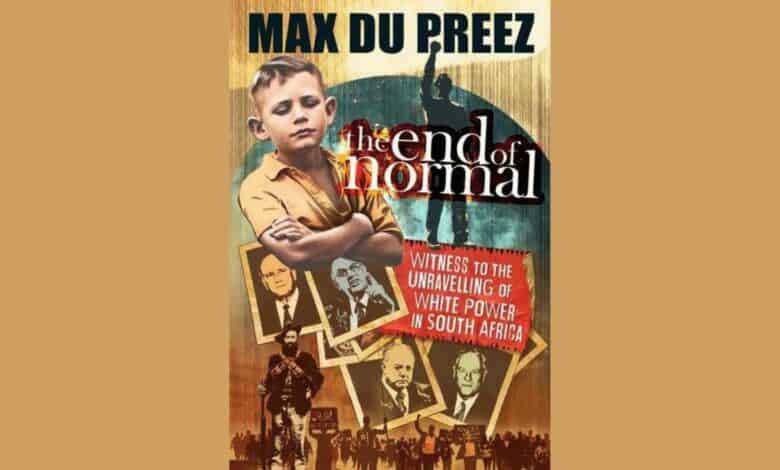
Max du Preez' excellent book if perfect reading for anyone interested in the last 50 years of South African politics.
We used to have a programme on TV called The News. That’s gone and instead of the local news we now have ‘You Won’t Believe What Has Been Stolen Now.’
On the international front, I won’t deny that I have learned a few things: one, then there is a vital shipping lane called the Strait of Hormuz, two, that one day it’s open and the next it’s closed and, three, some days it’s both open and closed at the same time.
Wonders will never cease! All we really care about is that the price of diesel has gone through the roof and that, mark you, is only the beginning. The price of everything is going to go mad this year. I pity the poor wage-earner.
Yet, chin up, we have pulled through crises like this before.
Talking of crises, I’ve just read “The End of Normal”, the new book by dissident Afrikaner journalist Max du Preez.
We were in the same field of political reporting for years and worked for the same company before I started the Courier and he, the then outrageous Afrikaans newspaper Vrye Weekblad. I say outrageous because by straitlaced Afrikaans media standards back then, it’s fokof attitude shocked the establishment.
It broke many stories of state and police brutality in the failing days of apartheid and, as a result, landed Max in a load of legal trouble. The old joke was “What do you call Max du Preez in a suit? Accused Number One.”
The book is part autobiography, part political history over the last 50 years. With the close up, in your face, front row seat afforded to political journalists, Max had a privileged view of the deaths of the old South Africa and Namibia, and their subsequent rebirths under new owners.
His is the story of a Free State kaalvoet boerseun who was jerked into reality as a reporter in the ’76 Soweto riots – the protests, the brutal retaliation of the police and defense force, the necklacings and more.
The riots were a crisis that proved a watershed moment for many reasons, not least the realisation among many young Whites that they had been blinded by the relentless State propaganda and lies by politicians, especially over the thorny issue of the border war.
The Eighties saw a swelling of young writers, musicians and intellectuals raging against the machine. They found voice in the freewheeling Vrye Weekblad before the State closed it down. They were labelled ‘pinkos’ and ‘commies’ for their troubles, even to this day, but we have to recognise that they also helped sow the seeds of the inevitable end of apartheid.
The poster boy of the new wave of Afrikaners was Progressive Party leader Frederik Van Zyl Slabbert. A strong, charismatic leader, he turned White opposition politics on its head when he walked out of Parliament, declaring that the real politics of South Africa lay outside its hallowed chambers. That was a punch in the gut, even for enlightened Whites.
Max knew Van Zyl well, as he did many of the main players of the time on all sides of the political spectrum, and Van Zyl appears to have been a major influence on his decision to follow his conscience to the limit in later life.
His views continue to get him into trouble. Today he is critical of Afrisol, the Solidarity and Afriforum movement, which claims 600 000 Afrikaner followers. While recognising the immense good works in education and providing support for poor Afrikaners, he questions the movement’s promotion of Afrikaner nationalism and adulation of Trump’s MAGA (Make America Great Again) politics.
His views are decidedly unpopular if the comments on social media are anything to go by. Not that he seems to care.
An essential read, I would say, if you’re interested in the politics that has occupied the minds of South Africans for the past half-century.
Stay in the loop with The North Coast Courier on Facebook, X, Instagram & YouTube for the latest news.
Mobile users can join our WhatsApp Broadcast Service here, or if you’re on desktop, scan the QR code below.