

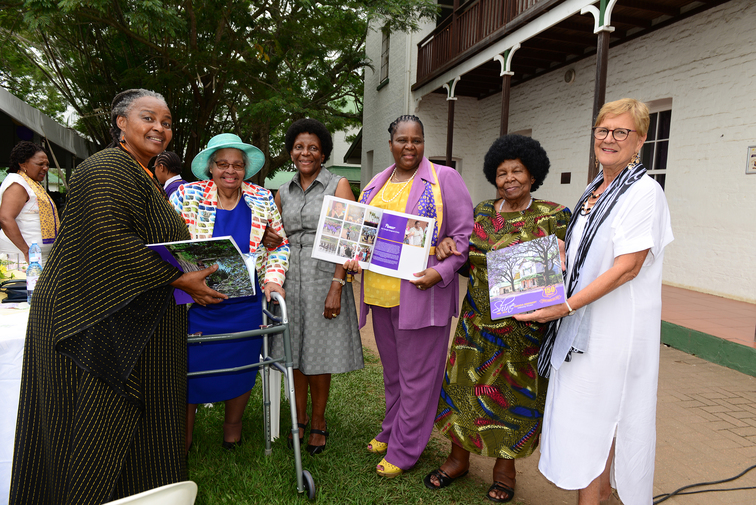
I recently completed one of the most interesting projects of my career in publishing. After a span of 49 years as a ‘scribbler’, it goes with the territory that this week’s newspaper is next week’s fish-and-chips wrapper (or township tablecloth, as some say).
That’s not to say that what appears in papers isn’t an enduring record, it’s that we are in such a rush from one edition to the next that all the work that goes into making a paper tends to fade from memory quite quickly.
Judy Tate, executive director and former principal of Inanda Seminary for girls, asked me to produce a coffee-table book to commemorate the school’s 150th anniversary. It was to be a history of the oldest boarding school for black girls in Southern Africa, with more emphasis on photos than text.
Most people wrinkle their brows when I mention Inanda Seminary. “Where . . . ?” they ask. If you ride south on the N2 past Umhlanga, you reach the KwaMashu turnoff. Head inland for 14km and, if you’re a townie on the coast, a whole new world awaits you.
The double-lane highway winds through KwaMashu up into the hills, the denseness of human activity pressing in closer and closer until the shacks, spaza shops, motor repair shops, funeral parlours, hairdressers – you name it – are slap up against the Armco barriers. Town planning is not so big up there. Still, it’s chaos but in a cheerful way. Lots of hustling, bustling, good-natured calling out, people making the best of pretty straitened circumstances.
Finally you reach the top of the valley and there is the school, an oasis of orderliness and charming, charming, charming in every way. At the centre of the campus are half a dozen double-storey Victorian buildings in fantastic condition considering they’ve been in constant use for more than a century, all wooden floors, double-volume ceilings and corrugated iron rooves. Plus many more modern buildings on a large campus.
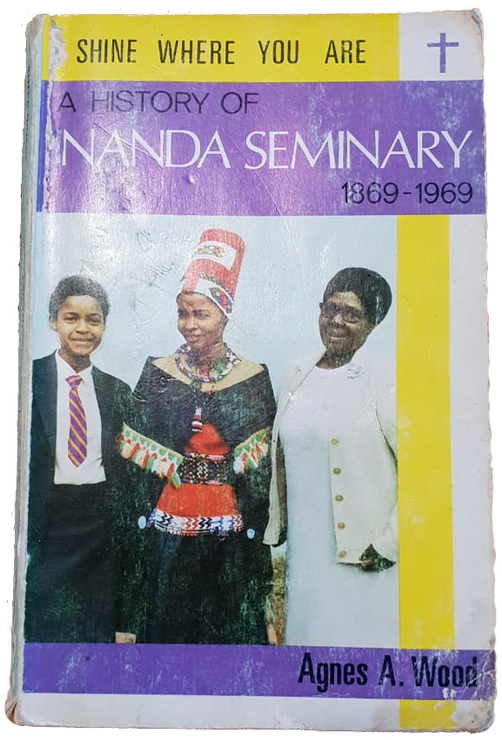
I immersed myself in the history of the place through its comprehensive archive and conversations with key individuals, and was feeling overwhelmed by the weight of its history. American Congregational Church missionary Daniel Lindley (who began his African career as pastor to the Voortrekkers!) – established a mission up there in 1847.
Can you imagine what it must have been like stepping off a ship from the USA into the Inanda and Umgeni valleys back then? The area was still in turmoil following King Shaka’s years of war and here this lot arrive carrying a torch for a foreign god and a different way of life. American missionaries have played a significant role in Natal life, from Groutville in the north to Adams Mission in the south, and no small part in the politicisation of Zulu society. The founders of today’s African National Congress, John Dube and Pixley la Seme, were from families converted and educated by them.
But this book was also to be a story about women. Strong, determined, God-fearing Protestants who decided Zulu girls would profit from the three R’s and the Word of the Lord. We unearthed picture after picture of strong-jawed women in buttoned-to-the-throat black dresses in the blazing Natal sun, not a trace of a smile or a hint of weakness.
It was they who started the school and kept it going through flood, drought, earthquake – and actually it’s never stopped. 150 years later it is still strong women who captain the ship. That is not to say there hasn’t been a great deal of support from men, it’s just that they have remained in the background. By the way, the opening of the Seminary in 1869 coincided with the start of the first boarding school for white girls in Natal, Richmond School which later became St Anne’s that is in Hilton today.
So, we decided to tell the story of the Seminary through the women who built it and the buildings named after them. These colonial Victorian buildings, as though frozen in amber, just like the yellowing photos of their founders. Today towering jacarandas spread their branches wide over the campus and carpet the lush green lawns with purple flowers. The girls move purposefully between the classrooms, greeting every visitor politely.
But it is in the chapel that the Seminary comes alive. The 436 girls lift the rafters with their full-throated singing – of hymns and other songs in English and Zulu.
The school has produced many women who are in prominent positions today, in politics, business and elsewhere. So when the school stumbled and nearly closed in 1997 due to money problems, it was women in the form of Old Girls who stepped forward and kept it alive. They roped in Nelson Mandela who persuaded Sappi to contribute generously. Today it is flourishing.
After three months’ intense work, the book, titled Shine: 150 years of Inanda Seminary, rolled off the press two weeks ago. It’s so satisfying to be able to hold something that you have been writing, designing, then re-writing, re-designing, over and over again. It’s what I have always loved about print media, the satisfaction of seeing the fruit of your efforts grow from an idea. Like a farmer or a carpenter, I guess. It’s what makes life so worthwhile.

Be the first to receive breaking news straight to your device with our newly launched push notifications! Simply visit our website and click on the icon shown above.
Do you want to receive news alerts via WhatsApp? Send us a WhatsApp message (not an sms) with your name and surname to 061 718 4438.
Please read our WhatsApp broadcast list disclaimer.
Join the conversation on Facebook, Twitter and Instagram
Stay in the loop with The North Coast Courier on Facebook, X, Instagram & YouTube for the latest news.
Mobile users can join our WhatsApp Broadcast Service here, or if you’re on desktop, scan the QR code below.