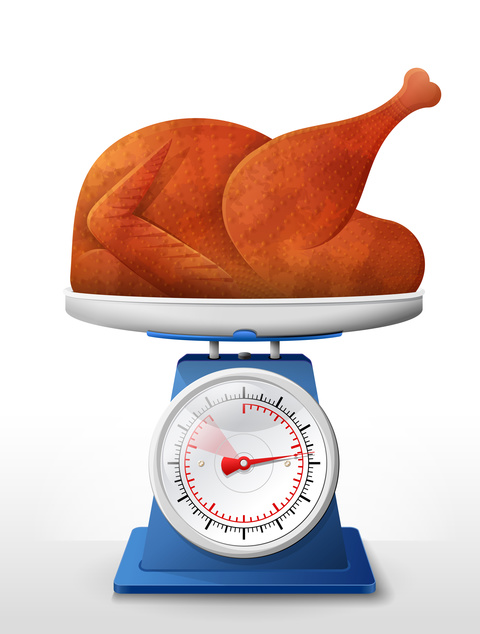
Your goose is cooked. Cooking the books. Cooking has been on my mind of late.
The word cook in its most basic sense means “to make fit for eating by the action of heat,” but especially “to prepare in an appetizing way by various combinations of material and flavouring.”
The use of idioms is to make language more colourful, more expressive. Other examples of idioms from cook are ‘too many cooks spoil the broth’ and the slang expression ‘cooking with gas’, but the one with an interesting history is ‘your goose is cooked’.
The meaning of “your goose is cooked” means “you’re in big trouble” or “you caused yourself big trouble.” Way back in 1415, a Czechoslovakian Protestant reformation leader named Johan Hus was burned at the stake in Germany. The word for goose in his native Czech is “husa.”
Since it was Germans who put him to death, you’d think that it’d be Germans, not Hus’s native Czechs, who would be making tasteless puns (The German for goose is ‘gans’). Anyhow, the saying has been used with relish for 600 years.
The idiom of the moment in SA is ‘cooking the books’, to add to state capture, the plundering of state resources led by head chef JZ and many assistant chefs, and outright theft.
Cooking seems a rather odd choice of word to convey fraud. The Oxford English Dictionary lists a dozen or so meanings of the verb ‘to cook’, ranging from ‘prepare opium for use’ to ‘prepare food by the action of heat’. Tucked away at the bottom there is also the meaning ‘present in a surreptitiously altered form’.
The allusion appears to be the changing of one thing into another, as in the conversion of food ingredients into meals. This usage dates back to Stuart and possibly Tudor England and was used by the Earl of Strafford in his Letters and dispatches, 1636: The Proof was once clear, however they have cook’d it since.
Last century the preferred euphemism for the manipulation of financial statements came to be ‘creative accounting’, but the enormous damage caused by the collapse of Enron and Worldcom, which had used sophisticated accounting tricks to overstate their profitability turned public opinion against the semi-admiring tone of ‘creative accounting’ and journalists stopped using it.
Those massive frauds gave investors and regulators a stark lesson in how clever some companies had become at hiding the truth between the lines of their financial statements.
On the local scene, enter Steinhoff and now there are rumours of culinary practices at our close neighbour, Tongaat Hulett.
Tongaat has been huge in this area for a very long time, in sugar and property development, notably Umhlanga Ridge, Zimbali and Sibaya, to name but a few. What could possibly have gone wrong? In the normal course of things, the finances might have gone unnoticed for years, but the economy has been in a bad place for five years or more. TH has entered a perfect storm – the sugar price is down, the new sugar tax had hammered sales and the till that kept on ringing – property sales – just tanked. When the tide goes out, some ugly wrecks are exposed.
The share price plummeted 90% since last year before trading on the JSE was suspended two weeks ago and 5 000 of the company’s 30 000 employees are being shown the door. Okay, cost cutting happens to all of us when times are hard, but it was only last year that executives trousered performance bonuses. Well the truth will come out when their books are examined, but in the meantime rumour has a way of travelling awfully fast.
If you don’t yet know what bad shape the economy is in, here are some sobering figures from Statistics SA: liquidations are up 53 percent April 2018 to April 2019 and insolvencies are 30 percent down March 2018 to March 2019.
Why do companies cook the books? Here, thanks to online Investopedia, are some of the best-known reasons:
Credit sales and inflated revenue:
Companies can use credit sales to exaggerate their revenue. That’s because the purchases customers make on credit can be booked as sales even if the company allows the customer to postpone payments for six months. In addition to offering in-house financing, companies can extend credit terms on current financing programmes. So, a 20% jump in sales could simply be due to a new financing programme with easier terms rather than a real increase in customer purchases. These sales end up being reported as net income, long before the company has actually seen that income – if it ever will.
Channel stuffing:
A manufacturer ships unordered products to its distributors at the end of the quarter. These transactions are recorded as sales, even though the company fully expects the distributors to send the products back.
Mischaracterised expenses:
Many companies have “nonrecurring expenses,” one-time costs that are considered extraordinary events and unlikely to happen again. The companies can legitimately classify those expenses as such on their financial statements. Some companies take advantage of this practice to report expenses that they routinely incur as “nonrecurring,” which makes their bottom line and future prospects look better than they are in reality.
Share buybacks:
Share buybacks can be a logical move for companies with excess cash, especially if their shares are trading at low earnings multiple. However, some companies buy back shares for a different reason: to disguise a decline in earnings per share, and they often borrow money to do so. By decreasing the number of shares outstanding, they can increase earnings per share even if the company’s net income has declined.
And so cooking the books leads, in many cases, to their goose being cooked.
* * *
“Have you been sleeping by an open window, like I told you?” a doctor asks his patient.
“Yes, just like you said, doc.”
“And is the bronchitis gone now?”
“Not yet, so far the only things gone are my laptop and cellphone.”

Be the first to receive breaking news straight to your device with our WhatsApp broadcast service.
Send us a WhatsApp message (not an sms) with your name and surname to 061 718 4438.
Please read our WhatsApp broadcast list disclaimer.
Join the conversation on Facebook, Twitter and Instagram
Stay in the loop with The North Coast Courier on Facebook, X, Instagram & YouTube for the latest news.
Mobile users can join our WhatsApp Broadcast Service here, or if you’re on desktop, scan the QR code below.