

Two Bits: The Man in the Iron Mask . . .
Curiosity drove me to pick up a tome of a book from the local library: Anthony Butler's biography of Cyril Ramaphosa.
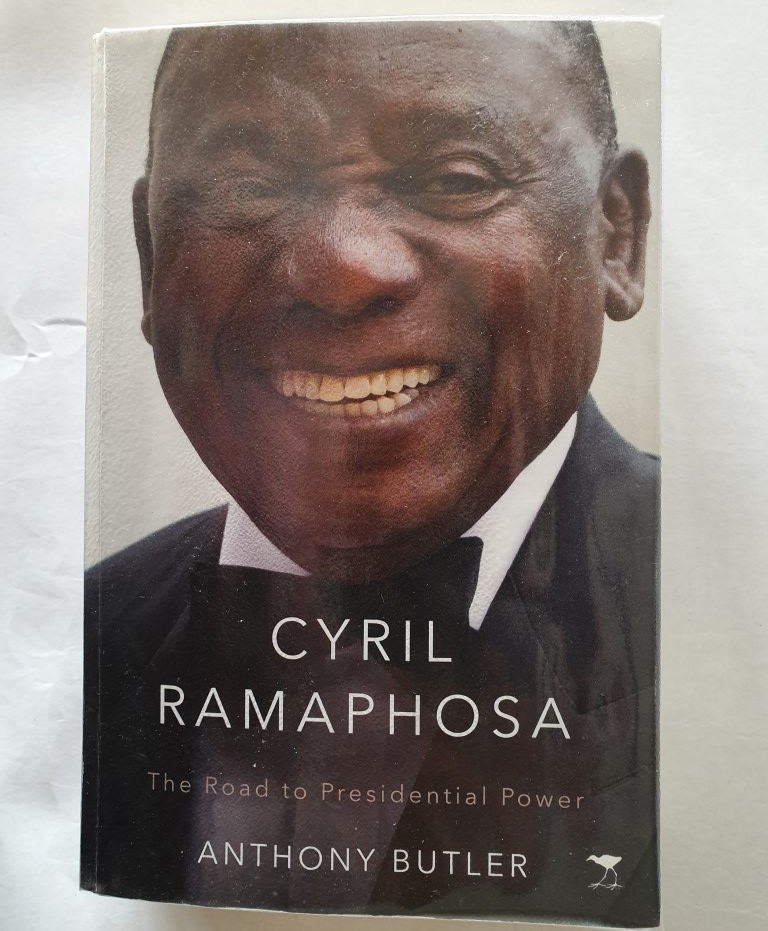
Curiosity drove me to pick up a tome of a book from the local library: Anthony Butler’s biography of Cyril Ramaphosa. I thought, if it kills me, I have to find out what makes this guy tick.
Well, from the outset Butler makes it clear that Ramaphosa wasn’t too keen on the idea of a biography. His attitude went from mildly hostile to accepting, but he wasn’t going to lift a finger to help.
Remember the guy from school who sat somewhere in the middle of the class, didn’t have much to say about anything but probably did really well at a few subjects like maths and science, didn’t shine on the sports field but captained the chess team, and you never saw him again.
Twenty years on you hear he’s chief financial officer of a really big company, a real whizzkid in the corporate world.
That’s Ramaphosa.
The book might as well be titled The Man in the Iron Mask for all you get to learn about what makes CR tick. Warren Buffet is much more exciting.
Son of a policeman, he was raised in Christian home in Soweto, got involved in student politics which brought him to the attention of the security police and earned him 11 months solitary confinement at a time when the cops were locking just about everyone up.
What did make him different was that he was a Venda in a political world dominated by Zulus and Xhosas.
Articled to a small law firm in Johannesburg, he is drawn into the world of resistance politics in the 70s not as a firebrand, but as an organiser and a cool head when, to quote Kipling, all around were losing theirs.
Ramaphosa and colleagues formed the National Union of Mineworkers, very quickly amassed a quarter of a million members and took on the mining giants of the day.
The old school tie types who ran Anglo American and the other big mines back then were wrongfooted by this small, unthreatening man who managed to conceal his true feelings behind a broad smile and was very quick at exposing their weaknesses.
An adversary shines a light on CR’s character when he says that the broader the man’s smile, the less you know what he is truly thinking.
So okay, we learn that CR generally plays by the book (but which book, that is the question), keeps a calm head, conceals his feelings behind a broad smile and doesn’t blink first, but with that comes the realisation that he cannot be entirely defenseless when it comes to dealing with the likes of Jacob Zuma, Ace Magashula et al. Nobody can survive in that nest of vipers without a few ninja tricks of their own.
Is it a matter of hoping that good will conquer evil all on its own?
Why, we ask, doesn’t he just fire Public Protector Busisiwe Mkhwebane before she causes any more damage?
A friend, a student of African politics, believes CR’s goal is to put right all those institutions of government that will automatically get rid of the likes of Mkhwebane without him having to directly intervene.
The central message of the biography for me is that CR is, above all, a pragmatist.
He is neither your friend nor your enemy until you make him so. He plays his cards close to his chest and will always do so. Unlike JZ, he can tell the difference between right and wrong.
Shortly after the May elections he remarked with a wry little smile that now was the moment for all the conspiracy theories about him to emerge.
He has been right about that but nothing has shaken the earth and I don’t believe anything will, remotely on the scale of the JZ or Gupta shenenigans.
I just hope that CR is afforded enough time to set government back on track before chaos triumphs.
* * *
My son wanted to know what it’s like to be married. I told him to leave me alone and when he did I asked him why he was ignoring me.
Stay in the loop with The North Coast Courier on Facebook, X, Instagram & YouTube for the latest news.
Mobile users can join our WhatsApp Broadcast Service here, or if you’re on desktop, scan the QR code below.