

#TwoBits: A journey through North Coast history hidden in old newspapers and photos
The Courier has recorded thousands of notable events over its history, which are all available through painstaking archiving processes over the years.
I spent the last week delving into the past.
KwaDukuza Museum asked us to look in our archives for interesting facts and snippets of the North Coast, specifically its political history. Luckily from the word go I have kept every newspaper and every photograph we have snapped, from 1985 to today.
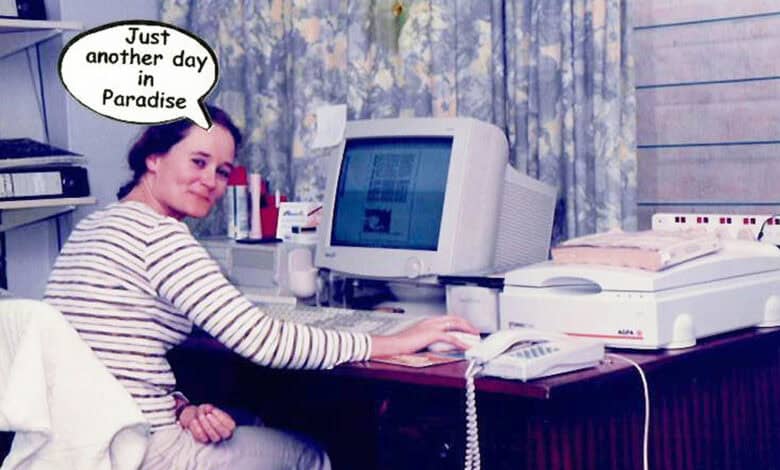
Back when cameras used film, a charming young lady by the name of Cheri, who worked for us, filed all the newspapers and black and white negatives every week. I know it was a boring job, Cheri, but thank you for doing it because today I can access photos taken in the first 20 years of the Courier, before the arrival of digital cameras and their storage on a server.
And there were plenty of notable political events to record – visits by Mandela, Mbeki, Zuma, even Kenneth Kaunda, all drawn of course to pay homage to the Luthuli family in Groutville. Parallel to those events has been the continual economic development of the North Coast, in particular the blossoming of Ballito from sleepy resort village to the hive of activity we are today.
As an aside, a wildlife photographer friend who has grown old and is downsizing his living quarters, asked what he was to do with four filing cabinets jammed full with his life’s work, 50 000 negatives and slides. What do you do with stuff like that, throw it away?
I’m delighted that the KDM museum will have a use for some of our photos and old front pages. There have been plenty of memorable moments (and memorable people) in the development of this region. Of course, photos and newspapers can only capture so much. What the developments like residential estates, shopping centres and business parks do is sweep aside the simpler life so many remember, the open spaces and the pleasure of walking down a dusty road through the cane. It’s hard to record the simpler life. For that we have our memories.
Today I learned a new word. The word is “petrichor.”
The English language contains many fascinating words that beautifully describe everyday experiences. The word “petrichor” (pronounced petri-kor) describes the pleasant, earthy scent that emerges when it rains after a dry spell. Coined in 1964 by two Australian scientists, the word combines two Greek terms, “petra,” which means stone, and “ichor,” which describes the divine fluid that flows through the veins of Greek gods. The term poetically expresses the essence of stone, which appears in nature after rain.
A little web research led on to the next discovery, that apparently humans can smell petrichor better than sharks can smell blood in water.
Speaking of sharks, the first sharks apparently appeared about 430 million years ago, whereas plants only developed woody fibre and therefore, trees, about 380 million years ago. It took another 90 million years for fungus and bacteria to learn how to break wood down. So the trees just layered the earth’s swamp forests for 90 million years without decomposing much, which produced most of the world’s coal.
Now here’s another fun fact. Whales began in the sea and evolved to become land creatures. They were fully terrestrial four-legged creatures and ran around on earth 50 million years ago.
Then they said nah, we’re going back to the ocean and evolved into the whales we know today. And that was only 40 million years ago. So, when someone asks why whales are mammals and sharks are fish, you can tell them.
Stay in the loop with The North Coast Courier on Facebook, X, Instagram & YouTube for the latest news.
Mobile users can join our WhatsApp Broadcast Service here, or if you’re on desktop, scan the QR code below.