Young scientists converge at Wits Flower Hall for the Eskom Expo for Young Scientists
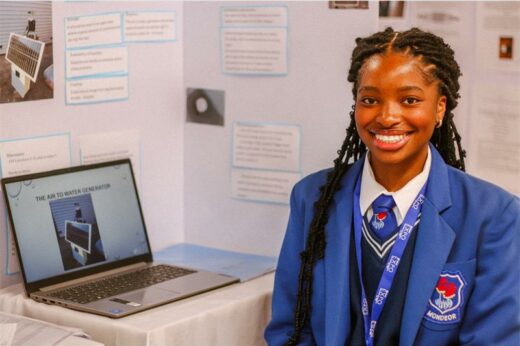
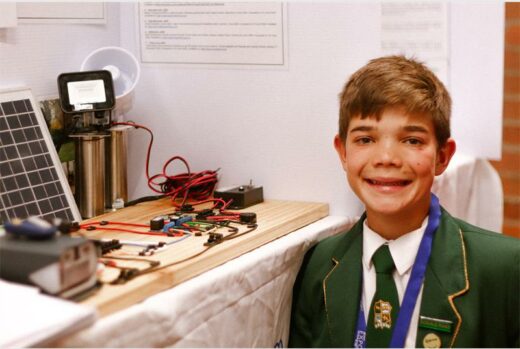
Participants of the Eskom Expo for Young Scientists showcased their projects to the audience, showing why they had been chosen to compete in this prestigious competition.
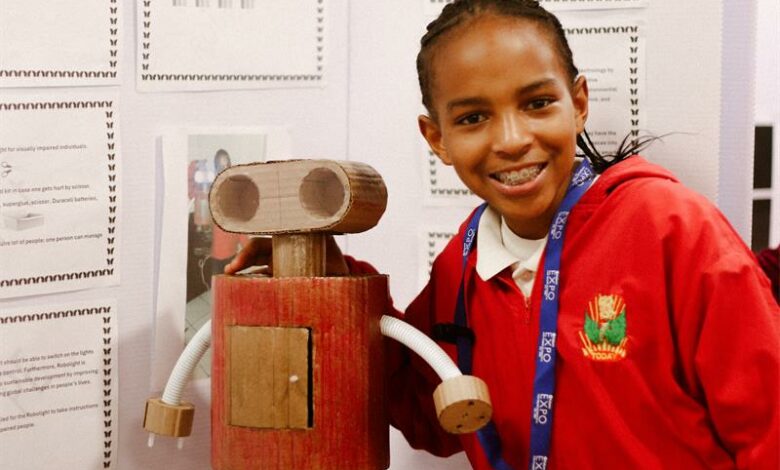
Some of the city’s boldest minds recently gathered at the Wits Flower Hall where they took part in the Eskom Expo for Young Scientists. There, learners from schools across Johannesburg submitted their final science research project.
Provincial co-ordinator Raven Motsewabangwe said these projects were part of the top 50 that were selected from district science fairs, going through over 700 projects to get to this point. The day’s object was for them to identify a cohort of projects that would represent the city at the International Science Fair, to be held at Emperors Palace Conference Centre on October 6–10.
Motsewabangwe said learners started work around February. “We challenged the children to identify challenges in their community, or any social aspect they may have identified, and to come up with a solutions through use of a scientific method.”
Workshops for teachers, learners, and some the judges, were then held, all in preparation for this event. “So, today is a culmination of work that has been ongoing since the start of the year.”
Read more: Adults exhibit their art at local Lillian Gray Art School
Motsewabangwe described how every year is different, with the quality of projects just getting better. “When I initially started, you were getting children building bridges to see which one was able to carry more weight. Now, we have children building automated powered, and even AI powered, bridges.” He said he has been fortunate to witness the evolution from where he started, and that level of work just keeps gets better.
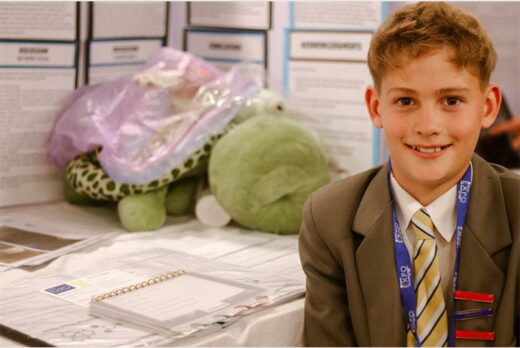
Science, as he describes, is all about thinking outside the box. With participants identifying problems, its the competition’s aim to see the children come up with innovative ideas to solve them, having them create unique solutions that no one else has done. “Especially some of the learners from previously disadvantaged backgrounds. We don’t want them to be limited by the areas they come from – we want them to dream big, and to use whatever resources are at their disposal to become innovators.”
These participants range from Grade 4 to matric learners, and also includes those homeschooled. At the end of the event, participants received medals based on scores they received. The criteria included: innovation, creativity, a solution that looks to solve a real world problem, thoroughness of research, and out of the box thinking. These learners will then be mentored, so to prepare their projects for the International Science Faire where they will go up against participants from Mexico, Ghana, Indonesia, and Lesotho, to name a few. At this competition, the best junior scientist (grades 4 to 9) walks away with R50 000, while the best senior scientist (grades 10 to 12) will take home R75 000.
Also read: Discovery Primary Schools builds future leaders through sport
Such events make Motsewabangwe excited about the future of science in the country. “Back in my day we were doing lemon batteries, and now learners are doing projects on AI, so its really quite interesting. We are definitely on the right path, and based on what we have seen, South African is set to be a big player in the innovation process, as long these children keep up the scientific excellence.”
Follow us on our Whatsapp channel, Facebook, X, Instagram, and TikTok for the latest updates