METRO MATTERS: Contractors and workers bear the brunt of city’s cash flow problems
City's cash flow problem affects more than just subcontractors, leaving workers without pay.
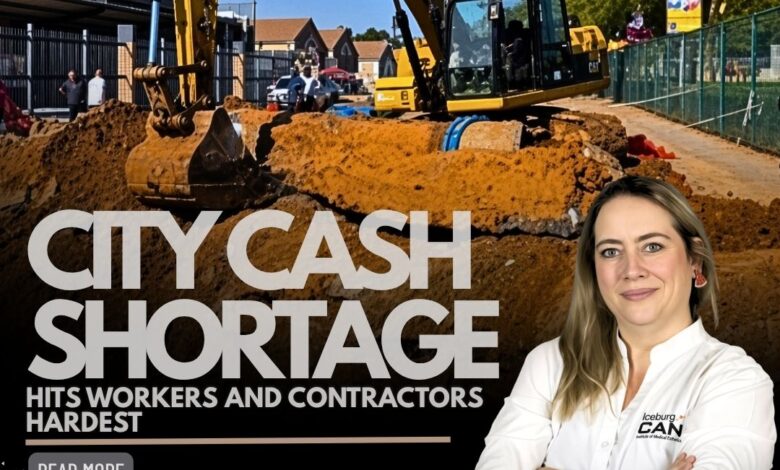
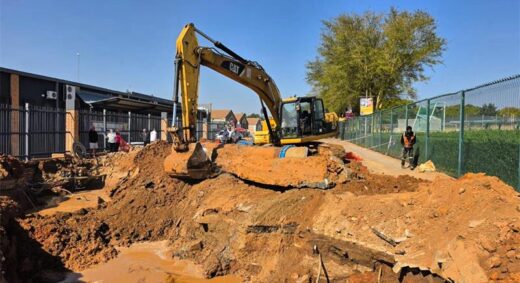
Labourers who are part of the teams working on Johannesburg Water’s (JW) critical infrastructure projects are now going months without pay.
Although they wake up every morning, report to site, and do their part, after the completion of a month’s work, invoices are sent, but wages never follow.
Now, months of unpaid wages have pushed contractors and their workers into financial distress.
Read more: METRO MATTERS: Behind Joburg’s rubbish crisis
What is frequently described in municipal circles as a cash-flow challenge has, in practice, become a crisis that threatens not only the livelihoods of workers and small businesses, but also the quality of services some residents receive, as crucial projects stall.
A revenue base under strain
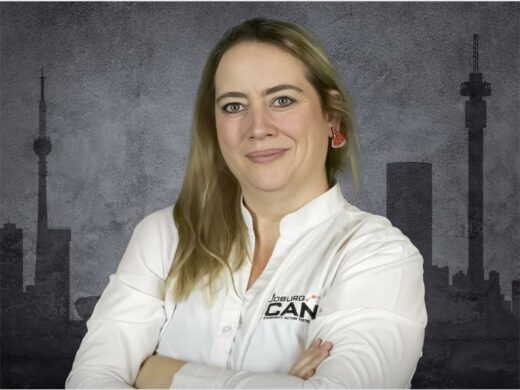
The roots of the crisis lie partly in Johannesburg’s chronic inability to collect what it is owed. JoburgCAN’s executive manager Julia Fish attributed the problem squarely to revenue under-collection, a diagnosis borne out in the city’s own figures.
During her 2026/27 medium term budget presentation, Finance MMC Loyiso Masuku acknowledged that the city’s revenue base remains under pressure, noting that the projected collection rate fell from 88.6% to 86%. This shortfall has been compounded by a further, more structural failing.
In November last year, the auditor-general of South Africa (AGSA) disclosed, during a meeting of the portfolio committee on water and sanitation with national treasury, that the city’s practice of sweeping funds from JW’s accounts had contributed to 30% of the entity’s late payments to suppliers.
Committee members identified this sweeping mechanism as a principal cause of the delays, a significant impediment to the entity’s ability to honour its obligations to contractors and to maintain infrastructure of critical importance to residents.
The sweeping system, according to the city, is a treasury practice where, at the end of each business day, all the available balance in each entity’s bank account is automatically transferred into the city’s primary bank account. The funds are then transferred back into the entity in line with their financial requirements and operations.
It was under this system that funds were cleared from JW’s accounts on a daily basis, leaving the entity reliant on the city to release its own funds, a release that did not always happen on time.
The AGSA’s findings revealed that JW had continued to breach the Municipal Finance Management Act’s 30-day payment requirement, noting that internal inefficiencies accounted for 70% of late payments and the sweeping system accounted for 30%.
Fish said that the national treasury’s intervention, under operation vulindlela, recognised that municipalities were not using revenue collected from services to maintain those services.
As a result, the metro trading services reform now requires that this revenue be ring-fenced, and used only for the relevant function. “As of July 2026, the City of Johannesburg started ringfencing water revenue, and stopped the sweeping arrangement for JW. However, there is a R4b back-payment from the last financial year owed from sweeping to JW by the city to pay historical contracts, which has not been returned to the entity.”
Workers left in financial limbo
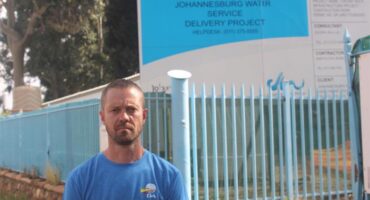
Selina Nkuna, one of ten workers employed by a business working on a project in Alexandra, said the project, originally scheduled for completion in April 2026, has been repeatedly interrupted by payment disputes. She said work halted again on July 9, after workers and three small, micro, and medium-sized enterprises (SMME) went unpaid for June.
“Debit orders have bounced. It has affected everything. At least I don’t have accommodation issues, because I stay at the hostel, but the salary we rely on to make ends meet is not reliable at all. It makes it impossible to budget.”
Many of her colleagues, she said, now face eviction threats after defaulting on rent. She said the company has attributed the delays solely to non-payment from JW.
Also read: Metro Matters: Johannesburg’s sewage crisis reaches breaking point
In Fourways, Wonder Nkosi, one of three workers responsible for safeguarding critical water infrastructure, confirmed that July marked his third consecutive unpaid month. Employed through a subcontracting arrangement involving another company, he said his team received wages only for March and April, and that payment for May, June, and July were outstanding.
“The company says they also haven’t received anything, and they are waiting for the city. My plans have been affected. I tried to settle my car instalments until the money ran out. Now, I have outstanding debts. My wish is that they would just pay us in full because we are already in debt.”
Site operations have, in many instances, effectively ground to a halt, with workers downing tools in protest. “Every time we have to get paid, we have to down tools, and only then do they pay us after a couple of days,” Johannes Mafalo, who has worked for business contracted to do work for JW in Alexandra, said. “I need to pay for transport for my child at school. It is not a favour that they pay us. The money I am looking for, I worked for it.”
As of early July, the publication was aware of unpaid workers at service providers in three areas, including multiple workers under one provider in Randburg, ten under a provider in Alexandra, which included SMMEs employing an unconfirmed number of labourers, and three workers in Fourways. None of them had been paid by July 1.
Contractors caught in the crossfire
The strain extends well beyond individual workers, to the small enterprises that employ them. Some contractors or subcontractors have had to draw from their own funds to cushion the impact on affected labourers, according to workers.
One business, currently subcontracted to work on a JW-related project in Randburg, confirmed that when the payment is delayed by two to three weeks, they would find themselves confronted with two difficult decisions: To either delay wages or compromise their cash flow by using company reserves.
According Nkuna, the management of the service provider working on a project in Alexandra reportedly vowed to settle outstanding payments by the end of July, pending transfers from the JW.
Also read: Melville residents demand answers as week-long water outage sparks protest
At least four affected service providers were approached for comment but had not responded at the time of publication.
Fish cautioned that the longer-term consequences could prove more damaging still, as future contractors may demand substantial upfront deposits that the city cannot afford.
The consequences extend to worker-to-contractor relationships, eroding the very trust needed to keep them working. “It damages trust a lot. Workers feel let down and morale suffers. People still work, but with less energy and commitment. After repeated delays, some workers lose confidence and look for other jobs,” a Randburg subcontractor told the publication, on condition of anonymity.
Johannesburg Water responds
JW spokesperson Nombuso Shabalala acknowledged the extent of the delays affecting multiple service providers. She said the current payment challenges are not unique to any single service provider, but affect a number of suppliers across the entity. She added that the entity is working closely with the city to resolve the cash-flow backlog.
“As funds are received from the City of Johannesburg, payments to service providers will be processed in accordance with established financial governance processes. At this stage, JW is unable to provide service provider-specific payment timelines.”
The consequences of this fiscal impasse extend well beyond the contractors and labourers directly affected, touching the quality and reliability of services on which every resident and ratepayer depends. Fish said there have already been major delays in repairing the leaking Hursthill 2 reservoir.
Also read: METRO MATTERS: Illegal connections and debt deepen crisis at City Power as losses near 27%
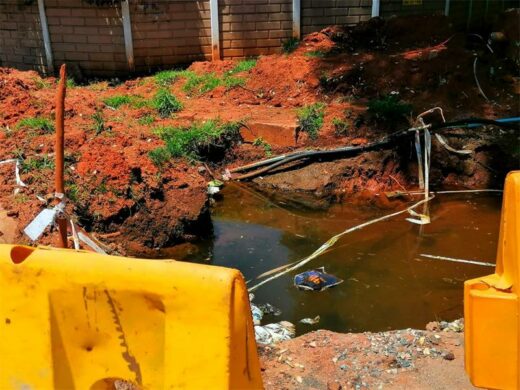
The sewer reticulation project in Alexandra remains incomplete as well, with exposed manholes and open trenches posing ongoing safety hazards for children, according to Alexandra resident Hilda Tindleni.
What affected workers can do
Ivan Israelstam, chief executive of Labour Law Management Consulting, explained that workers can take legal action against the subcontractor, even if the subcontractor has not been paid by JW.
“A case under the minimum wage act, at the commission for conciliation, mediation, and arbitration (CCMA), might be best. Also, the department of employment and labour might be best, because it can be expensive and time consuming to go to labour court, where they might need legal representation.
“Assuming that the sub-contractor is a truly independent business, and not a ‘front’ for JW, then, unfortunately, under labour law, it is the sub-contractor that is legally responsible for paying the workers. Under civil law, the sub-contractor can also sue JW for the payments.

“If there is no proof that the entity is the employer, then they can’t be liable under labour law.
However, whoever is owed money by JW can sue them in civil court. The media fallout of labour and civil suits could embarrass JW into paying the money.”
Also read: City Power links Newlands three-month power outage to damaged feeder cable
He advised workers facing these issues to consider lodging a joint, formal grievance internally, and joining a strong trade union to protect their rights while the dispute is being resolved.
“Also, before pursuing a legal claim, they should collect employment contracts, timesheets, payslips, attendance registers, WhatsApp messages, minutes of relevant meetings, as well as proof of losses incurred due to being unable to pay their debts, etc, as strong evidence.”
Queries to the City of Johannesburg’s spokesperson Nthatisi Modingoane were sent on July 22, with various follow-ups over the following weeks, however their comment had not been obtained by the time of publication.
Follow us on our WhatsApp channel, Facebook, X, Instagram, and TikTok for the latest updates!