Johannesburg Water enforces level 2 restrictions from November 21
Johannesburg residents will face tighter water-use restrictions from November 21, with garden irrigation and hosing down paved surfaces prohibited as the city moves to cut consumption by 200 million litres a day.
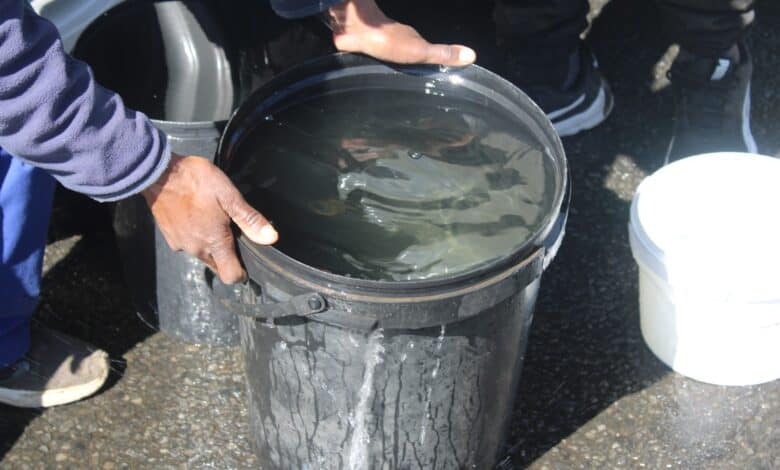
Johannesburg residents and businesses will have to tighten their water-saving measures from November 21, after Johannesburg Water announced the implementation of level 2 water restrictions across the city in response to mounting pressure on the water supply system.
The restrictions, announced in a public notice issued today, are aimed at reducing water consumption, allowing reservoirs to recover and improving the reliability of supply across Johannesburg.
Read more: Johannesburg Water sets out turnaround plans to improve water supply reliability
Johannesburg Water (JW) said the city’s water supply system remains under pressure as high demand continues to strain the available treated bulk water supply from Rand Water. This has affected the ability of reservoirs and water towers to maintain sufficient storage and recover following supply interruptions.
The utility has identified a need to reduce water demand by 200 million litres a day to support a more stable and sustainable supply. Under the new restrictions, residents are prohibited from using municipal drinking water to irrigate gardens, lawns, parks and public spaces at any time of the day.
The prohibition also extends to hosing down driveways, paved areas and sidewalks, as well as dampening building sand. The restrictions apply to residential, commercial, institutional and other consumers throughout the City of Johannesburg. The ban on garden irrigation replaces the limited watering hours that applied under level 1 restrictions.
Municipal departments and contractors will also face additional requirements. City departments and municipal entities must stop irrigating parks, public spaces and gardens with municipal drinking water. Johannesburg Roads Agency and its contractors must use treated effluent rather than municipal drinking water for road construction, while Johannesburg Water and its contractors must use treated effluent for jetting activities.
Also read: A flood of questions and a trickle of answers over Melville’s leaking water valve
The treated effluent will be sourced from the city’s six wastewater treatment works, subject to operational and safety requirements.
While the restrictions take effect on November 21, the approved 2026/27 level 2 water restriction tariffs will only come into effect on December 1. For conventionally metered residential properties and multi-dwelling units, the tariff will be charged according to monthly consumption.
The first 6KL will cost R7.80 per kilolitre, while consumption above 6KL and up to 10KL will cost R37.48 per kilolitre. Households using between 10 and 15KL will pay R41.51 per kilolitre, increasing to R59.82 for consumption above 15 and up to 20KL. Consumption above 20 and up to 30KL will attract a tariff of R83.57 per kilolitre.
The rate increases to R90.60 for usage above 30 and up to 40KL, R128.72 for usage above 40 and up to 50KL, and R165.41 per kilolitre for consumption exceeding 50KL.
Consumers have been advised to consult the city’s approved tariff schedule for charges applicable to their property, meter type and customer category.
Johannesburg Water will also introduce flow management measures aimed at reducing supply volumes by 20% in deemed-consumption and prepaid-meter areas. Similar measures may be implemented in other high-consumption areas where the restrictions alone fail to achieve the required reduction in demand.
Also read: Johannesburg residents protest outside Johannesburg Water offices over supply crisis
The utility said safeguards will be put in place to protect access to basic water supplies for households. Affected communities must receive advance notice of planned interruptions in line with applicable service standards, while alternative water supplies will be provided where interruptions exceed 24 hours.
Area-specific arrangements will be communicated through the official platforms of the city and Johannesburg Water.
Residents are being encouraged to take immediate steps to reduce unnecessary consumption, including repairing leaking taps, toilets and pipes, taking shorter showers and turning off taps when brushing their teeth or washing dishes.
The city has also urged motorists to use buckets rather than hosepipes when washing vehicles and discouraged the filling or topping up of swimming pools with municipal drinking water.
Households are encouraged to run washing machines and dishwashers only when they have full loads and to reuse suitable greywater safely for non-drinking purposes.
Also read: Metro Matters: Johannesburg’s sewage crisis reaches breaking point
Businesses, schools, institutions and residential complexes have also been urged to monitor their consumption, identify leaks and introduce practical water-saving measures.
Johannesburg Water and relevant city departments will intensify monitoring and enforcement to ensure compliance with the restrictions.
The utility warned that contraventions could result in enforcement action in accordance with the city’s Water Services By-laws and applicable procedures. Level 2 restrictions will remain in force until withdrawn through a further public notice. Their continuation will be reviewed against water demand, reservoir levels and prevailing supply conditions.
The city acknowledged the difficulties experienced by communities affected by unreliable water supply, saying reduced consumption, leak repairs and stronger operational interventions were necessary to improve the situation.
JW called on residents, businesses and institutions to play their part in reducing demand, warning that every litre saved would help reservoirs recover and support more reliable access to water across the city.
Follow us on our Whatsapp channel, Facebook, X, Instagram and TikTok for the latest updates!