Isandlwana shield up for auction
'Other weapons in the sale are a spear called an Iklwa, because of the noise it apparently made when someone was stabbed with it, and an executioners club."
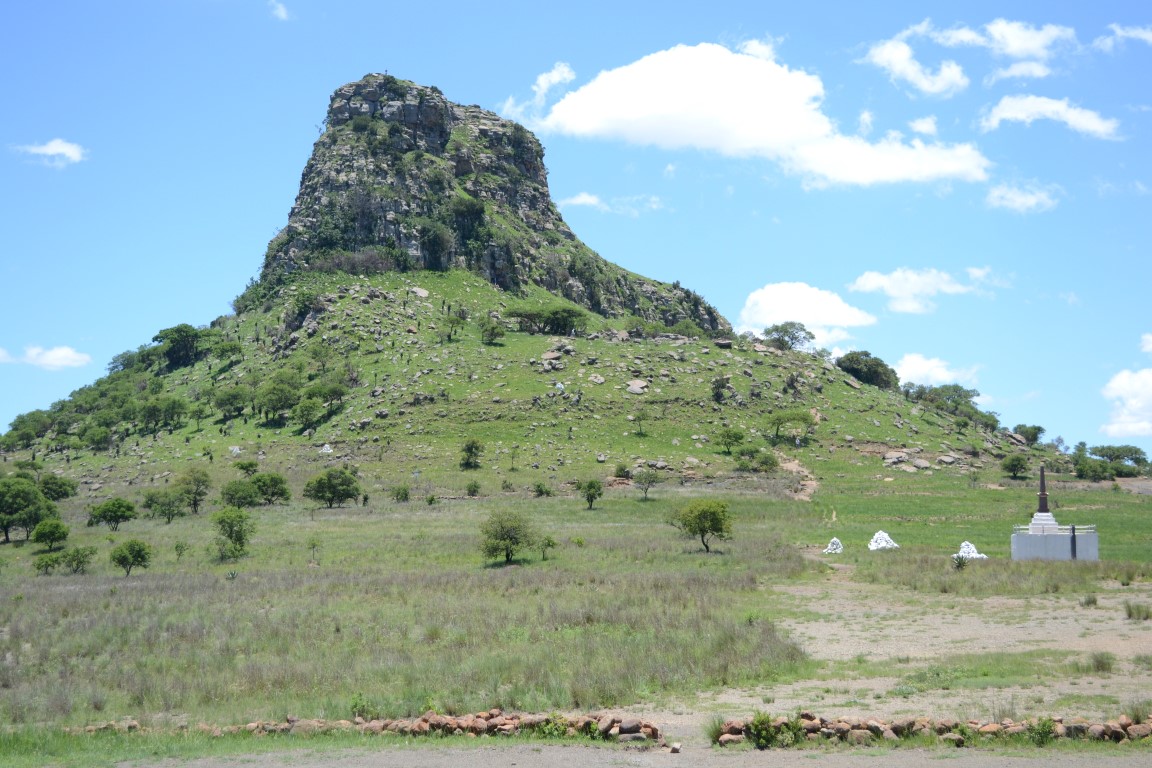
The war began with a British invasion of Zululand, and ended with almost 8,000 dead, a British victory and Zulu independence.
Now, a Zulu shield from the 1879 war is being put up for auction.
The rare tribal shield which belonged to a young Zulu warrior is believed to have been used in the infamous battle of Isandlwana, a massacre that claimed the lives of over 1,300 British soldiers.
The Zulu war shield, or ‘isihlangu’ for sale: expected to sell for £800 at an auction which is thought to have been used in the battle of Isandlwana
warrior in the massacre that took place immediately before the Battle of Rorke’s Drift.
holding shields in front of them and hit their target with it before stabbing them with a long spear.
David Smith, a former Royal Marine Commando from Beckenham, Kent amassed the collection.
There are over 150 items for sale including a wooden club that was used by an executioner, worth £300, and a necklace made from lion’s teeth worth £2,000.
Mr Smith died aged 65 in 2009 and the items are being sold by his partner, Roberta Welham.
Ian Knight, a historian for Wallis and Wallis, said: ‘In the 19th century every Zulu man had a shield.
‘Smaller examples of the shields were kept for personal use whereas the larger ones would have been used in battle.
‘I believe that the large, dark, shield in this collection could have been used in the Battle of Isandlwana in 1879 because in that particular war, the warriors were quite young.
‘Once the British had conquered the Zulu kingdom six months later it is likely that they gathered up items like these to take back home as a souvenir of the war.”
Asked if it was the ‘real thing’, Ian told the Courier: Yes. Those old war shields of the amabutho are a particular interest of mine, and I’ve seen quite a few real ones – I think the one they are talking about is definitely the real thing – although most surviving examples were looted after Ulundi (when the British) knew they had just won the war!) rather than at iSandlwana. Most of the souvenir-taking after iSandlwana went to the other side …!
‘They normally have a shelf life of around five years but it was probably well looked after and this would explain why it has remained in such good condition.
‘One of the spears in the sale was taken from the battlefield after the Ulundi war, we know that because a British troop appears to have carved ‘Ulundi’ and the year on it.
‘Other weapons in the sale are a spear called an Iklwa, because of the noise it apparently made when someone was stabbed with it, and an executioners club.
‘It is rare to see a collection of this size and I haven’t seen anything like it come up for sale during my whole time of collecting Zulu artefacts.’
The auction takes place on January 22.