NORTHERN KZN has the largest concentration of battlefields in South Africa, and they attract visitors from all over the world. The battlefields of this area, together with the game reserves and the Berg resorts, make tourism one of northern KZN’s biggest economic sectors. But the battlefields are under siege from vandals and grave robbers. There …
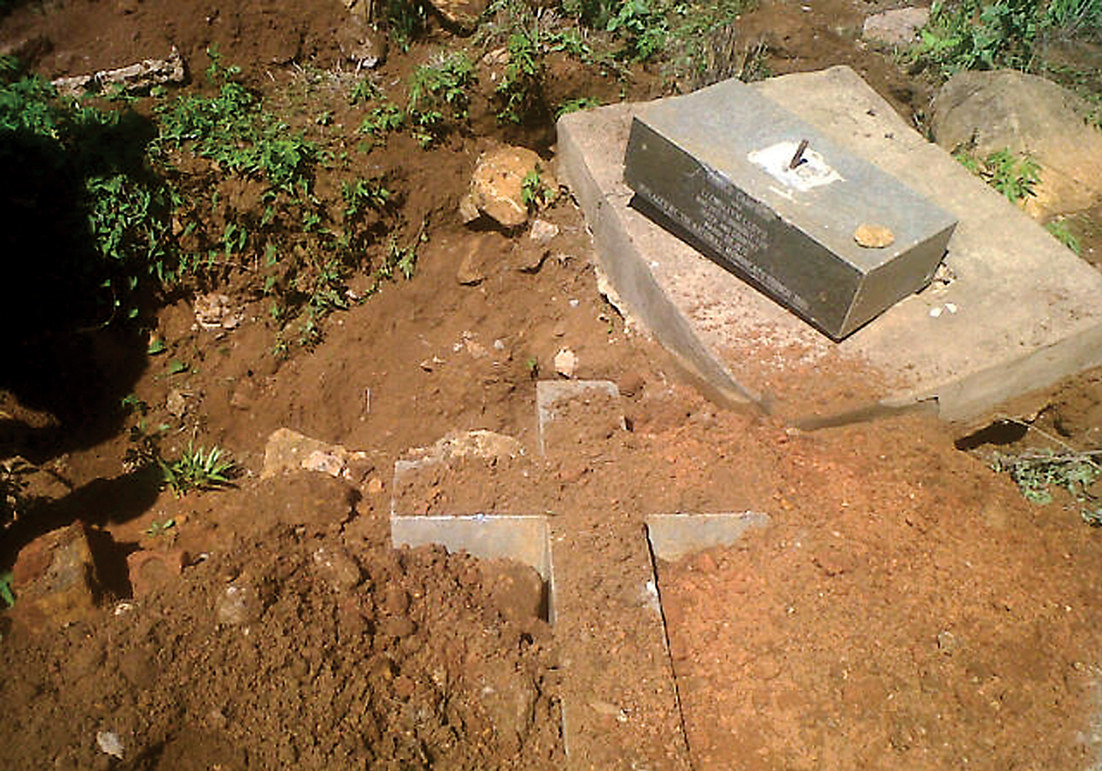
The grave on Hlobane mountain where Campbell and Lloyd are buried.
The grave on Hlobane mountain where Campbell and Lloyd are buried.NORTHERN KZN has the largest concentration of battlefields in South Africa, and they attract visitors from all over the world. The battlefields of this area, together with the game reserves and the Berg resorts, make tourism one of northern KZN’s biggest economic sectors. But the battlefields are under siege from vandals and grave robbers. There was a significant battle on Hlobane mountain on March 28, 1879 during the Anglo Zulu War. It was a resounding victory for the Zulu impi, although it was followed the next day, March 29, by the Battle of Kambula, when about 25,000 Zulu warriors attacked a fortified British position, and were driven off with heavy casualties. A report was received by the Vryheid Herald on December 22 last year that the British grave on Hlobane mountain had been dug up. This was confirmed on the eve of New Year when local battlefields tour guide, Wilfred Mchunu, led a party of people up the mountain to visit the site of the battle. His party consisted of three local people, and a French and a British tourist. What they found was that the grave of the British officers Campbell and Lloyd had been pillaged, probably by grave robbers looking for saleable relics – buttons, badges, insignia etc. The marking cross had been struck from its plinth, the grave marker dislodged from its slab, and the slab pried aside. Then the grave had been excavated, uselessly, the robbers would have discovered because the bodies would probably have been buried only in any undergarments. “It’s a great embarrassment, especially with foreign tourists,” said Mr Mchunu on Monday this week. He confirmed that it was a waste of time digging up military graves, because the deceased were buried without insignia, even without boots. Dave Sutcliff, KZN Guides Association Secretary added on Tuesday this week, that the deceased soldier’s effects would probably have been removed, auctioned among his comrades, and the proceeds sent with any personal items to the next of kin. In effect, there are no relics in military graves. AMAFA, the organisation that looks after the history of KZN, including the battlefields and the graves and monuments, has been advised of this attack on the heritage of the province. The SAPS will have been advised for investigative purposes, and then presumably the grave will be rehabilitated – until the next time, because the grave robber will not know there is nothing worth stealing.
At Caxton, every story is written by humans. We use AI only to perform quality checks - never to generate the news. Happy reading!