
The legend of the Bunny Chow unveiled
The Curry Parlour in Dundee is famous for their mutton, chicken or veg bunnies.
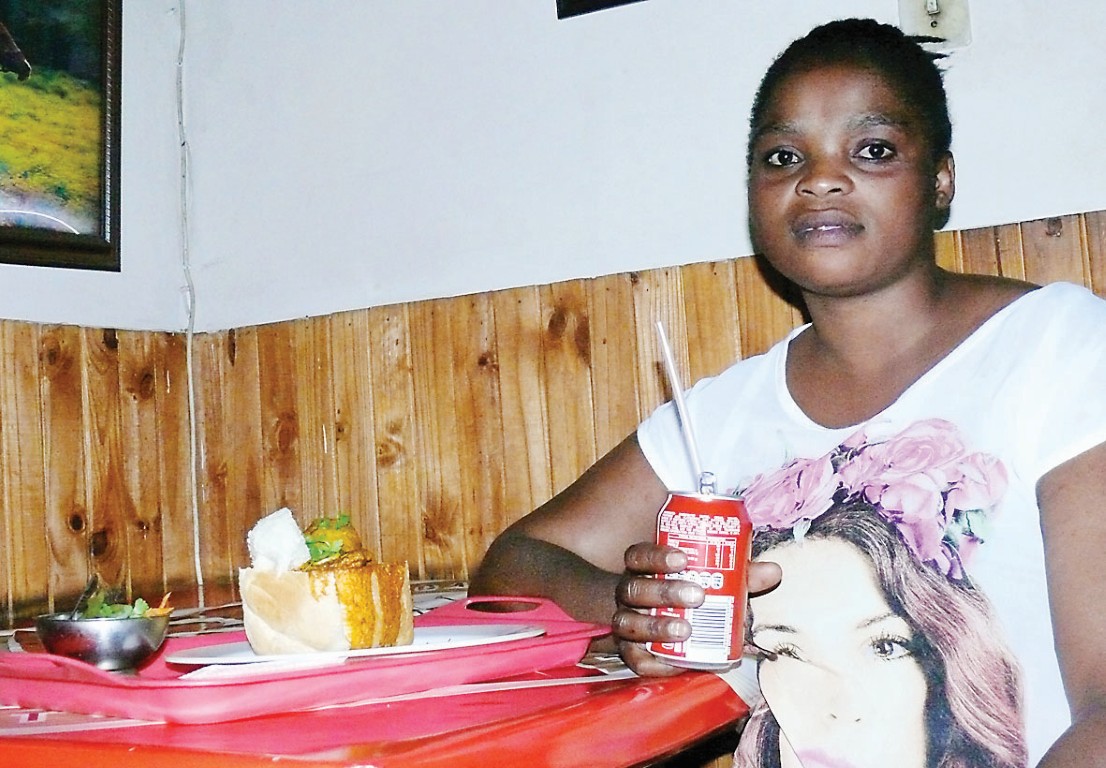
While marking Heritage Month, we are also looking (and tasting!) some of the traditional food and drinks that have made our area famous… first up the famous Bunny Chow that always has visitors to Dundee salivating when they search out The Curry Parlour on Beaconsfield Street:
The rich aroma of spices, fresh ingredients and the tantalising smell of Bunny Chows are found wafting through the air every time one passes the Curry Parlour. The Curry Parlour in Dundee is famous for their mutton, chicken or veg bunnies. Everyone knows where they can get their fix of bunnies from. But how much do you actually know about the bread with a hollow in it that is filled with steamy hot curries? Has one stopped in the midst of tearing apart a bunny and actually thought about from where did it orginate?
Stories of the origin of bunny chow date as far back as the migrant Indian workers arrival in South Africa. One account suggests that Indian migrant workers from India who were brought to South Africa to work the sugar cane plantations of Kwazulu-Natal (Port Natal) required a way of carrying their lunches to the field; a hollowed out loaf of bread was a convenient way to transport their vegetarian curries. Meat based fillings came later.
The use of a loaf of bread can also be ascribed to the lack of the traditional roti bread, in the absence of which a loaf of bread would be acceptable as an accompaniment to curry.
While another story suggests a restaurant run by people known as Banias (an Indian caste) first created the scooped-out bread and curry dish at a restaurant-cum-cafe called Kapitan’s on the corner of Victoria and Albert streets in Durban. The food was a means to serve take-aways to ‘excluded ‘people. During the apartheid era, Indians were not allowed in certain shops and cafes and so the shop owners found a way of serving the people through back windows, etc.
This was an easy and effective way to serve the workers. One story opines that the origin of this hand-held dish was due to Indian golf caddies not being allowed to carry cutlery during apartheid. Today Bunny Chows are available in many small take-aways and Indian restaurants throughout South Africa.
The price ranges from R6 for a quarter beans or dhal, to R40 for a quarter mutton bunny, and generally one can multiply the price of a quarter by between 3 and 4 to attain the price of a full bunny.

While one is not exactly sure as to where or how Bunny Chow made its way into the hearts of Dundonians, they are grateful for its existence. Dundonians share their love for bunnies with Durban. Where each year the Bunny Chow Barometer is held in September on the south bank of the Umgeni River, just above Blue Lagoon (a popular Sunday picnic spot), attracting numerous entrants from across the Durban Metro region to compete for the title of top bunny maker Dev Balgobind the proud owner of the Curry Parlour, explained his first encounter with a fish bunny when he was in hostel, which he compared to the quality of today’s bunny chow and deemed his first attempt horrible. Ever since that fateful fish bunny, Dev honed his bunny making craft, as a result of his keen liking to the aroma and taste of Indian food. When asked his secret behind making tasty bunny chows, he replied boldly “good selection of spices and masala, and the preparation of fresh food daily.”
Dev’s secrets to enjoying a Bunny are as follows:
*The correct way to refer to Bunny Chows when talking about them or asking for directions to the nearest purveyor is as Bunnies. The use of the word Chow will indelibly mark you as an outsider,
* Bunnies are mostly made with quarter-loaves of bread but you can ask for a half or full loaf if you’re very hungry. There is a taboo when it comes to ordering a Bunny and that is that you can’t mention the word Bunny. You should ask for the Bunny you want based on its size and the curry it is to contain as in: Gimme a quarter beef! They’ll know what you mean.
*The Bunny Chow should always be eaten with the fingers . The trick here is to avoid tearing off pieces of loaf which are below the current gravy line otherwise you end up with a steaming-hot mess in your lap. For much the same reason you should check whether your Bunny Chow was made from the end of a loaf or whether it is a Funny Bunny made from the middle and, hence, without a crust at the bottom. A Funny Bunny isn’t any less tasty but you do have to be careful to support the base in case it gives way and gives onlookers something to laugh about; you begin to see how it got its name?
*While eating your Bunny you may sweat and blow your nose often, Say “Whooee!! We’d better put some toilet paper in the fridge for tomorrow morning” , drink beer, a soft drink or milk.
*You may not betray that you’re in pain if the Bunny is too hot for your taste. Just relax and think of those nice endorphins you’re going to get when your brain finally gets into gear. Steer clear of the gravy if you are in real difficulties as experience has shown that it is the hottest part of the curry. Stick to the meat and, after a decent interval, scrunch up your Bunny in its wrapping and fling it quickly into a bin saying, “Damn, but I could eat two more of those.”