
The Celebration of Diwali…
The festival formally begins two days before the night of Diwali. Each day has the following rituals and significance.
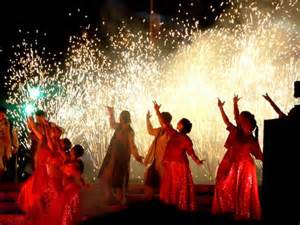
Like major festivals of the world, rituals and preparations for the Indian festival Diwali begin days or weeks in advance.
The festival formally begins two days before the night of Diwali. Each day has the following rituals and significance.
Ritual one: Dhanteras
Dhanteras starts off the five day festival. Starting days before and through Dhanteras, houses and business premises are cleaned, renovated and decorated. Women and children decorate entrances with Rangoli – creative colourful floor designs both inside and in the walkways of their homes or offices. Boys and men get busy with external lighting arrangements and completing all renovations. On the night of Dhanteras, diyas (lamps) are ritually kept burning all through the nights in honor of Lakshmi and Dhanvantari.
Ritual two: Naraka Chaturdasi
Narak Chaturdasi is the second day of festivities, and is also called Choti Diwali (mini diwali). Typically, house decoration and colourful floor patterns called rangoli are made on or before Narak Chaturdasi. Special bathing rituals such a fragrant oil bath are held in some regions, followed by minor pujas. Women decorate their hands with henna designs. Families are also busy preparing homemade sweetmeats.
Ritual three:Lakshmi Puja
Rangoli or Kolam decorations for Diwali, are prepared from coloured flour (shown), or with flower petals. They are floor decorations near entrances and corridors to welcome goddess Lakshmi and guests.
The third day is the main festive day. People wear new clothes or their best outfits as the evening approaches. Then diyas are lit, pujas are offered to Lakshmi, and to one or more additional deities depending on the region of India; typically Ganesha, Saraswati, and Kubera.Lakshmi symbolises wealth and prosperity, and her blessings are invoked for a good year ahead.
Lakshmi is believed to roam the earth on Diwali night. On the evening of Diwali, people open their doors and windows to welcome Lakshmi, and place diya lights on their windowsills and balcony ledges to invite her in. On this day, the mothers who work hard all year, are recognized by the family and she is seen to embody a part of Lakshmi, the good fortune and prosperity of the household.Small earthenware lamps filled with oil are lit and placed in rows by some Hindus along the parapets of temples and houses. Some set diyas adrift on rivers and streams. Important relationships and friendships are also recognized during the day, by visiting relatives and friends, exchanging gifts and sweets.
After the puja, people go outside and celebrate by lighting up patakhe (fireworks). The children enjoy sparklers and variety of small fireworks, while adults enjoy playing with ground chakra, Vishnu chakra, flowerpots (anaar), sutli bomb, rockets and bigger fireworks.The fireworks signify celebration of Diwali as well a way to chase away evil spirits.After fireworks, people head back to a family feast, conversations and mithai (sweets, desserts).
Information sourced from the internet.