
Beekeepers – Defenders of the Last Post…?
This weekend has seen the honouring of honey bees and bee keepers during National Honey Bee Day. Courier writer and local bee keeper, Johann Hamman, explains why it is said that when the last bee dies, mankind will also die within four years..
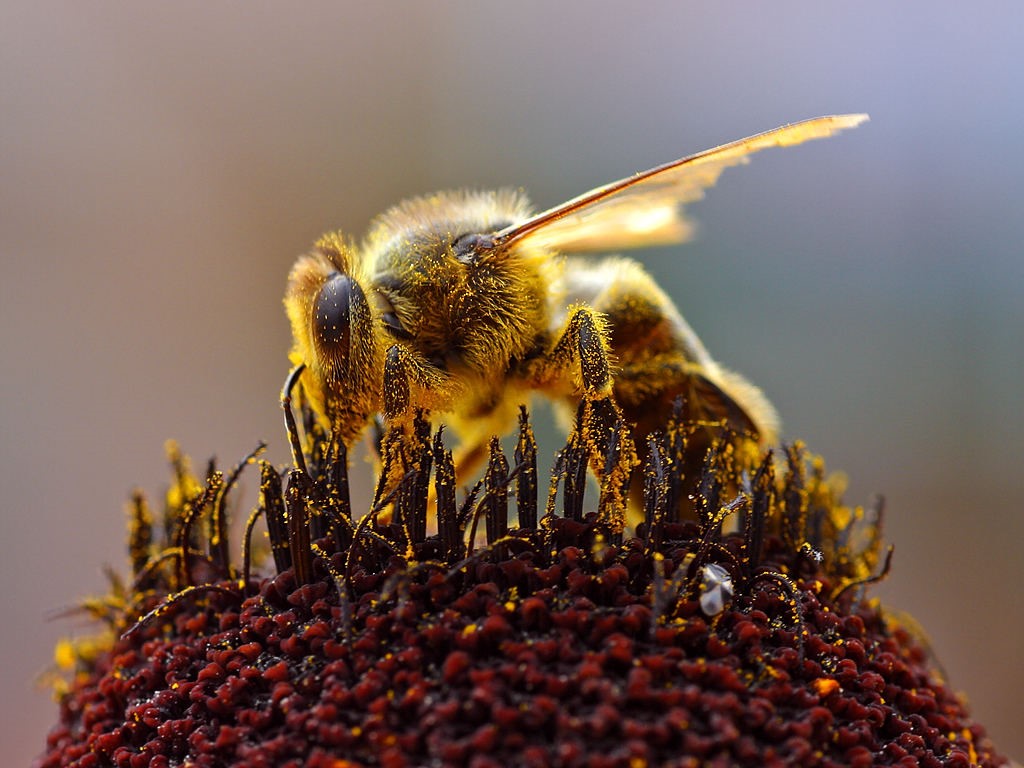
There is currently a range of arguments and discussions going on, on websites and across the spectrum of beekeeper forums available.
They all have one characteristic in common. There is a problem with the world’s bee population. A popular quotation attributed to Albert Einstein is the one that mentioned that mankind would have only four years left after the last bee died. There is no consensus that he did actually say this. There is surely a problem looming on the horizon with the declining bee population, and we do not really know what cause lies behind this phenomenon. Colony Collapse Disorder is the one cause that had been mentioned, but it is more likely that indiscriminate poisoning is the main culprit.
First of all, let us get the often- misquoted and wrongly represented “African Killer Bee” out of the way. My, or our bees, Apis mellifera scuttelata, are not African Killer Bees. The African Killer Bee – quite often an undeserved reputation for a very hardworking African honeybee is a hybrid.
That’s right. It’s a hybrid, and it originated in Brazil in October of 1957, probably by accident, by it is not clear. (https://en.wikipedia.org/wiki/Africanized_bee – site visited in November 2014). These bees were interbred by a biologist, Warrick Kerr, who attempted to create a bee strain that would produce more honey, and would be more attuned to tropical conditions. He used Southern African and a European strain of honey bee that was in use all through the Americas.
This was done at an apiary near Rio Claro, São Paulo, in the southeast of Brazil. They observed that the bees were especially defensive. These hives had queen excluders fitted to prevent the larger queen bees and drones getting out and mating with the local population of European bees.
But, in October 1957 a visiting beekeeper, noticing that the queen excluders were interfering with the worker bees movement, removed them. This resulted in the accidental release of 26 Tanganyikan swarms of A. m. scutellata. Following this accidental release, the Africanized swarms spread out and cross-bred with local European colonies; their descendants have since spread throughout the Americas. Because their movement through South and Central America was rapid and largely unassisted by humans, Africanized bees have earned the reputation of being one of the most successful biologically invasive species of all time.
I have been keeping them now for a good length of time, and had only been stung twice. We are hoping to get another four hives going in the new season, which presents a challenge, as we have to capture these swarms from travelling bees.
There is no shortage of bees in Dundee. We are aware of a couple of wild hives, which will become the focus of our attention as soon as we have all the necessary equipment to capture them. We are still putting our bee-vac together, and will start taking swarms in September.
Beekeeping is a fascinating hobby. Watching these industrious little insects, with their degrees in German engineering, provides a satisfaction of note, especially when you harvest that first frame of honey.
There are an estimated 3000 bee species in Africa, and about 20 000 worldwide. Now why are these little insects of such an extreme importance to mankind? Pollination is fundamental to the reproduction of plants, and plants are of fundamental importance as primary suppliers to all terrestrial life. Like Einstein said, “When the last bee dies, mankind has only four years left.”