Resident calls for traffic official to be considerate to the disabled
STATION commander of Vryheid's Road Traffic Inspectorate (RTI), Mr BN Ndlandzi, has promised to take strict action against traffic officials who abuse their authority and violate the law.
STATION commander of Vryheid’s Road Traffic Inspectorate (RTI), Mr BN Ndlandzi, has promised to take strict action against traffic officials who abuse their authority and violate the law.
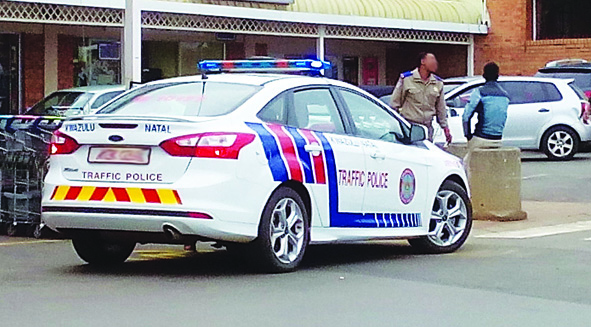
This follows a photograph submitted by a concerned reader, of an official RTI vehicle parked in a bay meant for the disabled at the parking lot of a local supermarket.
“Traffic officials are only allowed to use the parking meant for the disabled if there is an emergency that they are attending to,” said Mr Ndlandzi.
While the smiling traffic official who parked the vehicle is also visible in the photograph, the photograph does not seem to reveal any situation that would constitute an emergency.
Mr Ndlandzi promised to investigate the matter and provide feedback once he had had the opportunity to question the traffic official.
The store manager of the supermarket in question said the allocation of specific parking bays to accommodate the disabled was common practice and that his store respectfully encouraged only disabled people to make use of this facility.
“It is unfortunate that we did not witness the incident ourselves. If I had to see someone parking there, who was not disabled, I would definitely approach the person and ask them not to park there.
“We have the sign up that indicates that the parking is meant for disabled people and we make sure that there is sufficient parking to accommodate the general public so that there is no need for able-bodied motorists to use the parking for the disabled,” he said.
According to the last census, 2.9million South Africans (7.5% of the country’s total population) suffer some form of disability. In KwaZulu-Natal 620 000 people (8.4% of KZN’s population) are disabled.
www.disabilityawareness4you.wordpress.com recommends the following ways to show residents who have a walking disability that you respect and care about them:
1. Always ask the person if they need help before helping him/her. Sometimes people with physical disabilities appear to be struggling, when in actuality they are just acting in a way that works best for them.
I know this from personal experience.
Opening doors can be hard, but I have found ways to do it; therefore, always ask before you help.
2. Never touch a person’s equipment. Whether it be crutches, a wheelchair, a white cane, or a guide dog, it is in your best interest to avoid handling equipment that belongs to someone with a disability.
You may not know how to handle the object, or how fragile it is, so do not touch these aids.
If, for example, a person’s crutches are on the floor and you are unsure if she can bend down to pick them up, ask her first.
She will let you know if she needs assistance. Otherwise, show the person respect by respecting her equipment because it is as much a part of her as an arm or leg is part of you.
3. If you witness a person fall, ask before you help him. Many times when people fall it is expected that you lend them a hand and help them get back up.
However, when people with disabilities fall, the consequences could be much worse than embarrassment (broken bones, etc.). Ask the person how you can help them and go from there.
4. Never lean, push, or sit on a person’s wheelchair. Just as crutches are part of a person’s body, a wheelchair is also a part of its user’s body and personal space. No matter how friendly you are with the person, respect their space by not handling their wheelchair.
NEVER sit on a person’s wheelchair without their permission. If the person can get out of his/her wheelchair, and he/she asks you to watch it while they do something (i.e. visit the bathroom), it is still not wise to sit in their chair.
You do not know the ins and outs of it like they do, and you do not want to break a piece of equipment that someone relies on for everyday or part-time use.
5. Feel free to get on her level. If it makes you feel comfortable to kneel or sit down in order to be at eye level with a person in a wheelchair, feel free to do it.
If you work in an office and a person who uses a wheelchair needs your service, sometimes it is necessary to come into the waiting room, instead of trying to peer over the desk.
Be aware of situations like these. Again, people with disabilities want to be treated as equals in society, so it is perfectly reasonable to make accommodations in order to make them feel comfortable.
6. Keep ramps and accessible walkways clear. It is very frustrating for wheelchair users to take alternate paths, designated as wheelchair accessible, only to be denied access to a building or store due to blockage.
Always think before you park your bike, car, or place objects on walkways without steps or ramps.