President Ramaphosa announces ease in travel restrictions to boost tourism, ways of igniting the mining industry and ways to drop data prices
'As South Africans, we have confronted challenges far greater than this before.'
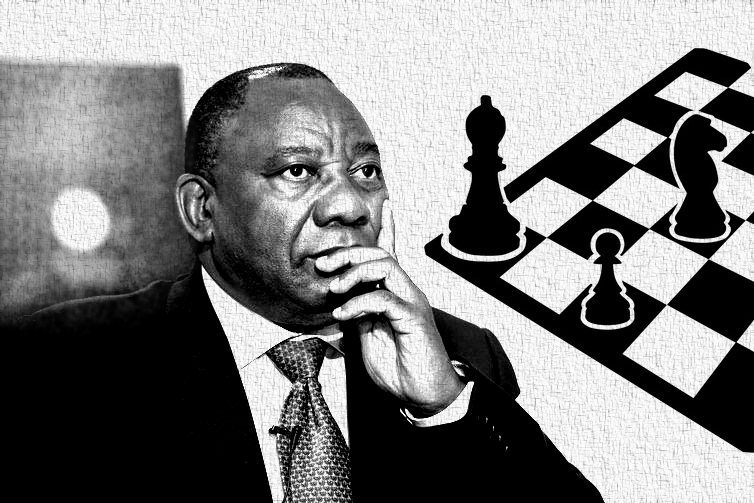
South African President Cyril Ramaphosa announced the implementation of the Economic Stimulus and Recovery Plan today to improve the country’s economy.
He said that in order for our economy to grow and for jobs to increase, the increase in investment must be prioritised. Funds will be redirected to the areas listed below.
This is what you need to know:
There are five key aspects to the ‘Economic Stimulus and Recovery Plan’:
Restore investors confidence
Prevent further job losses and create more jobs
Address urgent challenges faced by vulnerable groups
Address the municipal areas such as electricity rates
Within the next few weeks, governments will initiate the process for the allocation of high-demand radio spectrum to enable licensing. “This will unlock significant value in the telecommunication sector, increase competition and reduce data cost. This will provide relief for poor households, students and overall competitiveness of the country.”
- Agriculture will also be prioritised due to its huge potential which Ramaphosa suggested had been proved multiple times
- Township economies will be addressed and much assistance will be given to grow this sector
- Dire state of sanitation at many schools and complete 1 100 sanitation projects
- Shortage of tools in hospitals such as beds and linen while the Minister of Health, Dr Pakishe
- Aaron Motsoaledi, will fill 2 200 critical medical posts including nurses and interns
- Focus on infrastructure.
Minister of Finance, Nhlanhla Nene, said that the reprioritisation of funds will mainly come from underperforming programmes but that more will be explained in the medium-term budget.
Of particular interest to the Dundee area, the President made the following comments on the tourism and mining industries:
Within the next few months, amendments will be made to regulations on the travel of minors, the list of countries requiring visas to enter South Africa will be reviewed, an e-visas pilot will be implemented, and the visa requirements for highly skilled foreigners will be revised.
These measures have the potential to boost tourism and make business travel a lot more conducive.
Tourism continues to be a great job creator and through these measures we are confident that many more tourists will visit South Africa.
It is imperative that South Africa restores investment and exploration levels in the mining sector as mining and mineral beneficiation activities have significant potential to drive long-term growth, exports and job growth. These measures have the potential to boost tourism and make business travel a lot more conducive.
Following extensive consultation that involved industry players, communities, labour and government, Cabinet approved the revised Mining Charter.
It is imperative that South Africa restores investment and exploration levels in the mining sector as mining and mineral beneficiation activities have significant potential to drive long term growth, exports and job growth.
This will revitalise the mining industry and provide certainty to investors while charting a sustainable path towards a transformed and inclusive industry.
Parliament will be requested in terms of its Rules not to proceed with the Mineral and Petroleum Resources Development Act Amendment Bill, which has contributed to a lot of uncertainty in the sector.
Separate legislation for the regulation of the oil and gas industry will be drafted through the government’s legislative process.
To reduce the cost of doing business, to boost exports and to make the South African industry more competitive, government has begun a review of various administered prices, starting with electricity, port and rail tariffs.
The South Africa Infrastructure Fund will reduce the current fragmentation of infrastructure spend and ensure more efficient and effective use of resources.
The private sector will be invited to enter into meaningful partnerships with government in this fund.
The contribution from the fiscus towards the Infrastructure Fund over the medium-term expenditure framework period would be in excess of R400 billion, which we will use to leverage additional resources from developmental finance institutions, multilateral development banks, and private lenders and investors.
To ensure these funds are used effectively and that projects are completed on time and on budget, we are establishing a dedicated Infrastructure Execution Team in the Presidency that has extensive project management and engineering expertise to assist with project design and oversee implementation.
The team will identify and quantify ‘shovel ready’ public sector projects, such as roads and dams, and engage the private sector to manage delivery.
The role of the PICC will be strengthened to ensure improved coordination across the three spheres.
As part of the reprioritisation of spending, additional infrastructure funding will be directed towards provincial and national roads, human settlements, water infrastructure, schools, student accommodation and public transport.
In support of the stimulus efforts, the IDC will be targeting to increase its approvals to R20 billion over 12 months, an increase of 20% on the previous year.
This funding will target the productive sectors of the economy, including manufacturing, mining, industrial infrastructure and sectors in distress.
We also need short-term municipal investments to address the challenges that our people face.
We have identified 57 priority pilot municipalities in order to unlock infrastructure spending in the short term.
This spending will cover, among other things, sewerage purification and reticulation, refuse sites, electricity reticulation and water reservoirs.
Cutting across all these measures are series of interventions to ensure that growth is labour intensive and that young people in particular are drawn into the labour market.
Some of these measures include the extension of the Employment Tax Incentive for a further 10 years, with a review after five years, greater support for public employment programmes, additional support for the clothing and textiles sector, and the use of funds from the Unemployment Insurance Fund to support labour activation programmes.
As South Africans, we have confronted challenges far greater than this before.
By working together, we managed to end a seemingly intractable conflict and set our country on the path to a peaceful transition to democracy.
Now, we have it within us to come together once more and forge a new path of growth, jobs and transformation.
We are confident that the four elements of our economic stimulus and recovery package will play a decisive role in reversing the recent contraction of the South African economy.
Together, we are taking bold and concrete measures to ensure a clear and sustained improvement in the lives of all South Africans.