Trees under threat from tiny ‘terrorist’
There is a new threat to trees in Newcastle...
A tiny beetle may be the biggest threat ever to trees in the Newcastle area.
Although tests and trials are still to be conducted by experts in the field of microbiology, one resident believes a tree in his yard was infested with the polyphagous shot hole borer (PSHB), a species of beetle wreaking environmental havoc in some areas across the globe.
The beetle is believed to originate in southern Asia.
By means of a fungus which is deadly to trees, PSHB has since spread its eco-terrorism to the USA, the Middle East and parts of South Africa such as Pietermaritzburg, Knysna and Johannesburg.
Farmers are concerned this beetle may infiltrate the Newcastle ecosystem.
Craig Petersen, who farms with pecan nuts, first raised the alarm after hearing about possible infestations in the Dundee area and then some closer to home.
“In the Joburg area, it’s hit many trees. The more details we can get into the public domain, the less chance our trees are affected.”
The resident, who believes his tree was infested with PSHB, is Pastor Thomas Beneke of the Evangelical Lutheran Church and children’s home, St Martins Village.
He had previously read up on the beetle and took swift action.
“I noticed the symptoms, and cut down and burned the tree. I kept one of the beetles in a bottle in case someone wanted to test it.”
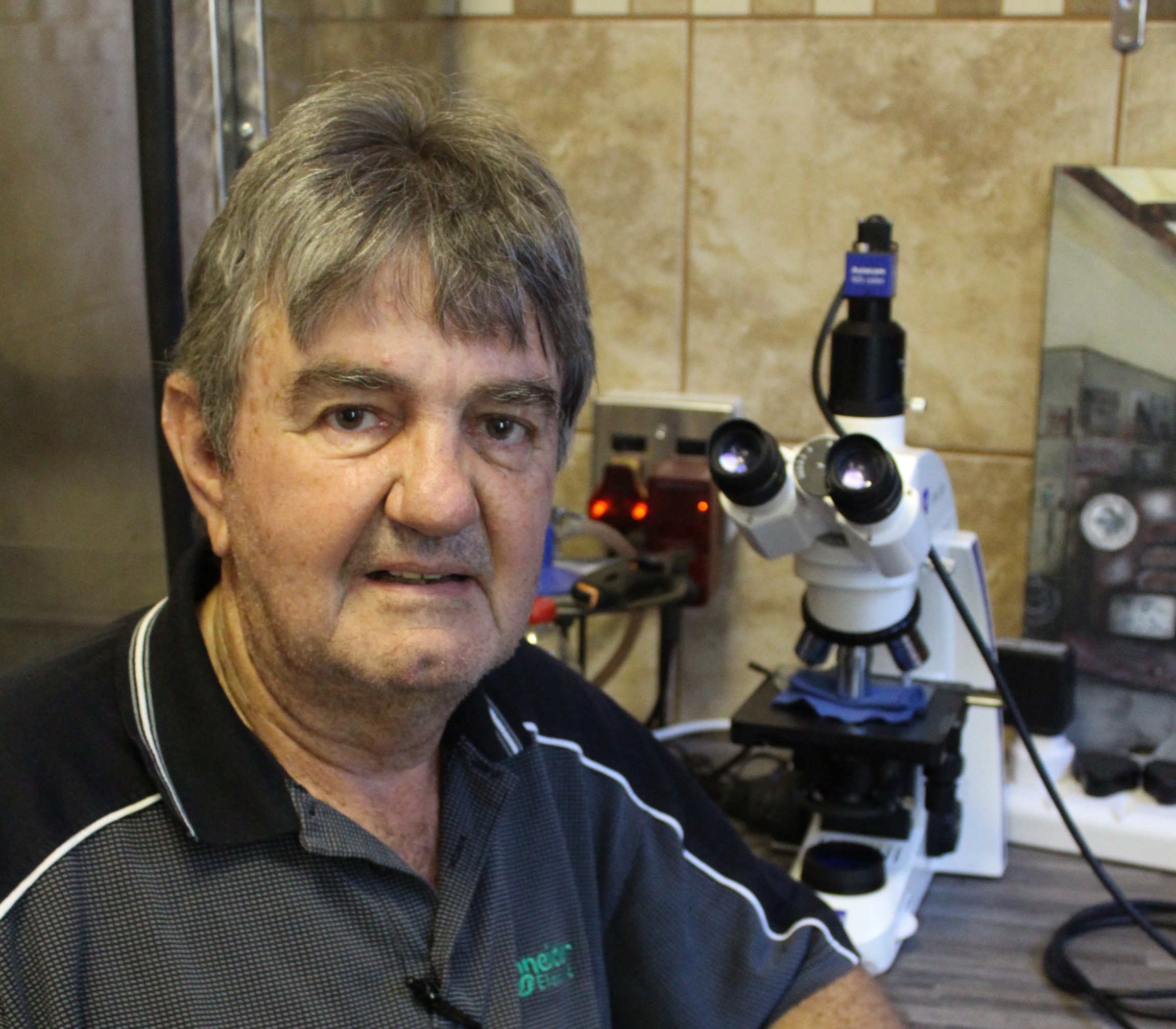
Microbiologist, Eddie Honeyball is yet to confirm the presence of PSHB.
In the meantime, he explains it isn’t the borer that kills off trees, but rather the fungus with which it shares symbiosis, which spreads into a tree’s vascular system.
“The fungus goes where it’s moist and stops the flow of moisture in the tree.”
Honeyball says grapevines and avocado, pecan nut, peach and orange trees are most at risk from PSHB, which is a huge concern for areas of the Lowveld.
Once a tree is infested, there is no cure.
The only way to stop the spread of PSHB, and its killer fungus, is to cut down an infected tree, chop it into smaller pieces and burn the wood entirely.
Honeyball also believes it can be stopped by breaking the life cycle.
“During winter, the beetle nests under the bark of trees and emerges at the end of spring and the beginning of summer, to feed on leaves and twigs. You need to catch the beetle then.”
Using the dead beetle from Beneke, Honeyball is conducting a series of trials on PSHB and is testing biological control methods against the fungus it spreads.
He believes this will prove more effective than pesticides. Honeyball has also been contacted by Wilhelm de Beer, Associate Professor at the Forestry and Agricultural Biotechnology Institute (FABI), who is keen to confirm if PSHB is active in the Newcastle area.
“The only way to reliably confirm whether this is the beetle, is by DNA sequencing of both the beetle and fungus.”
In the meantime, residents are urged to keep a close eye for any warning signs, and to act immediately to prevent Newcastle from possibly losing its trees to a fungus epidemic.
“This is potentially a massive threat to Newcastle,” concludes Petersen.
ALSO READ: Termites chew on trees
Contact us
WhatsApp: 082 874 5550
Email: Reveshni Douglas (Editor) at reveshni@caxton.co.za
Make sure you follow us for regular updates: