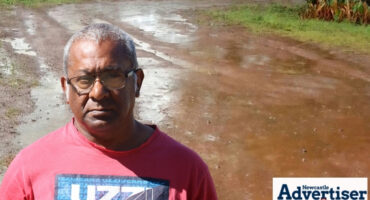
Manjit’s battle with Myelodysplastic Syndrome
Manjit Kooner's journey with Myelodysplastic Syndrome (MDS) has been a challenging one, marked by strength, resilience, and unwavering determination.

In 2022, Manjit was diagnosed with a rare blood disorder after experiencing symptoms such as anaemia, breathlessness, dizziness, fatigue, and loss of appetite.
Despite these overwhelming challenges, Manjit has faced his diagnosis with courage, fighting every day for his health and well-being.
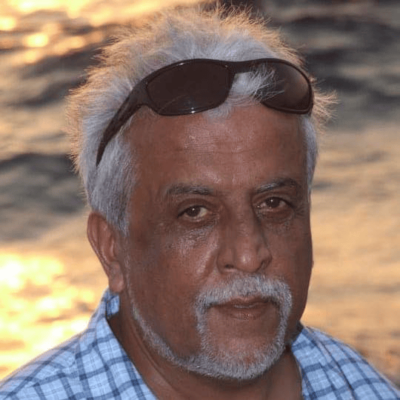
His wife, Ashieka, said despite going to see several specialists, it was only after he saw a haematologist that his condition was accurately diagnosed through a bone marrow biopsy.
Following a two-month wait, the diagnosis was made as MDS, and Manjit immediately began chemotherapy, which continued until December 2023, when he hit a bad streak—renal failure.
Admitted to the hospital for two months, he fought through a very tough period and resumed chemotherapy with new energy.
“Manjit has since undergone five bone marrow biopsies, the most recent of which indicated his bone marrow was not functioning to produce platelets and blood cells,” explained Ashieka.
Repeated transfusions of platelets and blood were administered to him over six weeks in the hospital, but sadly, these were not enough to maintain his levels and special injections that were brought in to stimulate production were not enough to turn his situation around.
Adding to the complexity, Manjit also requires special HLA-matched platelets.
However, despite the constant efforts to find one, the South African National Blood Service (SANBS) has been unable to find a suitable donor.
His compromised immune system has forced him into isolation from family and friends, and frequent journeys to treatment and on-going care have weighed heavily on those closest to him.
“Despite it all, uncompromising motivation from family members, friends, and even passers-by have provided hope and resilience,” said a hopeful Ashieka.
Currently, Manjit’s only hope to survive is through a stem cell (bone marrow) transplant.
DKMS, a global stem cell transplant foundation, has stepped in to organise a donor drive to find a match.
The international registry of the foundation brings hope not only to Manjit but to many more in need.
They are stored on the database when they become a registered donor and can be contacted if they match someone in need.
Becoming a donor is simple. DKMS posts a swab kit, by courier, with simple instructions to follow. Once the swabs are taken, the test determines if the individual is a match or not.
“Even if not a match for Manjit, registering can save another life,” said Ashieka.
Until a match is found, Manjit’s battle rages on with the hopes that an unexpected life-saving match could be found.
Myelodysplastic Syndrome (MDS) – causes, symptoms, and treatment:
Myelodysplastic Syndrome (MDS) is a group of disorders in which the bone marrow produces abnormally shaped or abnormal blood cells.
This causes the body to not get enough healthy red blood cells, white blood cells, or platelets, and various health issues occur.
MDS is considered to be a cancer and, from time to time, will turn into acute myeloid leukaemia (AML), which is more severe blood cancer.
Causes and risk factors:
- MDS develops from mutations in cells in the bone marrow that affect the regular production of blood cells.
Certain known risks include:
- Aging: more frequent in individuals 60 and older.
- Previous cancer therapy: Radiation therapy or chemotherapy increases the risk.
- Exposure to chemicals: Certain chemicals like benzene and pesticides have been linked with MDS.
- Smoking: Cigarettes contain poisonous chemicals that might damage the bone marrow.
Signs and symptoms:
- Signs and symptoms of MDS vary with the level of scarcity of blood cells.
Some of the general signs are:
- Fatigue and weakness.
- Frequent infections.
- Easy bruising or bleeding.
- Shortness of breath.
- Pale skin.
Diagnosis of MDS includes a series of tests, including:
- Complete blood count (CBC).
- Bone marrow biopsy.
- Cytogenetic testing.
Treatment options:
- There is no one-fits-all cure for MDS, but treatment can relieve symptoms and halt disease progression.
Options include:
- Blood transfusions.
- Medications.
- Chemotherapy.
- Stem cell transplant.
Understanding stem cell donation:
Stem cell donation gives hope to patients suffering from life-threatening blood disorders like leukaemia, lymphoma, and aplastic anaemia.
A transplant is the only hope for survival for most patients.
What are stem cells?
- Stem cells develop into red and white blood cells and platelets needed for a healthy immune system. They are found in bone marrow, peripheral blood, and umbilical cord blood.
Who needs donations?
- Leukaemia, myelodysplastic syndromes, or inherited immune deficiency patients need transplants to replace defective cells with healthy ones, reviving their immune system.
Types of donation:
- Bone marrow:
- Peripheral blood stem cells (PBSC):
- Umbilical cord blood:
Who can donate?
- You can donate if you are in good health and between the ages of 18-55.
Process:
- Register: Join and give cheek swab.
- Match: Compatibility is positively determined with some further tests.
- Give: Stem cells are obtained by bone marrow harvest or PBSC donation.
- Recovery: Donors recover within a few days.
Why donate?
- Stem cell donation is a befitting act that gives patients a second chance at life.
Be among the likes of the South African Bone Marrow Registry (SABMR) or DKMS and become a miracle for somebody today.
The news provided to you in this link has been investigated and compiled by the editorial staff of the Newcastle Advertiser, a sold newspaper distributed in the Newcastle area. Please follow us on Youtube and feel free to like, comment, and subscribe. For more local news, visit our webpage, follow us on Facebook and Twitter, and request an add on our WhatsApp (082 874 5550).