Sakekamer says town needs recovery plan after steel plant closure
The Sakekamer has warned that the steel plant closure continues to weaken Newcastle's economy.
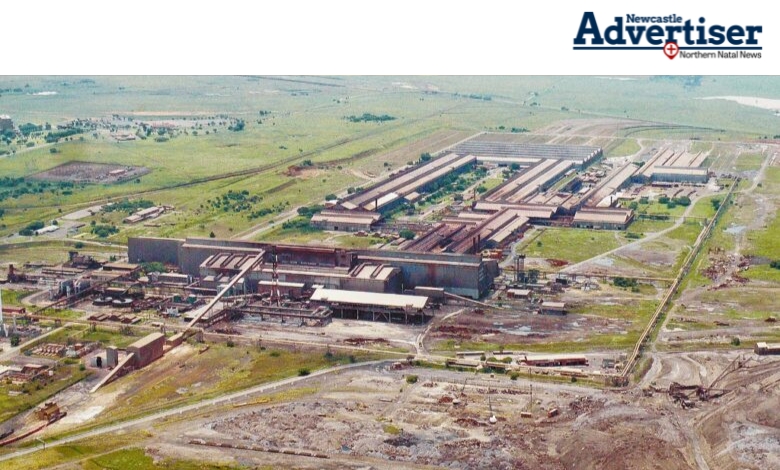
The Newcastle Sakekamer says the closure and placing of ArcelorMittal South Africa’s Newcastle Works into care and maintenance has had a serious impact on employment, household spending, local business confidence and investment in the town.
AMSA’s results for the six months ending June 30, 2026, show that crude steel production declined by 35%, while total steel sales volumes declined by 28% following the closure of Newcastle Works.
The company reported an EBITDA loss of R409 million and a headline loss of R1.489 billion.
Newcastle Sakekamer president Morne Seaman said the local impact extended far beyond those who had been directly employed by the plant.
“Newcastle Works formed part of the economic foundation of the town. Its closure affected employees, contractors, suppliers and service providers, but the impact did not stop there,” Seaman said.
“When households lose income or become uncertain about their financial future, they reduce spending. That affects retailers, restaurants, property owners, transport operators, professional services and many other businesses that may never have supplied the steel plant directly.”
The Sakekamer has observed job losses, reduced household spending and increased caution among local businesses.
Some businesses have reconsidered or delayed plans to expand, appoint additional employees or invest in new equipment and premises.
Seaman said the level of impact differed between businesses and sectors, and that Newcastle still required a comprehensive economic-impact assessment to quantify the full consequences.
“We should not exaggerate the position, but we should also not minimise it.
Diversification key to recovery
“There is a clear decline in confidence, and uncertainty is influencing both household and business decisions.” Despite these pressures, the Sakekamer believes Newcastle can recover.
“Newcastle remains an important regional business centre. We have industrial experience, skilled people, established businesses and infrastructure that can support future development.
“However, the town cannot continue to depend on one major employer or a single industry,” Seaman said.
The Sakekamer is calling for a co-ordinated recovery and diversification programme involving business, Newcastle Municipality, provincial and national government, organised labour, development agencies and educational institutions.
Priority areas should include retaining existing businesses, expanding local procurement, assisting affected employees, supporting small businesses, attracting new manufacturers, and identifying alternative productive uses for industrial assets and land. Municipal service delivery will be central to any recovery effort.
“Reliable water, electricity distribution, roads, sanitation, waste removal and efficient approval processes are not optional extras. They are the foundation of investor confidence,” Seaman said.
“Government cannot promote Newcastle as an investment destination while businesses remain uncertain about essential services and infrastructure.”
The Sakekamer would also like the provincial and national governments to consider targeted investment incentives, infrastructure projects, support for affected suppliers and employees, improved freight and logistics infrastructure, and stronger programmes to attract manufacturing and industrial investment to the area.
Community seeks certainty on Newcastle Works
AMSA has indicated that discussions with the ArcelorMittal Group and the Industrial Development Corporation concerning a potential transaction are at an advanced stage, although the discussions remain subject to final agreements and approvals.
Seaman said a successful transaction could strengthen confidence, but cautioned that its significance for Newcastle would depend on the details.
“A transaction at the group level does not necessarily mean that Newcastle Works will restart.
“What Newcastle needs is clarity about what any agreement will mean for the plant, its employees, local suppliers and the future use of the site.”
The Sakekamer believes the preservation or restoration of commercially sustainable industrial activity would be the best outcome for Newcastle.
Should a restart not be viable, alternative manufacturing and industrial uses for the site should be investigated without unnecessary delay.
“Uncertainty cannot be allowed to continue indefinitely. The community and potential investors need a clear understanding of what the future holds,” Seaman said.
He added that Newcastle’s recovery would depend on practical implementation rather than further studies without action.
“We remain optimistic about Newcastle, but optimism alone will not create jobs or attract investment. The town needs a clear recovery plan, identified projects, responsible institutions and measurable deadlines.
“The closure has undoubtedly been a major setback. It does not, however, have to define Newcastle’s future.
“With decisive leadership, reliable infrastructure, and genuine co-operation between business and government, Newcastle can rebuild and create a broader, more resilient economy.”
The news provided to you in this link has been investigated and compiled by the editorial staff of the Newcastle Advertiser, a sold newspaper distributed in the Newcastle area. Please follow us on Youtube and feel free to like, comment, and subscribe. For more local news, visit our webpage, follow us on Facebook and Twitter, and follow us on our WhatsApp Channel