Bylaws hopes to tame farm animal outcry in Glencoe
Ongoing disputes over unenforced public offences took a new turn when officials met to tackle a fresh issue—livestock roaming suburban streets.
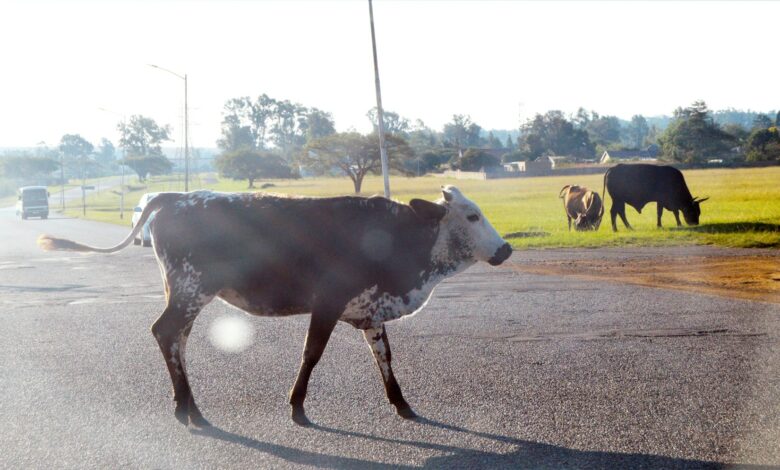
The spike in Foot-and-Mouth Disease (FMD), coupled with a barrage of complaints from mainly Glencoe residents over the keeping of farming animals in residential areas, prompted the municipality to host a public meeting where the long-suffering issue of bylaws was discussed.
More on Foot-and-Mouth Disease (FMD) in the area
For years now, the municipal bylaws have been a tug-of-war between the municipality and the SAPS, with the latter maintaining that the court does not prosecute cases such as drinking/urinating in public, and public disturbances, etc, as there are no fines attached to these offences.
While that remains moot for many officials on both sides of the fence, last Tuesday’s meeting in Glencoe aimed to discuss bylaws aimed specifically at livestock in the suburbs.
The meeting focused on regulations adopted on December 4, 2012, and implemented from March 1, 2015 – aimed at controlling the presence of stray animals.
However, the laws have not been implemented.
Ward Councillor Saleem Abdool opened the meeting by welcoming community members, with Chief of Traffic & Protection Services, Alfred Nsibande, presenting a detailed overview of the bylaws – which require livestock owners to obtain permits if they wish to keep animals on residential property.
Regulations also mandate that livestock must be housed at least 50 metres away from water sources used for human consumption; and that premises must be kept clean and sanitary, while sheds must be provided and the property properly fenced.
Traffic officers have undergone training on how these laws are meant to control livestock, and the officers will be reacting to complaints and taking action if necessary.
Offenders will have their animals impounded where the upkeep charge is R50 per day for small animals and R100 for large animals.
A local vet warned of the growing threat that FMD poses in Northern KwaZulu-Natal and other provinces. She noted that livestock movement is now heavily restricted, with transportation between provinces banned.
Livestock may only be moved with official clearance certificates issued by the Department of Agriculture in Pietermaritzburg.
The Glencoe SAPS emphasised the importance of livestock brand marks, which assist in identifying animals and notifying owners when animals are impounded.
HAVE YOUR SAY: Like our Facebook page, follow us on Twitter and Instagram or email us at dundee.courier@caxton.co.za. Add us on WhatsApp 071 277 1394.