
Newcastle faces deepening water crisis as systems fail
Upgrading key infrastructure is critical, but responsibility does not lie with the municipality alone.
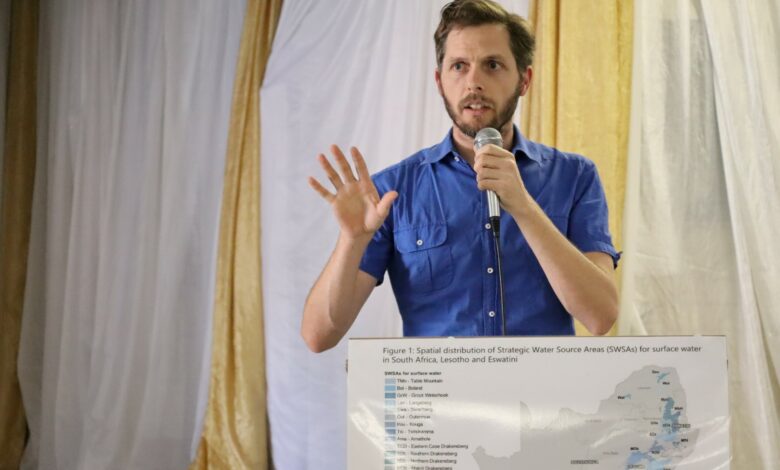
Newcastle’s growing water crisis is no longer just a question of ageing pipes or infrastructure decay – it has evolved into a complex failure of governance, compliance and accountability.
This came to light after the Save, Serve and Protect Newcastle (SSPN) campaign held a community dialogue at the NOFTA Hall on Saturday, April 18.
Guest speaker and independent researcher John Hopkins brought some alarming information and statistics to light. Findings from the Green Drop Watch Report 2023 on wastewater, issued by the Department of Water & Sanitation, paint a troubling picture. Compliance in Newcastle has dropped from 85% in 2021 to just 30% in 2024. Even more alarming, KwaZulu-Natal currently holds zero Green Drop certifications, indicating widespread systemic failure in wastewater management.
Much of the wastewater never reaches treatment plants at all. Instead, it leaks from a failing conveyance system – old, damaged pipelines that allow raw sewage to spill into the environment.
In areas like Madadeni and Osizweni, wastewater treatment plants are operating far below capacity, at just 20% and 19% respectively. As a result, an estimated 80% of sewage in some areas is discharged untreated into the environment, posing a severe risk to public health and local ecosystems.
A system under pressure
The crisis is said to be due to rapid population growth. Newcastle’s population has grown from 381,000 in 2016 to over 507,000 in 2022, placing additional strain on already fragile systems.
Much of the infrastructure is over 50 years old, including asbestos cement pipes that are prone to leaks and bursts.
Meanwhile, key water sources such as Ncwengwayo Dam (formally Chelmsford Dam) are silting up, reducing available water supply even further.
Financial challenges add more complexity. Approximately 35% of water is lost through leaks, while 65% is not paid for – often due to illegal connections or non-payment. This leaves the municipality in the difficult position of paying for water it cannot recover revenue from, with debts reportedly reaching around R2 billion.
Dangerous feedback loop
As untreated sewage enters rivers and dams, water quality deteriorates. Treatment plants, already under strain, are not equipped to remove modern contaminants such as pharmaceuticals.
Industrial activity and large-scale farming further intensify the problem, introducing chemicals and pesticides into water systems already on the brink of collapse.
Not just infrastructure, but a governance crisis
Experts stress that this is no longer just an infrastructure issue. It is also a governance problem.
Recommendations such as installing smart water meters (to reduce tampering) and monitoring non-revenue water losses have yet to be fully realised.
Upgrading key infrastructure (including the Buffalo River extraction and wastewater treatment plants) is critical, but responsibility does not lie with the municipality alone. Communities also play a role in addressing water losses and illegal connections.
Way forward
Solutions are clear, but require commitment:
- Enforcing compliance standards;
- Building a resilient water management system;
- Ensuring accountability at all levels.
Campaigns such as SSPN aim to raise awareness and encourage collective responsibility in protecting water resources.
Ways in which you can support SSPN:
- Participating in water testing initiatives;
- Allow sampling and identify areas of concern;
- Share information responsibly;
- Volunteer your skills.
The public can email SSPN or follow them on social media:
Email: info@sspnewcastle.com
Facebook: Save, Serve, Protect Newcastle
Instagram: ssp_newcastle
The news provided to you in this link has been investigated and compiled by the editorial staff of the Newcastle Advertiser, a sold newspaper distributed in the Newcastle area. Please follow us on Youtube and feel free to like, comment, and subscribe. For more local news, visit our webpage, follow us on Facebook and Twitter, and follow us on our WhatsApp Channel