Sound the call to come together
Somewhere in the world right now, someone is a foreigner there and that person is being treated as family and with respect as though they were a citizen of that country, South African citizens who have initiated the xenophobic attacks in different parts of the country have a lot to learn.

Madam – I am a South African and I have been a foreigner in USA, Germany, United Emirates and Africa but never were my rights as a human being violated in any manner, and never during any of my other travels abroad have I experienced discrimination or hatred of any kind, but rather was welcomed by friendly global staff and citizens who treated me and other fellow travellers in foreign lands with the highest of respect which made me walk on foreign soil with integrity and dignity – fully experiencing the anointment of freedom, as passed on to us by our forefathers.
During my last visit to New York when the xenophobia outbreak was at it’s peak, I watched television and realised that it made headlines on every channel where people around the world expressed their disapproval and condemnation of the violent, brutal and fatal actions bestowed on their fellow friends, families and citizens of their respective countries.
Witnessing the visual collections of the incidents as they took place only left me disappointed and perplexed by the hate and unbelievable measures another human being can undertake to cause harm to another.
Being born and raised in KwaZulu-Natal, the province known as “the garden province” and “Place for the Zulu” as the majority population and language of the province is
Zulu, due to it being the only province in South Africa that has the name of its dominant ethnic group as part of its name, I could not stop thinking about the fact that KwaZulu- Natal is a province embedded with rich history; which is the birthplace of many notable figures in South Africa’s history, such as Albert Luthuli, the first African and the first person from outside Europe and the Americas to be awarded the Nobel Peace Prize; Pixley ka Isaka Seme, the founder of the African National Congress (ANC) and South Africa’s first black lawyer, John Langalibalele Dube, the ANC’s founding president, Mangosuthu Buthelezi, the founder of the Inkatha Freedom Party (IFP), Anton Lembede, the founding president of the ANC Youth League, Jacob Zuma, the current President of South Africa and Bhambatha, a 19th-century Zulu chief who became an anti-apartheid icon.
It is also a place recognised for its booming tourism where all South Africans plan their vacation to enjoy warm beaches, the internationally recognised
Drakensberg and friendly residents. Lest we forget.
But now hereon, due to the actions in the past few weeks, KwaZulu-Natal’s draft history has been officially revised and it is disappointing that it will too be remembered as the place where xenophobia reigned.
A place where our fellow brothers and sisters across boarders were inhumanly massacred, murdered and torched, slaughtered and stabbed on the busy streets in the full view of unbothered residents, to their death. I felt embarrassed to be associated with the country South Africa, yet one of many who were still proud be among those who not only pioneered the end to the xenophobic attacks on our fellow African brothers and sisters, but spoke about the good and positive things South Africa has done and is trying to do to combat the violent criminal acts committed by only a selected few citizens due to misunderstandings occupied with selfishness and greed.
I was consulted by concerned global and national citizens, most of them young people voicing their disappointment about the ongoing violence in the country’s popular province. Together we collaborated with the aim to resolute a plan of action, mobilising young people in South Africa and across the African continent to raise awareness on the attacks in an attempt to change people’s mindset on their unbecoming social behaviour as we knew that such violence, if not stopped, would not only get out of hand with more people dying at the hands of their fellow black people, but it would lead to an Africa fighting itself, and might take more than a decade, if not century, to resolve. Thus action towards change, had to begin, and it had to begin fast.
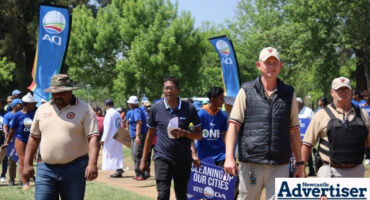
We mobilised ourselves among civil society where different organisations across the country too mobilised women and children, young people, public servants and officials, the private and public sectors who not only marched against Africans killing other Africans all due to great misunderstanding accompanied with anger, but to raise awareness to ensure that such incidents are prevented in the future.
I have more friends, colleagues, allies and family living in different countries around the world than in my own country. Somewhere in the world right now, someone is a foreigner there and that person is being treated as family and with respect as though they were a citizen of that country, South African citizens who have initiated the xenophobic attacks in different parts of the country have a lot to learn. We still have a long way to go and each global citizen has a role to play.
I thus reiterate our national anthem and ask South Africans and fellow Africans to come together so united we shall stand, and live and strive for freedom in South Africa our land.
A man or woman from any country around the world, irrespective of race, social class, economic status, political stance, religion or origin is my brother and sister. We were together in the past when our leaders called for freedom; freedom came, let us practise our liberty respectfully, for the sake of the safety, health and prosperity of our current generation and the next generations to come. Masisukumeni Sakhe Sonke, Let us stand up and build together. Africa Unite!
Zanele Mabaso