
Attract birds with canopy trees for small gardens
Planting trees for the birds and butterflies
Cape Holly, Waterboom, monomane, iPhuphuma, umDuma, phukgile (Ilex Mitis)
In the wild, this is a tall tree, but in cultivation it is small to medium-sized. The small white flowers are sweetly scented, born in spring or early summer. Male and female flowers are borne on separate trees. The flowers are not very showy, but in autumn and winter (April to July) the female trees bear heavy crops of small red, holly-like berries, which are relished by birds.This plant tends to be bushy and needs to be shaped into a good shade tree. It makes a good hedging plant and can be clipped into almost any shape and size, making it perfect for formal gardens.
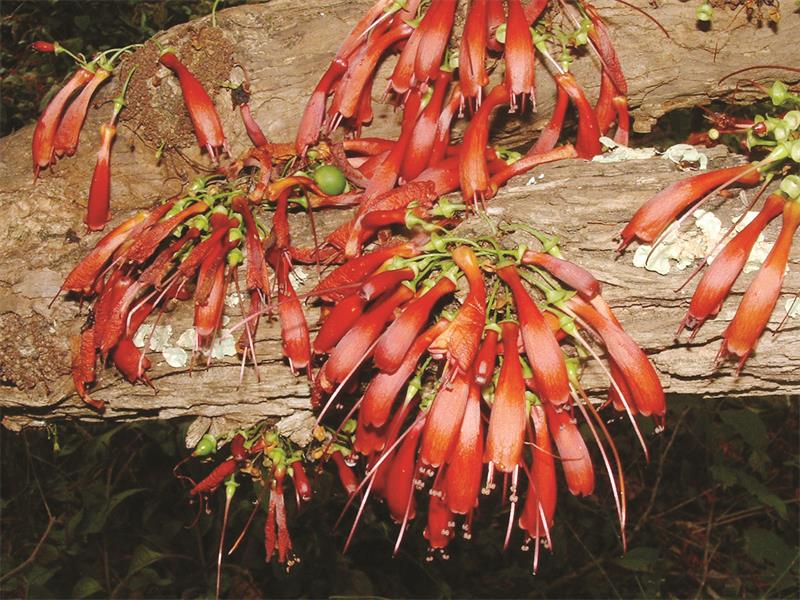
Tree Fuschia, Witolyf, Kinderbessie, Notsung, umBinza (Halleria Lucida)
This plant produces clusters of flowers in the axils of the leaves and on short shoots on the old wood and even the main trunk. Flowers vary from dark orange to brick-red and yellow, and can appear anytime from May to January. The flowers are somewhat hidden among the leaves but are rich in nectar, attracting feeding sunbirds as well as butterflies. The flowers are followed by black berries, relished by fruit-eating birds and the leaves are browsed by stock and game.This tree generally remains a small shrubby tree or large shrub, which is prefect for the exclusion area of the bird garden. It makes a good specimen tree because it does not have invasive roots. In larger gardens and parks it looks lovely when planted in groups, and makes an excellent informal screening plant or hedge, growing beautifully in large containers.