
The ‘nitty-gritty’ on head lice
Elaine Rodway DESPITE evidence to suggest that they have been in existence since the dawn of mankind, the tiny head louse is still known to strike dread and panic into the hearts of parents, caregivers and school teachers worldwide. The Pediculus humanus capitis, more commonly referred to as the common head louse, is a wingless …
Elaine Rodway
DESPITE evidence to suggest that they have been in existence since the dawn of mankind, the tiny head louse is still known to strike dread and panic into the hearts of parents, caregivers and school teachers worldwide.
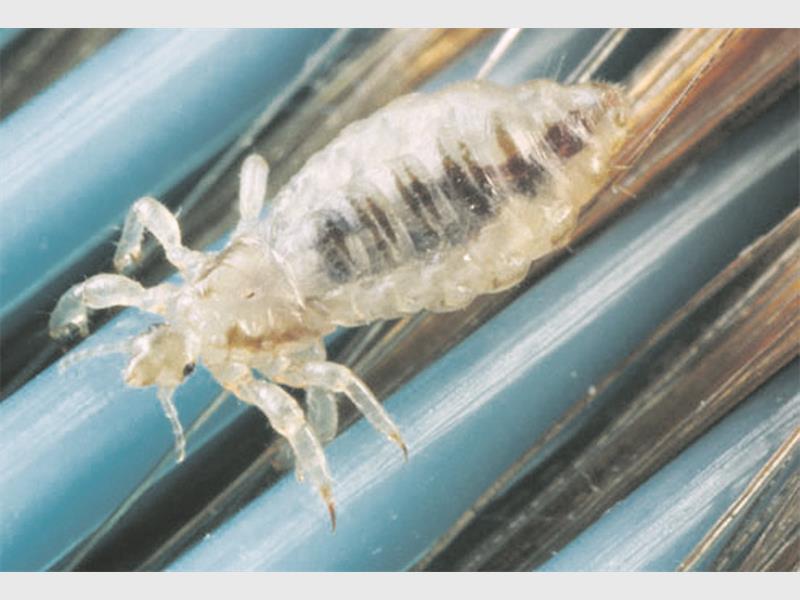
The Pediculus humanus capitis, more commonly referred to as the common head louse, is a wingless insect which spends its entire life on the human scalp and feeds exclusively on human blood. “Head lice cannot fly, and their short stumpy legs render them incapable of jumping, or even walking efficiently on flat surfaces,” states Wikipedia. “Adult head lice are small (2.5–3mm long), dorso-ventrally flattened and entirely wingless. The thoracic segments are fused, but otherwise distinct from the head and abdomen, the latter being composed of seven visible segments… Head lice are grey in general, but their precise color varies according to the environment in which they were raised. After feeding, consumed blood causes the louse's body to take on a reddish color.”
According to Wikipedia, humans are the only known hosts of this specific parasite.
The hot summer months at the start of the school year often result in lice outbreaks at schools across the country being faced with the task of dealing with an inconvenient epidemic culminating in a high absenteeism rate among schoolgoing pupils. The hotter its gets, the more active head lice become. This means a female louse lays more eggs and they hatch faster, leading to more severe infestations.
Nationally, schools have adopted a 'no nit' policy which excludes pupils from school should they be infested with head lice or nits. In the event that an infestation is detected, the pupil will be sent home and may not return until they have been cleared of all traces of nits or lice. A clearance note from a clinic nurse or pharmacy assistant is required before the child can return to school.
According to a report by Health24, “International guidelines established in 2007 for the effective control of head lice infestations state that no-nit policies are unjust and should be discontinued because they are based on misinformation rather than objective science. In the US, teachers have stopped sending children with head lice home, following advice from the American Academy of Pediatrics. The new thinking is that head lice are not dangerous, just a nuisance…”
Head lice, although common, are really more of an annoyance than a danger. They do not usually cause any serious disease and an infestation of head lice and nits can actually be treated fairly easily.
Although lice and nit removal can be somewhat tedious, ridding your child's hair of these dreaded parasites is not impossible. Aside from chemical treatments available at pharmacies, there are several natural treatments that can be implemented to exterminate the scourge of lice from your child's hair, but in order to be effective, you will need to ensure that re-infestation does not occur by treating not only your child's hair but their bedding, clothing and soft toys as well.
Children are more susceptible to picking up head lice due to the fact that they are frequently in contact with each other while playing. Sharing of brushes, combs, hats or hair accessories can also spread the infestation to a lesser extent, however, than head to head contact.
While there is a certain stigma attached when children and their families are stricken with these tiny blood-sucking parasites, it is important to note that head lice do not discriminate and an infestation is in no way an indication of poor hygiene or uncleanliness.