
Local newsNews
Where is the Vredefort Dome headed?
The Vredefort Dome occupies a central place in the geological history of the Earth.
The recent and puzzling replacement of the Democratic Alliance’s Minister of the Environment, Dion George, comes as a real setback for progress at the Vredefort Dome.
During his visit he showed genuine interest in working together with business, universities and local communities, and that spirit of cooperation now appears to have been abruptly interrupted.
The Dome was declared a UNESCO World Heritage Site in 2005. Today, 20 years later, it has still not been protected by an Act of Parliament and there is a real danger that Unesco could lose patience and deregister it.
It is long overdue to recognise that the real dynamism driving the Dome forward is not coming from government, but from academia and business. This is entirely appropriate in a modern society, but government must now live up to its original commitment under Nelson Mandela to advance, protect and properly conserve this unique World Heritage site.
What follows is a snapshot of how the Dome is actually being kept alive, interpreted and developed on the ground.
Where is government?
Official support remains severely limited. An interpretation centre built by the Free State province at Vredefort was never opened due to structural defects and appears derelict. A small museum at Venterskroon on the North West side currently operates without staff, and its video facility is non-functional.
These shortcomings reflect a broader lack of sustained official commitment to the Dome as a flagship tourism and scientific destination. In this context, institutions such as University of the Witwatersrand and private enterprise have stepped in to fill the gap.
An example of this initiative is the production Great African Mysteries, a History Channel video which features an authoritative presentation by three leading Dome interpreters: Prof Roger Gibson, Prof Graeme Addison and Mr Christo Meyer. This collaboration demonstrates how academic and private sector resources are being mobilised to meet growing domestic and international interest in the Vredefort Dome.
World Heritage Context and Conservation Challenges:
The Vredefort Dome is the best preserved large impact crater on Earth and one of South Africa’s nine UNESCO World Heritage Sites. Although declared in 2005 by UNESCO, it has yet to be fully recognised through an Act of Parliament. Ongoing concerns regarding unrestricted development, pollution, unrehabilitated mining sites and slow regulatory enforcement have raised the risk of possible deregistration. These challenges highlight the urgency of coordinated conservation and management.
Growing Public Engagement and Skills Development:
Against this background, interest in Dome-related information and guided tourism continues to grow. The business-led Parys Information Office, together with community initiatives in Tumahole and Mokwallo, are responding to increasing visitor demand. Tour-guide training for the area is conducted by Prof Addison, while provincial conservation officials regard public awareness of the Bankenveld biome as a core responsibility.
Facilities, Research and International Engagement:
Research services and tailor-made tour programmes attract specialised geological and historical groups from South Africa and abroad. These have included delegations linked to NASA, the European Space Agency, foreign embassies and airline personnel. School and university tours form a regular part of the programme, supported by steady weekend tourism from across the country.
Outdoor Activities and Geological Setting:
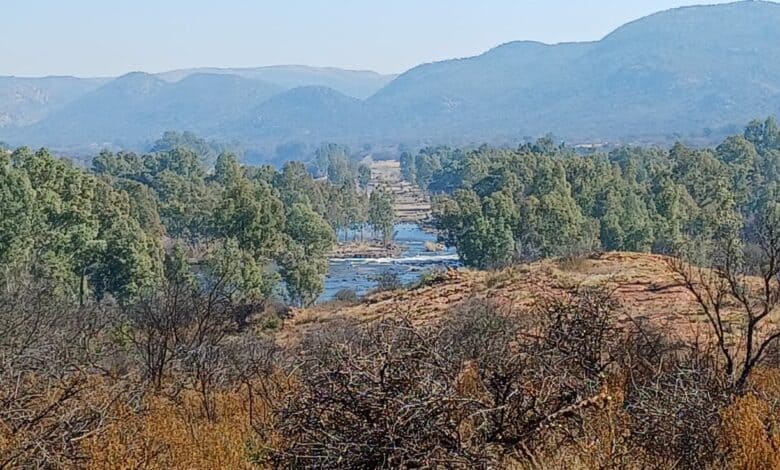
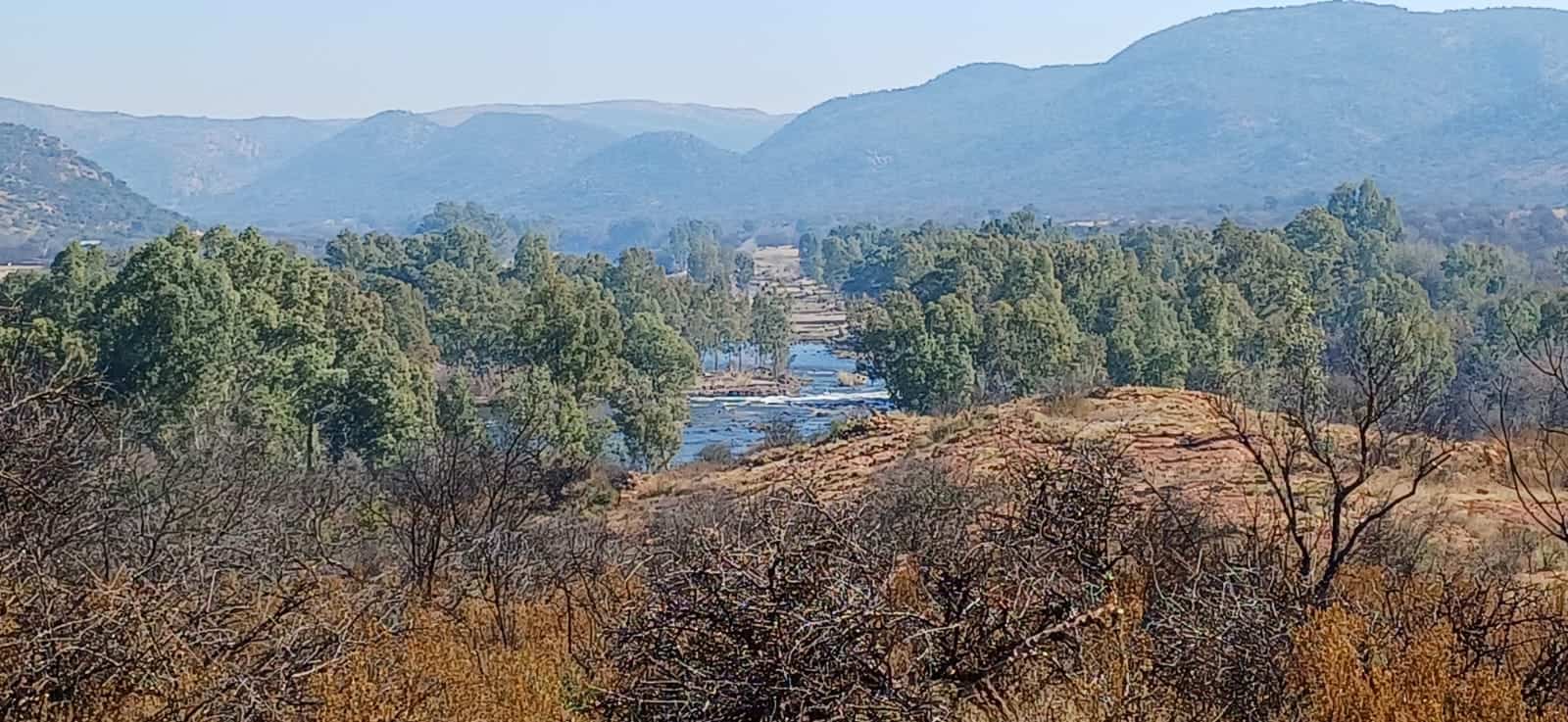
Outdoor activities such as rafting and hiking take place within the unique Dome setting. The Vaal (Lekoa) River is the only major river in the world that flows directly through a confirmed meteorite impact structure. The surrounding Dome Bergland, forming the first ring of the three-ringed crater system, consists of mountain remnants created within minutes of the impact and eroded over more than two billion years. At the time of formation, these mountains may have rivalled the Himalayas in height.
Scientific Significance and the Case for a Geopark:
The Vredefort Dome occupies a central place in the geological history of the Earth. Rock formations exposed by the energy of the asteroid impact include some of the planet’s oldest accessible geological layers.
It has been proposed that the full extent of the crater, stretching roughly from Johannesburg to Welkom, should be designated as a geopark. As most of the land falls under private ownership, the long-term protection and advancement of the Dome depend heavily on the commitment of residents, landowners and businesses.
At Caxton, we employ humans to generate daily fresh news, not AI intervention. Happy reading!