When beauty becomes an invasion
For Parys, keeping a watchful eye on these small populations now could potentially prevent a much larger ecological problem in the future.
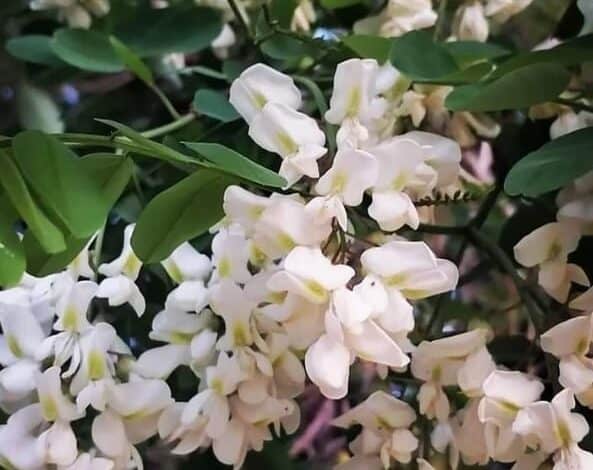
Robinia pseudoacacia, commonly known as Black Locust, is a fascinating tree species native to the eastern and central United States. It was introduced to South Africa in the early 1900s, initially to the Eastern Cape, primarily for agricultural and forestry purposes.
Black Locust has long been valued as a fast-growing hardwood timber tree. As a member of the legume family (Fabaceae), it forms a symbiotic relationship with nitrogen-fixing bacteria in its root nodules, allowing it to enrich nitrogen-poor soils. This ability made it particularly attractive for use in land rehabilitation, agroforestry and erosion control.
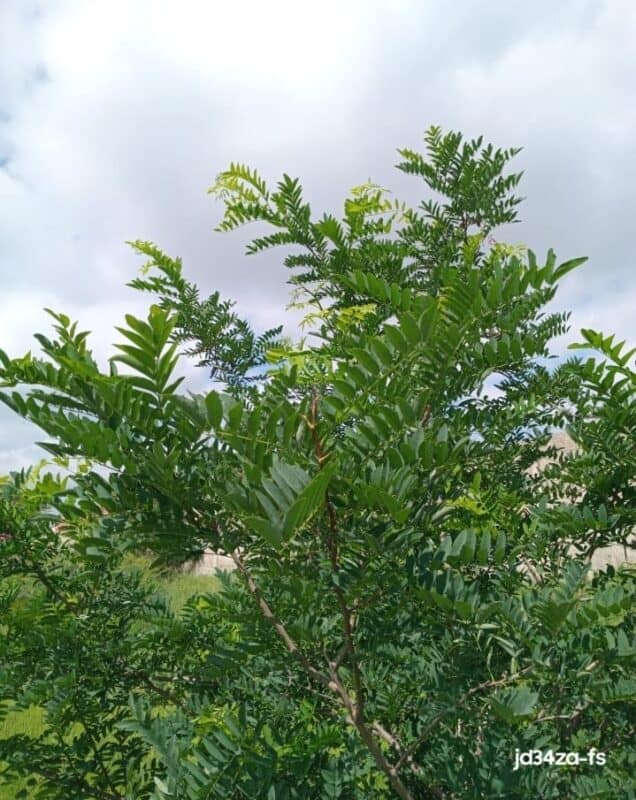
The timber itself is remarkably durable. It is naturally resistant to decay, rot and wood-boring insects, making it highly desirable for fence posts, poles, railway sleepers, outdoor furniture, decking and other applications where wood is exposed to the elements. Its wood is also extremely dense and produces excellent, long-burning firewood and charcoal.
Then there are its spectacular flowers. In spring, Black Locust produces masses of pendulous clusters of intensely fragrant, creamy-white flowers. Their sweet perfume and abundance make them attractive to bees and other pollinating insects, and the tree can be an important nectar source during its flowering period.
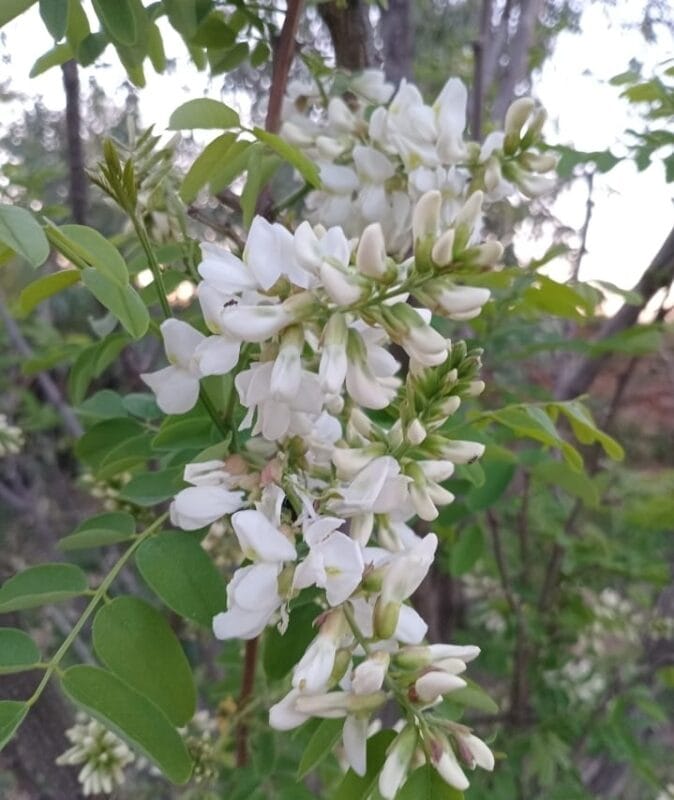
The flowers are also traditionally used as food: when correctly identified and properly prepared, the blossoms can be eaten fresh in small quantities, added to salads, or used to make fragrant cordials, syrups, fritters and infused desserts, effectively capturing the taste and aroma of spring in a bottle.
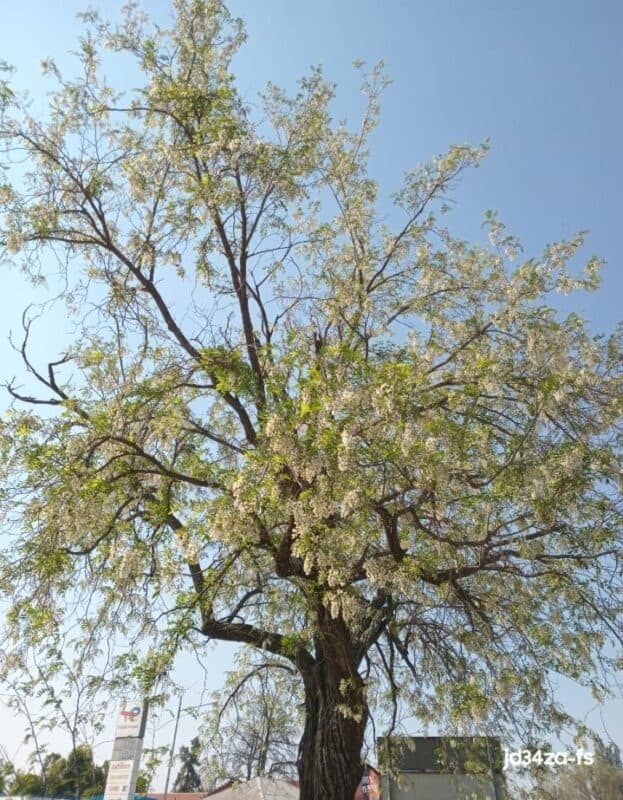
Interestingly, the flowers are not the only part of the tree with a history of human use. Black Locust has been planted extensively as a windbreak, erosion-control tree, shade tree and honey plant, while its exceptionally strong timber has made it one of the most useful hardwoods introduced into many parts of the world.
Its rootstock has also been used horticulturally as a vigorous grafting stock for related ornamental locusts, including ornamental forms that can still be found in older gardens around Parys. Some of these historic garden trees are reminders of the period when exotic trees were deliberately introduced and distributed for ornamental and agricultural purposes.
A beautiful tree with a dark side
Despite its many virtues, Black Locust has a considerably darker side when it escapes cultivation. It is an aggressive coloniser with an extraordinary ability to reproduce and spread, often to the detriment of native ecosystems.
One of its greatest advantages — and ecological dangers — is its suckering root system. Its roots can extend considerable distances from the parent tree, and disturbance, cutting or damage to the roots can stimulate new shoots to emerge. These shoots are genetically identical clones of the original tree and can rapidly develop into new stems.
As a result, simply cutting down the visible trees does not necessarily eliminate the colony; the extensive underground root system can continue producing new growth.
Black Locust also produces large numbers of seed pods containing numerous seeds, allowing it to reproduce sexually as well as vegetatively. Where conditions are favourable, the combination of seed production and vigorous root suckering can result in the rapid expansion of dense stands.
Once established, these stands can form dense, thorny thickets, shading out and competing with indigenous vegetation.
Because Black Locust is also capable of fixing nitrogen, it can alter soil conditions and potentially give itself an additional advantage in nutrient-poor environments where native plants are adapted to low-nutrient conditions. The result can be a significant change to the structure and composition of natural grassland and woodland communities.
For Highveld ecosystems, this is particularly concerning. Our grasslands are highly specialised ecosystems containing an enormous diversity of indigenous grasses, herbs, bulbs and other plants, many of which are poorly equipped to compete with rapidly expanding woody thickets.
Thankfully, the escaped Black Locust populations recorded around Parys currently appear to remain relatively localised. This is in stark contrast to some areas of the wider Vaal Triangle, where Black Locust has become considerably more established and has invaded substantial areas of native Highveld and Bankenveld vegetation.
The Parys Wetland Park NPC has recorded two escaped populations in the area, apparently associated with the ornamental trade. Their relatively small and localised nature is encouraging, as early detection and control provide a much better opportunity to prevent these populations from developing into large, deeply established colonies.
Black Locust is therefore a perfect example of the complicated relationship we have with introduced trees: a species can simultaneously be beautiful, useful, economically valuable and ecologically destructive. Its fragrant spring flowers, exceptional timber and fascinating biology make it an interesting tree to study, but its ability to reproduce through both seed and root suckering means that escaped populations deserve careful monitoring — particularly in sensitive Highveld grasslands and wetland margins.