
Rabies: This is what every pet owner should know
Rabies is spread primarily through infected saliva.

Animal rabies occurs in all nine provinces, with dog rabies cycles mainly concentrated in the eastern parts of the country (Limpopo, Mpumalanga, KwaZulu-Natal, Eastern Cape provinces and the eastern Free State border with Lesotho).
Dogs and cats are often moved between provinces by travellers, workers, or holiday-goers, which can easily cause a spillover of rabies to any area if these animals are unvaccinated or inadequately vaccinated and incubating the disease.
Remember that any mammal can become infected with rabies, this includes pets, wildlife, livestock and humans. Wildlife species that can host rabies include jackals, foxes, mongooses, aardwolf and Cape fur seals.

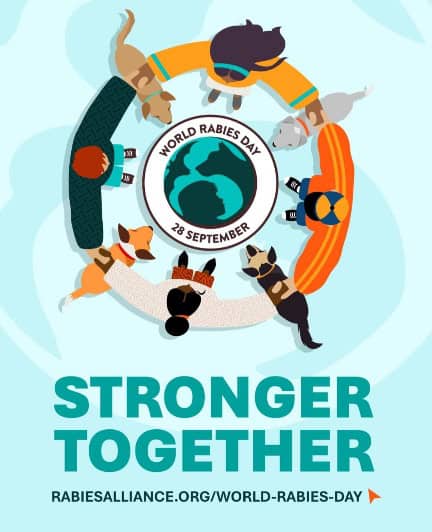
If your dogs and cats are vaccinated against rabies, they form a protective barrier for your family and protect you and your beloved pets. The same is true if everyone in your community ensures that their dogs and cats are vaccinated.
What is Rabies?
Rabies is a fatal disease caused by a virus that can affect all mammals, including humans.
The virus is present in high concentrations in the saliva of infected animals and is transmitted by bite wounds.
The virus replicates in the tissues, subsequently entering the nerve endings in and around the wound. It can travel along these nerves and gain entry into the central nervous system, rapidly spreading to the brain stem and the forebrain.
Typical clinical signs in rabid animals or humans occur once the rabies virus has reached the brain tissue.
Once these clinical signs are noted, the disease is usually at a terminal stage and medical intervention is seldom successful.
The rabies virus can spread to the salivary glands before the infected animal starts to exhibit symptoms of clinical rabies; the disease can thus be transmitted by infected animals that appear outwardly normal.
Signs of rabies in dogs and cats:
Although signs may vary, infected animals may initially show changes in behaviour, like nervousness and anxiety. These symptoms can last for two or three days. They progress to irritability, photophobia (fear of light), biting, snapping, incoordination and seizures.
Some animals may show signs of weakness, incoordination and paralysis, which also affects the muscles used for swallowing.
How can you, your dog or cat contract Rabies?
Rabies is spread primarily through infected saliva.
The virus needs to gain entry into the body, thus normally through an injury to the skin.
This usually occurs during a bite wound from a rabid animal. Transmission may also occur if infected saliva comes into contact with open wounds, for example, by licking.
What to do if you get bitten by a rabid animal
Should you be bitten by a suspected rabid animal, the first step is to wash the wound thoroughly with running water and a disinfectant.
You will need to see a doctor immediately so that they can begin post- exposure treatment. (Source: Bayer (Pty) Ltd., Animal Health Division www.bayeranimalhealth.co.za).