
Don’t turn a blind eye on gender-based violence
To combat this crime, the international 16 Days of Activism for No Violence Against Women and Children, is held annually to address violence against women and children.
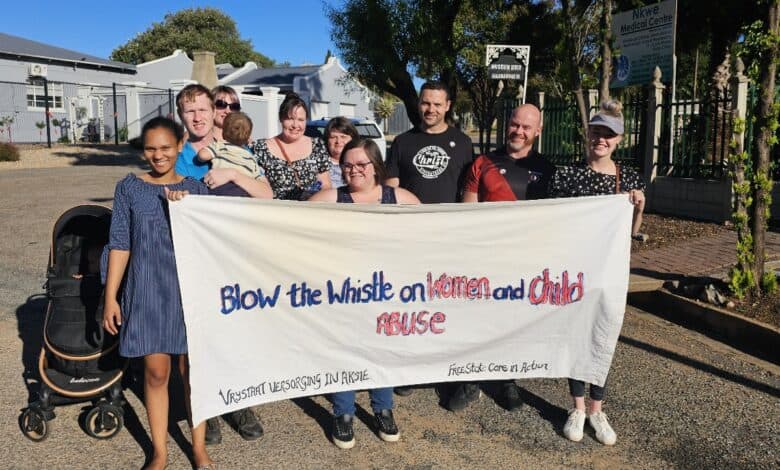
Gender-based violence (GBV) traditionally increases over the festive season. This was said at the Parys Community Policing Forum’s (CPF) annual meeting.
To combat this crime, the international 16 Days of Activism for No Violence Against Women and Children, is held annually to address violence against women and children.
The campaign kicked off on November 25 (International Day for the Elimination of Violence against Women) and ends on December 10 (International Human Rights Day). With this year’s campaign focused on gender-based violence, the wake-up call is not only on South Africans but worldwide to stand together to put an end to this crime.
Annemarie du Toit, chairperson of the Parys CPF, answers some of the questions surrounding gender-based crime.
What crime is included in gender-based violence?
GBV refers to any harmful action directed against an individual, based on that individual’s gender. It is rooted in gender inequality, the abuse of power, and harmful practices Under GBV, a range of physical, sexual, and psychological violence are included.
This includes:
* Intimate relationship violence – physical, sexual, and emotional abuse within an intimate relationship
* Sexual violence – rape, sexual assault and harassment
* Domestic violence – inside a shared dwelling, and includes child abuse and violence against older persons
* Human trafficking – exploitation of individuals, mostly women and children, for forced labour or sexual goals
* Forced marriage – to commit someone in a marriage against her will or at a young age
* Honour-based violence – acts of violence committed to restoring “honour” in a family or community
* Femicide – the murder of an individual simply because she is a woman.
* Online violence – harassment, stalking, and abuse across digital platforms.
There is a tendency to show that GBV against men is also committed and although correct, the Parys CPF admonishes that such an outlook/comment reduces the importance of action against violence against women in particular, says Du Toit.
How do we combat gender-based violence?
* Awareness campaigns at school
* Legal and policy measures by which laws against GBV are introduced
* Support services for individuals surviving and overcoming GBV
* Community engagement
* Economic empowerment through equality in the workplace
* Research and data collection
* International cooperation between countries
* Technological solutions through, for example, so-called hotlines
* Advocacy and activism
* Addressing the root causes of gender-based crime.
The role of the CPF in combating GBV:
* Du Toit says CPFs across the country play an important role in combating GBV.
* CPFs facilitate better communication between the police and the community and thus holds the police accountable for their actions and ensures that the police respond effectively to GBV cases.
* The CPF organises workshops and awareness campaigns through which attempts are made to educate the community about the existence of GBV, its signs, and how to report it.
* This empowers community members to take action against GBV and to support victims.
* The CPF also works with local organisations to provide support services for GBV victims, such as counseling, legal aid, and safe shelters.
The public is advised to support the Parys CPF and join their awareness campaigns. GBV is not a problem that should only be addressed during 16 Days of Activism but must be advocated against continuously to eradicate it in the community.