High Court ruling reopens public participation in JB Marks demerger process
The Municipal Demarcation Board has been directed to restart the process of the demarcation which includes public notification and an invitation for written representations and views from the public.

Discussions regarding the demerger of JB Marks into separate municipalities for Potchefstroom and Ventersdorp can once again be continued through public participation.
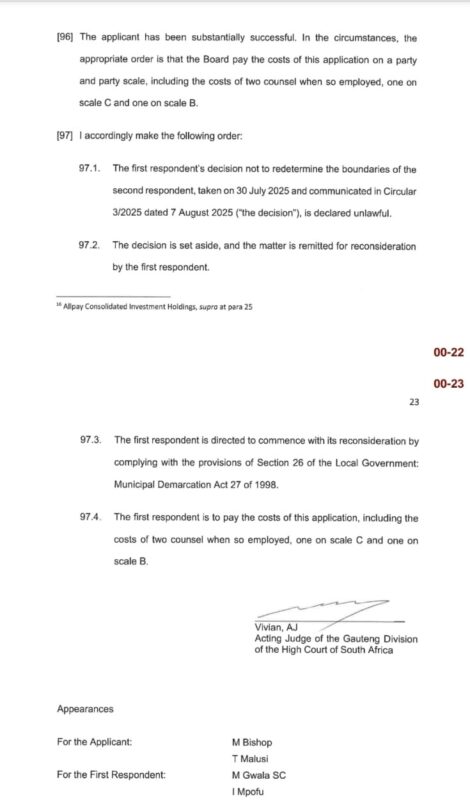
This follows the High Court setting aside the Municipal Demarcation Board’s (MDB) decision not to reverse the merger of the former Tlokwe and Ventersdorp municipalities, ordering the Board to reconsider the matter.
The judgment does not mean that Potchefstroom and Ventersdorp will immediately become separate municipalities again. The final decision on whether JB Marks should remain intact or its boundaries should be changed still rests with the Municipal Demarcation Board.
Acting Judge Vivian in the Gauteng Division of the High Court delivered this verdict on Friday, 13 November, following a legal challenge by the Democratic Alliance (DA) against the MDB’s decision of 30 July 2025 to retain the existing JB Marks Municipality.
“I hold that the failure of the Board to consider utilising the option of public meetings in the light of the repeated recommendations that it do so, including in the report following the formal investigation, is unlawful,” the judgment states.
How could the process unfold?
1. Notice: The MDB informs the public about the proposed boundary changes.
2. Public input: People have at least 21 days to submit their opinions in writing.
3. Meetings: The MDB may hold public meetings to hear people’s views.
4. Decision: The MDB publishes its decision in the Provincial Gazette.
5. Objections: The public and relevant parties have 30 days to object to the decision.
JB Marks was established on 3 August 2016 through the merger of the former Tlokwe City Council and Ventersdorp Local Municipality.
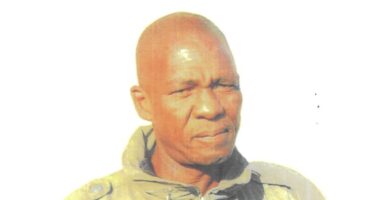
According to Hans-Jurie Moolman, who has been fighting this legal battle on behalf of the DA, the Municipal Demarcation Board must comply with all the requirements set out in the legislation, which it had previously failed to do. This failure also contributed to the court setting aside its decision.
“A particularly important aspect of this process is public participation. I believe this is the basis residents will need to use to ensure that their voices are heard. It is very similar to what was done with the petition, but this time there will probably be public meetings. I think the aim will be to ensure that hundreds, if not thousands, of residents come together to make their views and feelings about the demerger known,” he added.
The DA had earlier, on 28 August this year, approached the court to have the MDB’s decision reviewed and set aside. They argued that the Board had failed to properly consider public participation before deciding against the proposed demerger.
At the centre of the judgment was Section 27 of the Local Government: Municipal Demarcation Act, which gives the MDB the option of holding public meetings, conducting a formal investigation or doing both after receiving written public submissions.
MDB had previously decided in July 2025 to retain JB Marks, citing concerns about financial viability, governance, administrative costs, resource sharing and the potential destabilising effect of changing municipal boundaries.
The court found that the Board had failed to properly consider whether public meetings should be held, despite repeated recommendations to do so during the process.
Acting Judge Vivian found that the Board had not provided reasons for failing to consider the option of public meetings, particularly in light of the repeated recommendations. This amounted to a failure to comply with a mandatory and material procedure under the Demarcation Act.
What the High Court ordered:
- The MDB has been directed to restart the process at Section 26 of the Act, which requires public notification of its intention to reconsider municipal boundaries and an invitation for written representations and views from the public.
- The Board was also ordered to pay the DA’s legal costs.
- The MDB’s failure to consider the option of holding public meetings, despite repeated recommendations, was declared unlawful.