JB Marks coalition: Who will benefit – the people or the kingmakers?
"Consensus around the distribution of executive positions does not necessarily translate into a programme for addressing the needs of the people."

Suliman Rajah writes:
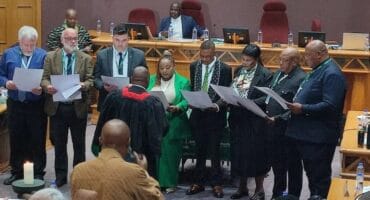
As JB Marks Local Municipality prepares for its inaugural council sitting on November 26, the question facing residents is not simply which political party will secure the mayor’s office. It is whether the formation of a coalition will bring any meaningful change to the lives of the people who have endured years of poor service delivery, unemployment, poverty and exclusion from municipal decision-making.
The outcome in neighbouring Matlosana, where the ANC secured a 51-vote majority through a coalition, demonstrates that the ANC can retain executive power despite losing its outright majority. But JB Marks presents a different challenge. With 67 council seats, the ANC has 22 and the DA 21. Neither can govern without support from smaller parties.
ActionSA, with five seats, and Baagi, with three, hold considerable influence over the outcome. The question is whether they will use that influence to advance the interests of residents or negotiate political positions for themselves.
Coalition politics is often presented as an opportunity to build consensus. But consensus around the distribution of executive positions does not necessarily translate into a programme for addressing the needs of the people.
The outgoing ANC council has left behind decisions that demand urgent scrutiny. Among them is the reported 25-year contract concluded without the proper public participation processes and amid concerns about legislative compliance. This must be an immediate test of the incoming administration’s commitment to accountability.
Any party seeking to participate in the governing coalition should commit to an independent legal review of the contract, full disclosure of its financial and contractual implications, and appropriate action where unlawful processes are established. Residents must not be left to bear the consequences of decisions taken without their meaningful participation.
The DA, meanwhile, must also be tested. Its opposition to the ANC does not automatically make it an alternative for the working class and the poor. Its right-wing neoliberal policies, particularly its approach to privatisation and outsourcing, raise serious questions about the future of municipal services and public employment.
A municipality may improve its financial performance while the poorest residents continue to struggle for water, electricity, sanitation and housing. Efficiency cannot be measured simply by reducing expenditure or transferring municipal functions to private contractors. It must be measured by whether people receive the services they need and can afford.
The same scrutiny must apply to the ANC and its potential coalition partners. The EFF, SACP, MKP and smaller formations must demonstrate that their participation in government will produce material improvements for the communities they claim to represent.
For the poorest and most vulnerable residents, particularly Black working-class communities, the consequences of coalition negotiations are immediate. Will informal settlements receive basic services? Will housing and land allocation become more transparent? Will municipal employment and public works programmes prioritise the unemployed? Will communities have a meaningful say in decisions affecting their lives?
These are the questions that should determine the terms of any coalition agreement.
ActionSA and Baagi have an opportunity to insist on a programme of public accountability, meaningful participation, transparent procurement and a commitment to improving services in neglected communities. If they instead settle for executive positions while allowing existing policies and questionable decisions to continue, they will have failed the electorate.
The same responsibility rests with every party seeking to govern or participate in the opposition. The people of JB Marks did not vote simply to change the occupants of municipal offices. They voted in circumstances of deep dissatisfaction with the existing political order.
The inaugural sitting will reveal who has secured the numbers. But the real test of the new council will be what it does with that power.
The residents of JB Marks must not become spectators to coalition negotiations conducted in their name. Community organisations must demand transparency, monitor the coalition agreement and hold every party accountable for its decisions.
The kingmakers may determine who governs. But they must not be allowed to determine the future of the municipality without the people.
The question is not who will occupy the mayor’s office. It is whether the poor will finally have a government that serves their interests.
*The views expressed in this letter are those of the writer and do not necessarily reflect the views or opinions of the Potchefstroom Herald