‘Women must walk freely in the streets and children play safely outside’
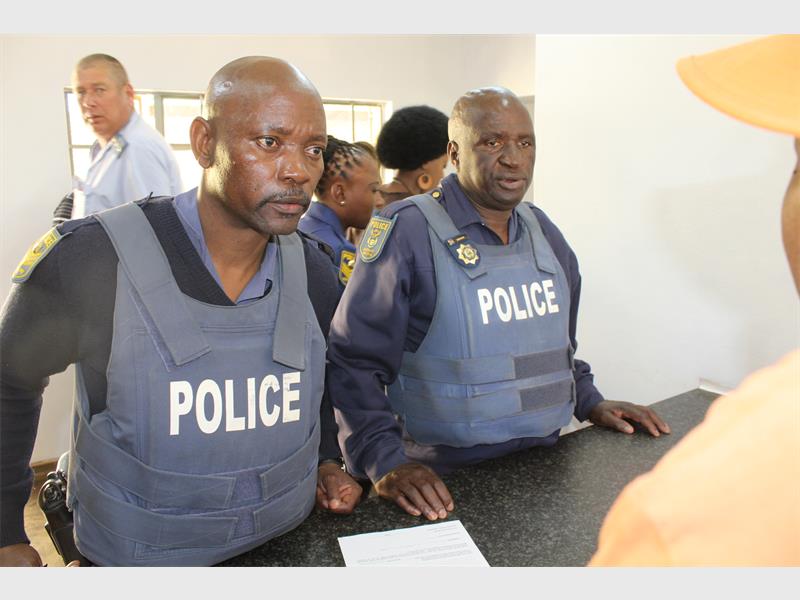
Men in blue reminded about the steps that ought to be followed and how a GBV victim ought to be treated when reporting a case at a police station.
General Bheki Cele, the Minister of Police, has issued a stern warning to all officers who are found to be turning away Gender-Based Violence (GBV) victims who come to report cases.
Through its Men for Change structure, the men of the South African Police held a mobilisation awareness campaign in Pretoria recently. The Men for Change structure was formed in 2004. Its purpose is to address matters of Gender-Based Violence and the challenges faced by men in policing. The campaign brought together 1 500 men in blue from various stations, components and divisions located in various parts of Gauteng.
The proceedings culminated in the signing of a pledge by all involved, with everyone committing themselves to intensified efforts to curb Gender-Based Violence.
General Cele used the platform to remind the men in blue about the steps that ought to be followed and how a GBV victim ought to be treated when reporting a case of GBV at a police station.
“Police stations must be a safe space for victims of gender-based violence. Many of the women who report to you are already traumatised, so don’t further traumatise them by asking them silly questions about what they were wearing before they were violated. This secondary victimisation must come to an end.”
He added, “Never turn a woman away, and don’t turn away anyone who reports abuse and advise them to go back home and negotiate. You are not social workers – your job is to investigate, make arrests and ensure victims are safe from the perpetrators.”
The Minister also urged detectives to thoroughly investigate GBV cases to ensure convictions.
Lieutenant General Bonang Mgwenya, the Acting National Police Commissioner, emphasised the need for improved police-community relations.
“With Community Policing being a fundamental pillar of effective policing, the Police cannot over-emphasise community involvement in assisting us in overcoming this scourge.
“We therefore call on all citizens, other government departments and law enforcement agencies, civil society and community members to rise up against these abhorrent acts by supporting the work of the police in detecting, preventing and reporting such incidents timeously. This will ensure that together we realise the National Development Plan’s Vision of 2030, where women can walk freely in the streets and children can play safely outside.”
Major General Bafana Linda, the Police Head of the Family Violence, Child Protection and Sexual Offences Unit reminded the officers about adhering to the Ministerial Six-point Plan.
The plan was implemented in 2017 and is posted visibly in all police stations. Members of the public are urged to familiarise themselves with these laws when reporting matters relating to GBV as this plan seeks to ensure that proper procedures are followed during the reporting of such cases.
The Ministerial Six-point Plan
• All victims should be treated with respect and dignity and be interviewed by a trained police official in a victim-sensitive manner
• Victims should be assisted in a Victim Friendly Room (VFR) or an alternative room or other location providing victim support services, where their statements will be taken in private
• Victims will be referred/ taken for medical examination by a healthcare professional to obtain medical evidence and complete a medical report, including seeing to the health of the victim
• The investigation should be conducted by the Family, Violence, Child Protection and Sexual Offences Investigation Unit (FCS) or a detective with relevant training
• The families and victims of sexual offences, femicide and infanticide should all be referred to the victim support services that are available within the precinct for legal, medical, social and psychological help
• Victims should be proactively given feedback on the progress of their cases on a continuous basis