
Randfontein vet makes disturbing discovery in stray dog’s stomach
When No More Tears Animal Rescue took a severely undernourished street dog to the vet, which revealed shocking items lodged in its stomach.
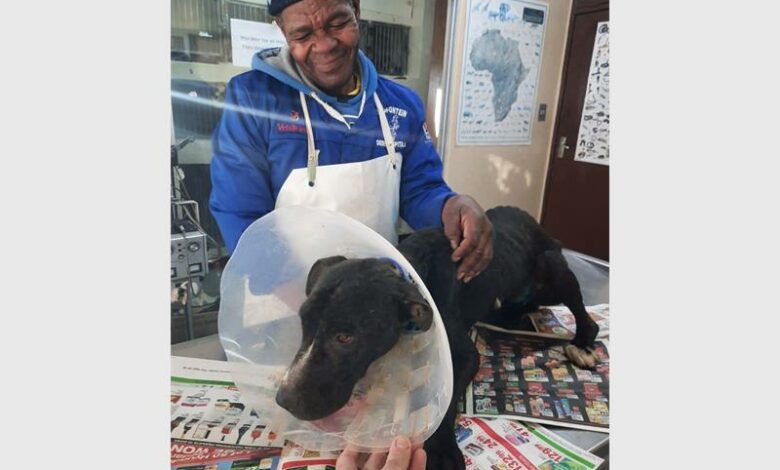
A severely underweight dog found with a hard object in his stomach highlights the desperation animals face when trying to survive.
Clarisse Kruger, a volunteer at No More Tears Animal Rescue, said an extremely emaciated dog recently wandered onto a property in Aureus.
“It was clear he was not well. Luckily, kind-hearted residents took him to Randfontein Animal Hospital for treatment. X-rays showed a strange object in his stomach, and an operation was scheduled immediately. During the operation, a large piece of a ball was removed. Just think how hungry and desperate he must have been to eat such a thing,” said Clarisse.
Veterinarian Dr Johan Naude explained that the dog’s rapid weight loss likely occurred within one to two weeks. Had the dog swallowed the ball more than a month ago, he would probably not have survived.
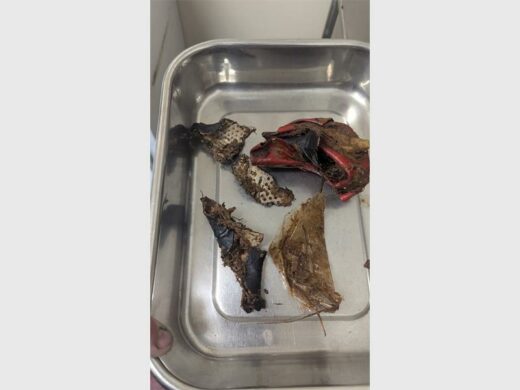
He added that, in the X-rays, the object appeared to be cement. During the operation, he removed not only the ball but also other hard plastic items.
“It is incredible that the dog was still able to live, eat and drink after swallowing the objects. All the foreign objects were removed during the surgery, and the stomach was properly reattached,” said Dr Naude.
Clarisse said the dog appears to be a Great Dane-Labrador cross and is estimated to be between two and four years old.
The person who found him decided to adopt him and collected him from the vet on July 1 to take him to his forever home.
Clarisse noted how hunger affects many of the animals they rescue. She explained that a lack of proper food can severely impact both a dog’s physical and emotional health.
Prolonged hunger can lead to weight and muscle loss, poor skin and coat condition, and, in severe cases, damage to vital organs such as the kidneys and liver. This can ultimately be fatal. Dogs suffering from hunger may also display behavioural issues such as aggression, food-related anxiety, excessive begging, restlessness, and distress.
“Unfortunately, in these times we live in, this is the reality. The need is great out there. We get many cases where dogs are simply dropped off, and then they have to survive on their own, looking for food and trying to survive on what they can find. So their condition worsens with each passing day, little by little,” Clarisse added.
She said that when a dog’s ribs are visibly protruding to a shocking degree, it indicates weeks of starvation, not just a few days. Several factors influence weight loss, including breed, size, age, and underlying health conditions such as worms, diarrhoea and infections.
“Dogs living on the streets face several challenges every day as they try to find food. This existence is not only physically exhausting, but also emotionally stressful,” Clarisse said.
She added that stray dogs face the following hardships:
• They never know when or where their next meal will come from. They rely on rubbish, discarded food or the kindness of strangers – none of which are guaranteed
• They rummage through bins, dumps and industrial areas, which often contain harmful substances such as toxic food, broken glass, sharp objects, metal fragments, and contaminated waste
• In search of food, they are often hit by cars, injured by gates or barbed wire, attacked by other animals, or chased away by people
• Food on the streets is scarce and hotly contested. Dogs – and sometimes cats – compete for the same scraps, often resulting in fights and injuries
“Stray dogs are constantly in a state of survival. Every day is a struggle to get just enough to stay alive. This underlines the importance of raising awareness and providing help where possible,” Clarisse concluded.