
SPCA defends controversial horse euthanasia
The euthanasia of a horse by throat-slitting has sparked public debate – was it an act of compassion or cruelty? Both the owner and the RandWest SPCA share their sides of the story in this ongoing case.

A horse named Robin was euthanised by the RandWest SPCA in what they describe as an act of compassion – but the owner disagrees, calling it cruel and unnecessary.
The incident occurred after the SPCA received a complaint about a horse lying down on a plot in Vleikop. From the road, SPCA staff spotted the bay-coloured animal and suspected the worst.
“We feared he had already passed, but then his ribs moved,” said SPCA manager René van Straten. “As we got closer, he lifted his head – a moment that broke our hearts.”
Van Straten said they contacted the owner but were met with “insulting excuses”. A veterinarian was called, and the SPCA invoked Section 5 of the Animal Protection Act, which allows the humane euthanasia of suffering animals, even without owner consent.
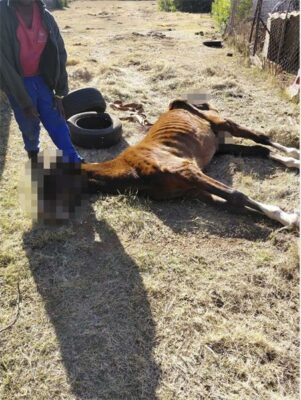
Robin’s owner, Meliza Gouws, claims otherwise. She said she does not live on the property but visits regularly, and the horse had food, water and companionship.
“He meant a lot to our family, especially the children. I saw him twice a week. He was eating just two days before this happened,” she said.
According to Gouws, on June 24, she was informed that Robin was down. She suspected the cold was to blame and drove to the property, where they managed to get him up. A rescue sanctuary offered to take him in, but Gouws refused, fearing she wouldn’t get him back.
She said Robin continued eating the following day but was too weak to get up again. When the SPCA contacted her, she asked them to wait until she arrived, but by then, he had already been euthanised.
“My husband arrived to a horrific scene. Robin’s throat had been cut. There was a pool of blood stretching across his body,” she said. “If this was humane, there wouldn’t have been such a mess.”
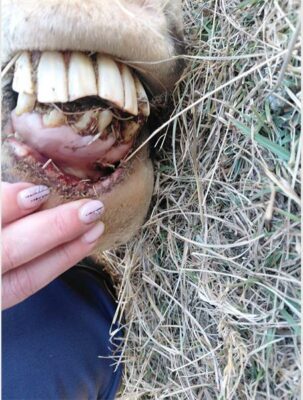
Van Straten explained that the horse’s teeth were broken, making it impossible for him to eat. She said the horse had been down for some time, with signs of prolonged distress. A vet confirmed euthanasia was the only option.
“We used a humane stun gun, then cut the throat to sever the main artery. This is the approved method for large animals. I hold a competency certificate in large animal euthanasia,” Van Straten said.
She also emphasised the legal basis for the action, noting she is authorised by the Randfontein Magistrate’s Court to intervene in such cases.
According to the National Council of SPCA’s euthanasia policy, humane euthanasia is accepted when an animal is suffering, traumatised, or when recovery is not possible.
The SPCA has since issued a warning about other animals on the property, reportedly showing signs of skin conditions. Gouws was requested to provide proof of veterinary care, which, according to Van Straten, has not been received. A case of animal cruelty is being considered.
Van Straten concluded with a strong message, “Animal ownership is a privilege, not a right. If you take in an animal, you must ensure their needs are met – physically, financially and emotionally. They rely on us completely. When we fail them, it’s our responsibility to act.”
Van Straten shared a few tips for horse owners on how to properly care for their animals:
• As horses age, their teeth continue to grow. Without regular dental checkups, their teeth can become overgrown, making it painful or even impossible for them to eat. Dentals play a vital role in the physical well-being of any animal
• Weight loss in a horse is always a red flag. If your animal begins to lose condition, you must seek veterinarian advice immediately. Why take responsibility for such a magnificent animal if you won’t even make time to care for it?