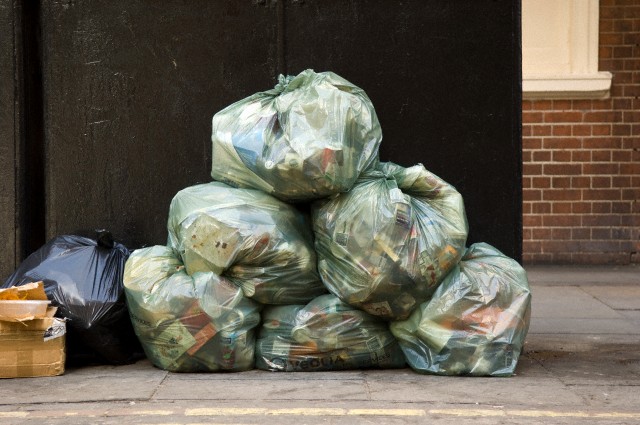
Households in the east of Pretoria eagerly await the removal of their household waste as their refuse bins are quickly filling up.
In the Monument Park, Sterrewag, Erasmus Rand and Waterkloof areas a sickly sweet smell has started to permeate the suburbs and on closer inspection it is evident that this comes from overflowing refuse bins.
According to DA Councillor Bronwynn Engelbrecht waste removal workers have decided to down their tools as they have not yet received protective clothing due to municipality funds that has run out. Engelbrecht said that many of the workers’ clothing is so old that it provides little, if any, protection.
“According to the Health & Safety Occupational Act all refuse removal workers must be issued with three sets of blue Tshwane overalls with yellow reflective stickers and two sets of boots and a raincoat,” Engelbrecht said.
“With all the recent rain that has fallen, collection of waste has become hazardous with such low visibility that the workers are endangering their lives by not having the correct reflective clothing. Lack of raincoats has meant that many workers are soaked to the bone after just an hour of work,” she added.
To add insult to injury, local landfill sites have all been closed meaning that residents can only dump their garbage in remote places like Kwaggasrand, Soshanguve, Onderstepoort, Heatherly, Garankuwa, Bronkhorstspruit or Temba.
An upset resident, Nico Frylinck, complained to Rekord that his trailer has been loaded with rotting refuse for more than a week. According to him, some residents are even dumping their household and garden refuse in open velds as they do not want to drive as far as Mamelodi to get rid of it.
Johan Erasmus from Waterkloof said that he is fed up with waiting for the municipality to remove the refuse, as the smell has now become unbearable.
“Every household in the East of Tshwane pays a fee of around R 90 per month, per refuse bin, depending on the size of their waste containers for the weekly removal of their household waste. It sounds like a small amount for such a basic necessity but multiplied by the large number of households, especially those with two or three refuse bins, this can be a large sum of money available to supplement the coffers of Tshwane,” Engelbrecht concluded.
According to her the City of Tshwane should ensure that rate payers are not be penalized for the bad management of Tshwane’s finances.