Several hundred residents of the newly incorporated Eklawenimi and Rietfontein agricultural holdings find themselves sinking deeper into debt each month, after the Tshwane metro has declared their properties no longer being agricultural holdings, but residential areas.
Frank Hamm (78) and his wife Barbara, of Rietfontein Landbouhoewevereniging, are two pensioners living on a four hectare smallholding and earning a meagre R2 520 pension between the two of them, but are expected to pay the metro R2 720 monthly in rates and taxes.
This all came about with the new revaluation and rezoning policy the metro council adopted in 2012, which kicked in on 1 July 2013. “Since then I owe the metro an accumulated R60 000 in rates and taxes. Adding to this is the monthly financial charges amounting to R358,87. What I do not understand is that neighbours of mine having twice the size of the property which I have, only pay R580 per month,” Hamm said.
He is one example of hundreds of people who were caught in a catch 22 situation with the metro’s revaluation of properties. Hamm said prior to the revaluation, he could just about come by since his property rates and taxes were then only R400 per month. He said when the metro unilaterally reclassified his agricultural holding as a residential property, the metro did not even bother to visit his premises to ascertain first-hand whether his property should be reclassified as a residential property.
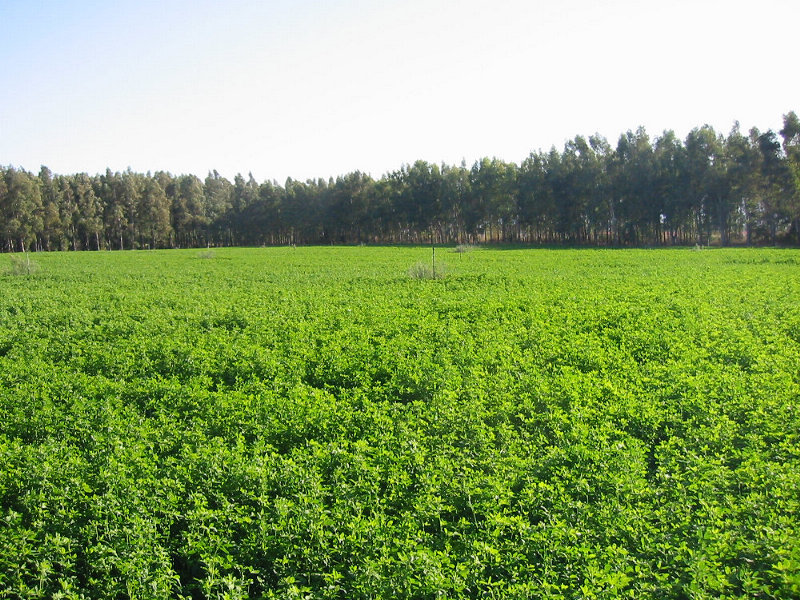
“My property has always been an agricultural holding. In fact right now there’s even lucerne planted on the property. I have made numerous pleas to the metro to reclassify this as an agricultural holding again, but to no avail,” Hamm said.
He has also approached Dayalan Pillay, the executive director revenue management of the metro, explaining that he was financially unable to pay the rates which the municipality was asking. “Firstly, he refused to see me. When his secretary advised him he better come out of his office and see me he came out. When I explained the situation to him he said: ‘take us to court’ and turned his back on me and walked away. When I tried to apply for a pensioner rebate I was told that I first had to pay the accumulated R60 000 before it could be considered,” he said.
Dayalan Pillay was recently dismissed from the metro and Rekord got hold of Subesh Pillay, MMC responsible for economic development and planning in the metro, who said he would not comment on the issue but was quite happy to have a look at Hamm’s account and see if it were possible to assist the client.
“I tried to sell my property but with the high rates and taxes on it, no buyers are interested. So now I’m in the situation that the outstanding balance is increasing enormously monthly, I cannot afford the monthly rates and taxes and I am just sinking deeper and deeper into debt with no solution to solve my problem. Taking up Dayalan Pillay on his suggestion that I should sue them, is also not an option, since it is obvious that I cannot afford a lawyer.”
Rekord wanted to know from the councillor of the area how many people were affected in the same way as Hamm.
Lex Middelberg said there were several hundred who were in the same boat as Hamm but many were ignoring the high taxation and not paying, although some are paying.
“My ward is on the urban edge. This is where development takes place. This is where plots are converted into developments. Since 2011 development has virtually stopped, which means developers now sit with vacant stands they cannot get rid of. People are punished with punitive vacant land rates because they are not developing their properties,” Middelberg said.
He explained the issue of whether a property is agricultural property or not falls under the provincial legislation and said it does not fall under the city’s legislation. “The rezoning of the agricultural property is not delegated to the city, it is retained within the province. So now we have a situation where the province still zones Hamm’s property as agricultural, but the city has unilaterally reclassified it as residential property, even though Hamm is still farming on it.”
Middelberg pointed out there had been no inspection of Hamm’s property.
“If you do not do an inspection, what is the basis of your reclassification? Your classification depends on evidence. If you have not collected evidence you do not have a case for reclassification. If you do not have a case for classification there is no case for the resident to answer to, and that is the whole point of the Promotion of the Administrative Justice Act,” he said.
For free breaking and community news, visit Rekord’s websites:
Also like our Facebook page and follow us on Twitter.