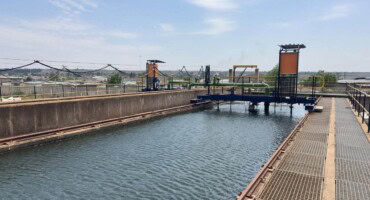
Outcry over privatisation of power stations
Employees of Rooiwal power station participated in a peaceful demonstration to object to the metro’s plans of leasing the two entities to the private sector.

Fears of job losses and allegations of incompetent management on Tuesday forced some 100 employees of Pretoria’s biggest power station, Rooiwal, to the streets to protest.
Rooiwal as well as Pretoria-West power stations are Tshwane metro-owned, but mayor Kgosientso Ramokgopa last month announced that the idling entities would be leased to private sector companies later this year for much needed refurbishment, upgrades and management.
Despite the heavy price tag of an estimated R9,5 billion to get the two power stations up and running, generating electricity at full capacity, the metro believed the cost justified the need for power in the country. Ramokgopa said once modernised and refurbished, Rooiwal would generate some 600 Mega Watts and Pretoria-West 300.
The electricity would be fed into Eskom’s national power grid.
Insiders told Rekord that although more than R4 million was spent at Rooiwal power station last year to replace ageing equipment, it was the inability of the metro to procure fuel for the power station that resulted in the entity not generating any electricity.
“In fact, we are importing 5 Mega Watts of electricity just to keep certain processes at the plant going,” one source, who did not want to be identified for fear of losing his job, said.
Rekord reporter Ron Sibiya, who attended Tuesday’s picket outside Rooiwal power station, reported the employees who downed tools, all members of the SA Municipal Workers Union (SAMWU), demanded that both Rooiwal and Pretoria-West power stations were not privatised, fearing that it would lead to people losing jobs.
SAMWU Regional Secretary, Mpho Tladinyane, said they believed with the current electricity challenges facing the country, the metro should keep control of the power stations as it would benefit the people.
“As SAMWU, we will do whatever it takes to make sure these power stations are not being sold to any private company nor being leased to any company,” Tladinyane said.
He said they believed the city had the responsibility to make sure the two power stations remained on-line and that they should be managed by the city.
The employees who picketed peacefully at the main entrance of Rooiwal power station feared they might lose their jobs should a private entity take over management on a lease-basis.
Tladinyane said they had learnt from past experience, wherever there was privatisation of state assets, massive retrenchments followed.
“We support our members’ action against selling or leasing the power stations,” Tladinyane said.
The union said it had engaged in talks with metro management about the decision to lease the entities and added that the metro had assured them Rooiwal power station would be running within two weeks from Monday.
The union warned they would take to the streets again if the metro’s promises did not materialise.
Ramokgopa earlier stressed the two power stations would not be sold, only leased for a period of some 20 years.
Mayoral spokesperson Blessing Manale, said the power stations were currently only nominally functioning and presented a considerable drain on the city’s financial resources without any significant contribution to the supply of electricity.
“While we agree the cost of the projects might look astronomical – R9,2 billion for Rooiwal and R300 million for Pretoria-West – we believe the demand and market for energy remain high and profitable.”
Manale said this demand was confirmed by, among others, long term plans by the metro which included major housing developments in the city, the development of the northern and eastern capital and the continuing growth in Soshanguve and also by major catalytic projects in the inner city.
In handing over the power stations for lease to the private sector, Manale said several proposals based on high level principles were considered.
These included the funding and refurbishment of Pretoria-West station by the lessee for the use and generation of alternate fuel and the transfer of the assets and improvement to Tshwane at the end of the lease term, which would be 20 years.
He said revised Eskom tariff structures, current coal prices and repairs and refurbishments already undertaken by Tshwane, had also been taken into consideration.
To obtain a financial break-even situation under the best operational scenario meant that a reduction of 36% in fuel costs must be achieved and fixed costs must be cut by 47%, Manale said.
He said at Rooiwal, financial key assumptions included the installation of two 150 MW turbine generators and adopting circulating fluidized bed (CFB) technology.
The R9,2bn price tag would include construction, project development and financing and other financial costs.
For more breaking news, visit Rekord’s websites:
Also visit our Facebook and Twitter pages.