Slimy snails dominate many discussions on social media
Over the past couple of days, social media was abuzz as residents created posts about these large creatures.
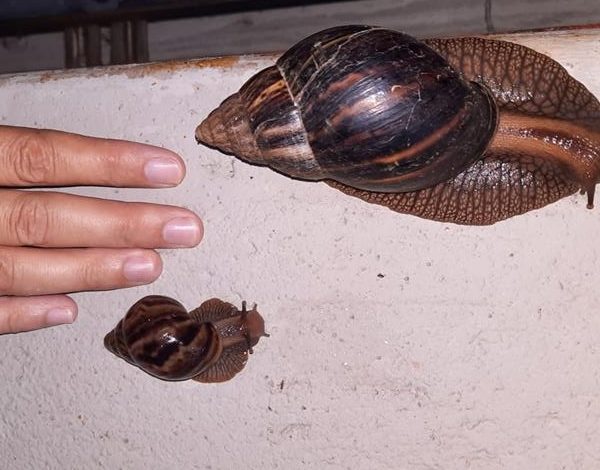
Social media was abuzz with pictures of giant snails this week.
The so-called Giant African land snails dominated many discussions as residents created posts about these large creatures.
Moot resident, Christelle Truter-Pauw, a nature conservationist and owl connoisseur, shed some light about the Giant African land snail.
“It is a nocturnal animal that buries itself underground during the day, one rarely sees them,” she said.
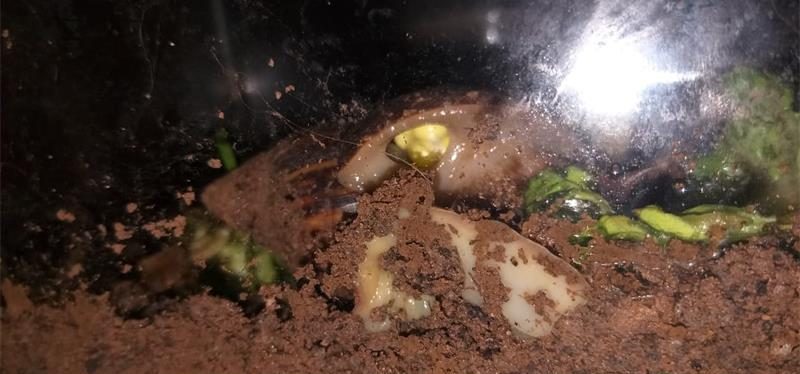
“We may be seeing them again now because this past week’s rain is making them come out more now, because they drink a lot of water.”
According to Truter-Pauw, it is one of the largest terrestrial gastropods.
“The body has two short tentacles and two long ones that have the eyes.
The Giant African land snail is one of the most invasive species in the world.
They have an average life span of about five to seven years.
When they have enough food, and the weather is satisfactory, they tend to live much longer.
Some of them have been known to live up to 10 years.
The Giant African land snail is known as a hermaphrodite which is an organism with both male and female genitalia.
“An adult weigh about 32 grams.
“An important part of the anatomy of this snail is a structure in the mouth similar to a tongue, which is called the radula. It has small teeth that allow snails to scrape the food before eating it,” she said.
“The Giant African snail tends to eat leaves, flowers, fruits, wood, seeds, grains, nuts, and even lichens, fungi and other snails.
“They have a muscular foot that helps them move releasing a mucus while they move to reduce friction and avoid damage to their tissues.
Truter-Pauw said the snails uses their shell to take refuge from predators.
“They will also spend time inside of their shells when the temperatures begin to dip too low at night for their comfort.
“It is not a social species. On the contrary, it lives all its life alone. Not even after laying eggs, does it establishes any bond with its offspring,” she said.
Did you know?
– The Giant African land snails pose a serious health risk to humans by carrying the parasite rat lung worm, known to cause meningitis in humans.
– The snails should not be handled without proper protection and sanitation.
– Snails have reproductive organs of both sexes and can fertilize themselves.
– Up to 500 eggs can be laid in a day, depending on the age of the snail and the eggs are buried underground.
– They eat live or dead plant material.
– The hermaphrodite helps with the breakdown of plant material which then becomes part of the soil cycle.
– Lacks a lot of calcium for their shells and can even eat bones or animal skeletons to get calcium.
– They are active during the night and bury themselves underground during the day.
Do you have more information about the story?
Please send us an email to editorial@rekord.co.za or phone us on 083 625 4114.
For free breaking and community news, visit Rekord’s websites: Rekord East
For more news and interesting articles, like Rekord on Facebook, follow us on Twitter or Instagram