Meet Tuks’ youngest professor
The appointment of Dr Joel Modiri as the youngest law professor at the University of Pretoria due to his established critical political writings and its relevance to law, sets to become inspiration to many who wish to become academics and achieve their goals.
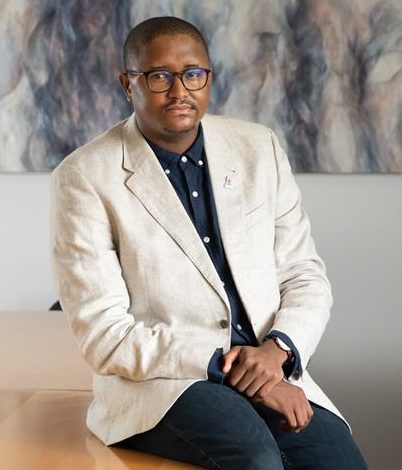
The appointment of a 29-year-old Dr Joel Modiri to associate professor at the University of Pretoria has been described as a “game-changer”.
These were the sentiments of UP’s faculty of law deputy dean Professor Charles Maimela as the university celebrates the appointment of Modiri.
Turning 30 in August, Modiri was promoted at the end of 2020, to the position of associate professor making him the youngest professor in the current employment of the university – and among the youngest in the history of the institution.
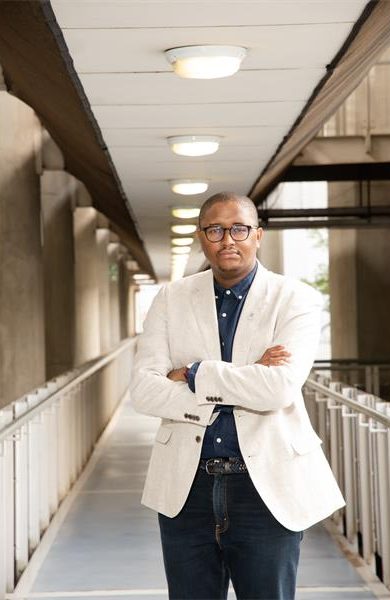
For Modiri, this was a milestone for an academic career that began a little over a decade ago (2010), when he published his first accredited articles as a law undergraduate on critical race and gender theory in the context of the post-1994 legal order.
“It was the scarcity and silence around questions of race, class and gender in the law classroom – as well as the efforts of a few scholars to bring these issues to the fore – that opened me up to academic scholarship,’’ he said.
Modiri who also takes on the hat of being the new head of the department of jurisprudence at UP, said before the critical political writings, he had anticipated a traditional legal career route as an attorney or advocate in public or private practice.
“This experience of shifting from wanting to be a lawyer to becoming an academic is a testament to the transformative power of higher education and critical pedagogy (the method and practise of teaching).”
READ MORE: South Africa’s record-breaking relay team now all at the same club in Pretoria
The young teacher believed that the task of universities was not only to deliver technically-skilled and competent graduates but also morally and politically-engaged citizens.
“Graduates who care deeply for all human and non-human life and who are well-versed in the many kinds of literature, languages, histories and discourses that have shaped the world as we know it.”
Born in Atteridgeville, Modiri believed that the profound political history of his birthplace, being a cultural site of Pan-Africanism, was the root of his interest in politics.
“I also come from a family of public servants (social workers, nurses, government officials), which in turn shaped an interest in reading and debate on matters of public interest.”
Modiri completed his bachelor of law degree (LLB) cum laude in 2013, and began working as an assistant lecturer at the same university that has chosen to be an associate professor.
“Immediately as I began teaching as an assistant lecturer, I enrolled for a master’s degree. My master’s thesis was then converted to a doctorate which I completed in 2018, on the political and social theory of Black Consciousness and its relevance to law, jurisprudence and legal theory.”
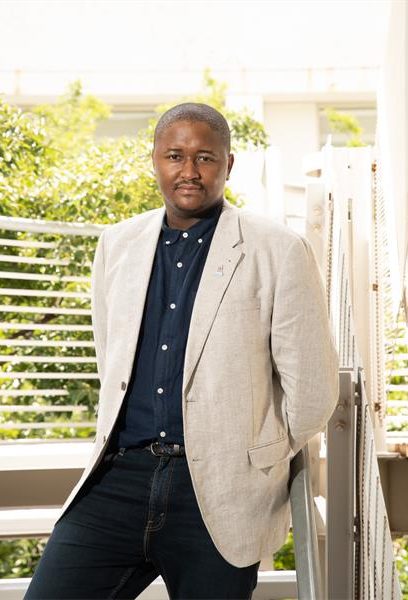
It was his critical analysis of the political and social theory of the Black Consciousness formed by Bantu Stephen Biko that led to him being among recognised scholars.
“Higher education is deeply undervalued as a public value in South Africa, which is evidenced by the prohibitively high costs of university tuition resulting from declining funding for universities. Ideally, anyone wanting to study further should be supported and enabled to do so by the state,” he said.
“Once we address this funding crisis, many, many young people will be encouraged to enter the academy to complete master’s and doctoral degrees, and do the work required to attain success as scholars — which in this context means to contribute meaningfully to knowledge about the world and their academic discipline.”
On his future plans, Modiri said his main goal was to work on a book-length monograph taking further the ideas developed in his doctoral thesis.
“Another key imperative is to participate in the transformation of the academy and the professorate in particular collectively creating spaces to support black academics as teachers and researchers to ask critical questions about the society we live in from the perspective of their chosen academic fields.”
Maimela believed that the appointment of Modiri showed that the field of academia was changing. The title of professor was not only reserved for old people but even young people like him were able to attain the title at the earlier stages of their career.
“The appointment of Prof Modiri was in line with the faculty regulations of appointment and promotions, and he met these requirements to be promoted to his current level. As a faculty, we are very proud of Prof Modiri, and we celebrate this milestone with him. We hope all young and old people will see his appointment as an inspiration and motivate them to reach their goals.”
Maimela said UP would give opportunities to young professionals and scholars like Modiri, as long as they would be committed and hard-working as well as having the required credentials of being appointed.
Do you have more information about the story?
Please send us an email to editorial@rekord.co.za or phone us on 083 625 4114.
For free breaking and community news, visit Rekord’s websites: Rekord East
For more news and interesting articles, like Rekord on Facebook, follow us on Twitter or Instagram